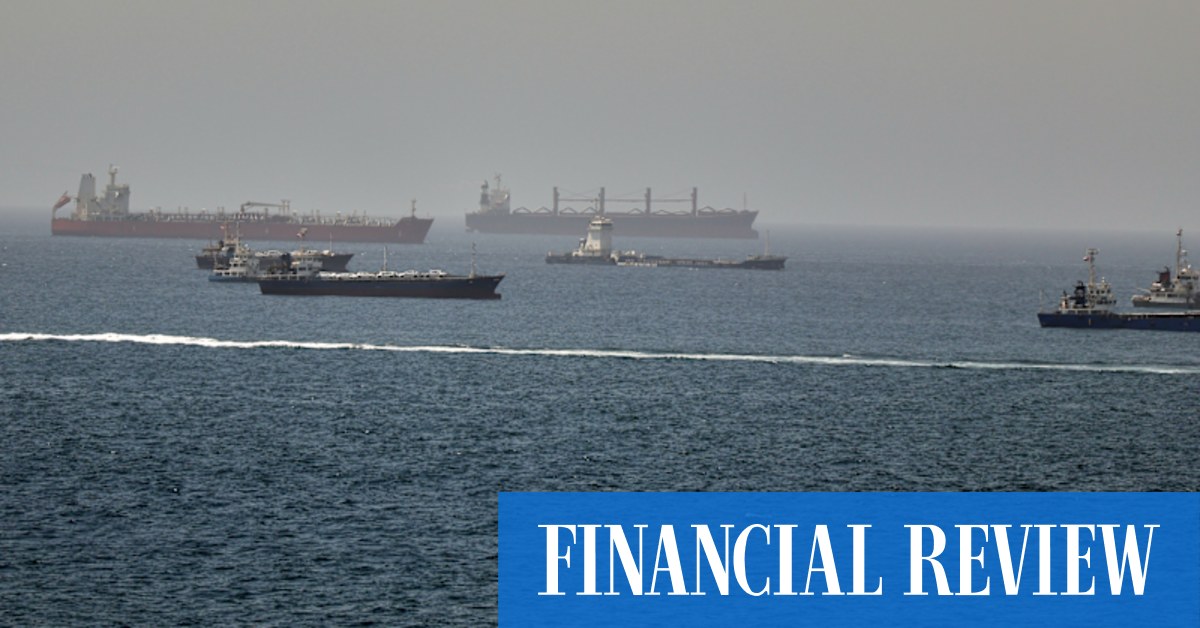
With large-scale oil shipments potentially resuming soon, let's take stock of how the energy shock has bucked conventional wisdom.Why it matters: What market watchers and participants got wrong could help inform responses to geopolitical upheaval in the future.Here's what surprised analysts (and journalists) during the conflict:📃 Futures market behavior. Predictions of $150 per barrel or even $200 were common in the early days, and prices — while painful — never got close.There's no consensus on why. As oil analyst Ben Cahill put it to me, "paper markets can defy physical market reality for months."Some argued the market was too sanguine about a looming supply crunch, and responding too much to President Trump's frequent posts declaring progress.Others saw a market working more or less as intended based on available info. Either way, the predictions were wrong."If you had surveyed oil market analysts at the start of the year and asked what the oil price would be if most supply through the strait [of Hormuz] were disrupted for more than 100 days, few would have told you less than $100 a barrel," Jason Bordoff, founding executive director of Columbia University's Center on Global Energy Policy, said via email.🇨🇳 China's outsized role. The world's largest oil importer cut back on purchases to a degree that many market watchers didn't expect."Besides the market's sanguine response to the greatest supply outage in history, Beijing's ability to subtly shape the crisis was surprising," notes Joseph Webster, a senior fellow with the Atlantic Council.It provided one of the biggest shock absorbers at a time when oil inventories have been draining fast, as Axios' Emily Peck recently explored.China imported 7-8 million barrels per day in May, down from 11-12 million per day in 2025, per market data and intelligence firm Sparta Commodities. That's a lot in a market of around 105-ish million barrels per day.😳 Iran's ability to (mostly) choke off the strait. "For me, the biggest surprise was how quickly and easily the Iranians managed to close the strait, and how ineffective US measures to reopen it proved to be," Gregory Brew of the Eurasia Group said in an email.There was a long-held prediction that the U.S. could guarantee security in the strait, but that has "proven to be hollow, "said Brew, a senior analyst with the political risk consultancy.Amy recently dug into this.🦕 Oil, like life, finds a way. Lots of forces together have made the market surprisingly able to buy time, even as the transitway for a fifth of the world's oil remains severely restricted.One is that "global oil refining is more resilient and flexible than we realized," Cahill notes via email.The Financial Times' Camilla Palladino has a nice look at other "unforeseen pockets of flexibility that have shown up in this crisis," such as demand levels proving more responsive to price increases than expected in some markets.The bottom line: From oil prices to China's major role, the energy shock repeatedly defied expectations.Sign up here for Axios' Future of Energy newsletter.
How the Iran war energy crisis defied expectations
What market watchers and participants got wrong could help inform responses to geopolitical upheaval in the future.
496 words~2 min read