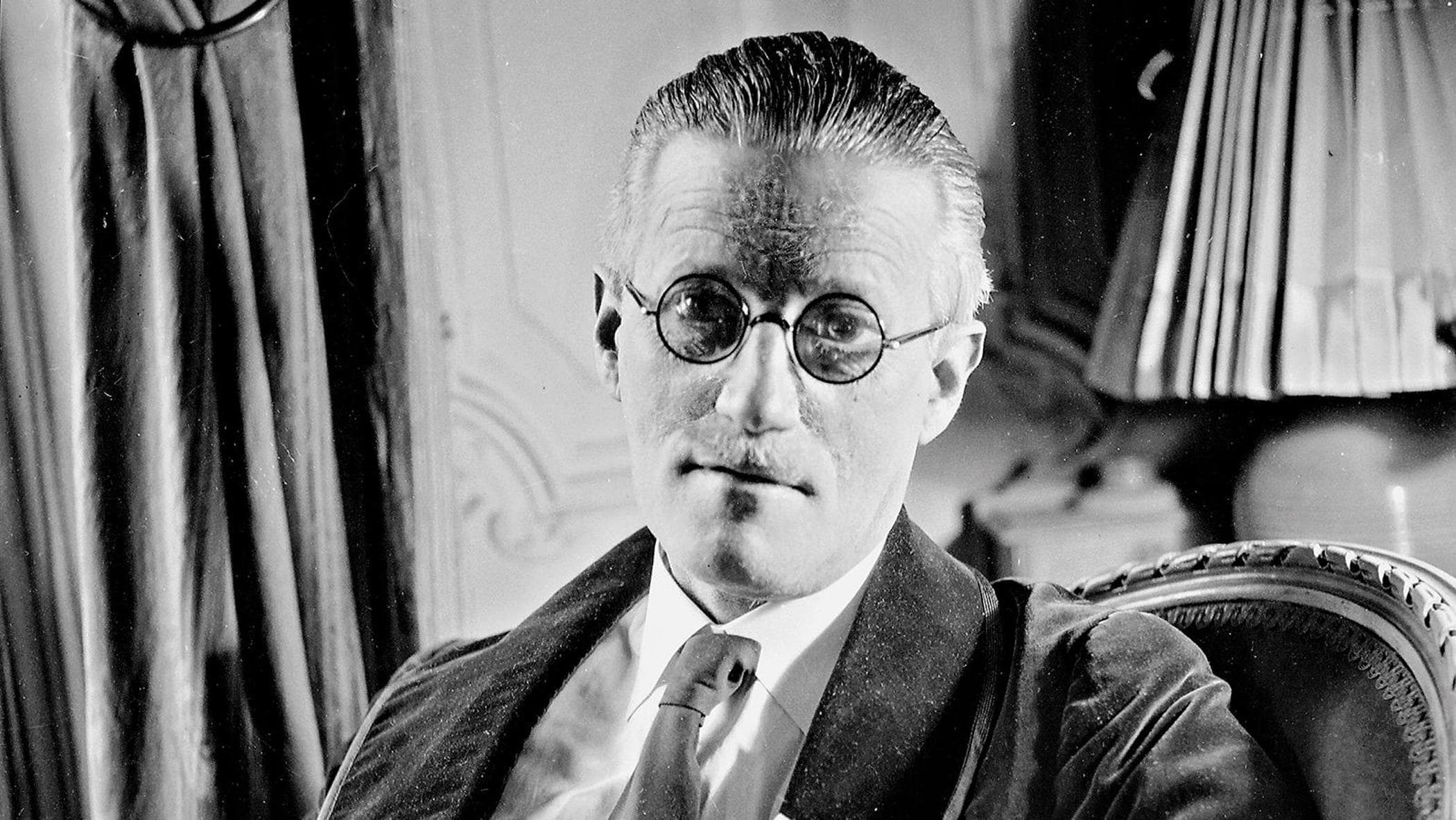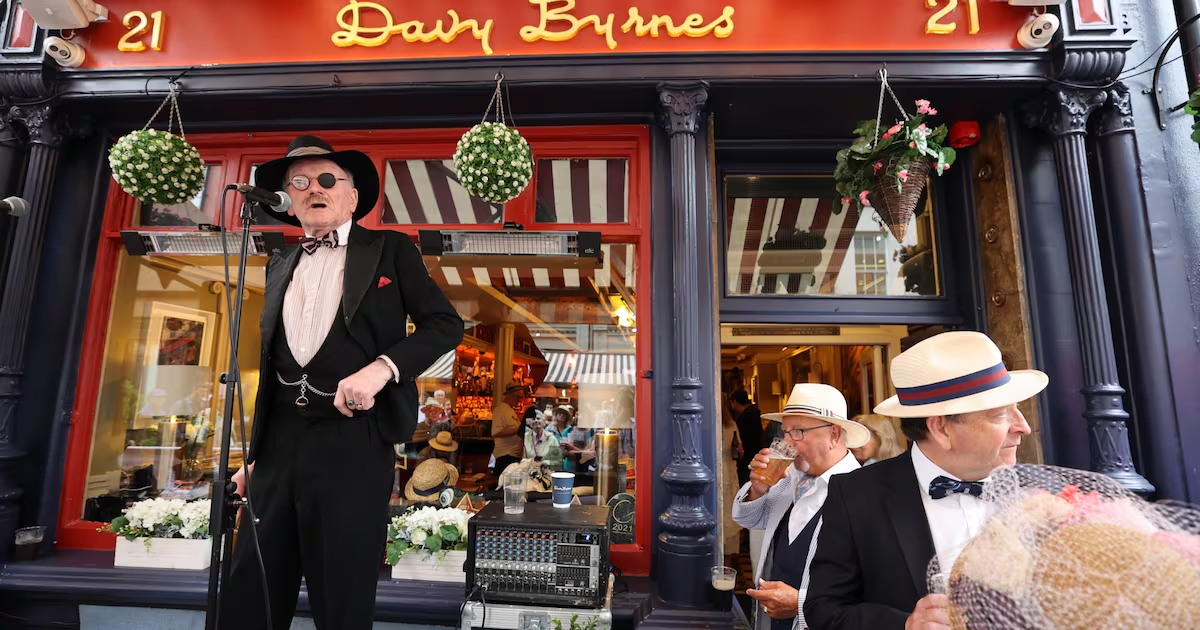
A first edition of James Joyce’s Ulysses that was intercepted and impounded by the British Post Office on government orders in 1933 had a peculiar provenance. The ground-breaking book was banned in Britain for nearly 14 years following its publication in Paris in 1922. The copy seized by the post office in 1933 was sent from Dublin to a London bookseller. The sender was Davy Byrne, proprietor of the well-known city-centre pub that still bears his name. He was also a character in the book. Byrne was selling the book for £3-0-0 sterling, equivalent to about £280 or about €322 today. His business card bearing the pub’s address, 21 Duke Street, was enclosed with the book, along with the publisher’s errata slip and excerpts of favourable newspaper and periodical reviews. All the items are retained in the Royal Mail Archive in London. The seized book was one of a limited first edition of 1,000 copies, published by Shakespeare and Company, some 750 of which were printed on handmade paper and numbered 251 to 1,000. It is numbered 895. (Number 955 from the same first-edition print run was offered for sale for €32,750 by De Búrca Rare Books, Dublin, this year). Davy Byrne was selling the book to Jacob Schwartz, a New York-born dentist turned London bookseller. Based initially at 20 Bloomsbury Street, he founded the Ulysses Bookshop on Bury Street, between Piccadilly and Pall Mall. He was nicknamed The Great Extractor by Samuel Beckett because of his earlier profession and his ability to acquire rare books and manuscripts. He was credited by the Joyce biographer Richard Ellmann with eliciting from Joyce the comment that he expected his books “to keep the critics busy for 300 years”, among other claims. He also appears as Dr Jacob Schwartz among the acknowledgments in the first Joyce biography, published in 1939 by Herbert Gorman with help from Joyce and his brothers Stanislaus and George. Neither biography mentions the Schwartz-bound Ulysses first edition confiscated by the post office. The British government had banned the importation of Ulysses within a year of its publication in Paris on February 2nd, 1922, Joyce’s 40th birthday. The chief legal adviser to the cabinet, Ernley Blackwell, sent a confidential letter from the Home Office in Whitehall to the postmaster general on January 10th, 1923, informing him that a copy of Ulysses “printed abroad” had been detained by a customs officer at Croydon Aerodrome “as being indecent”. Davy Byrne's first edition of Ulysses Blackwell wrote that the secretary of state at the Home Office (home secretary nowadays) had consulted the director of public prosecutions and had advised the board of customs and excise that the book was “obscene” and that “it should be forfeited under section 42 of the Customs Consolidation Act, 1876, and that any further copies that may be imported into this country should be similarly dealt with”. [ Reading Ulysses: Splendid literature that can suck the life out of you and your familyOpens in new window ]As chief legal adviser to the British cabinet, Blackwell had been involved in the prosecution of Roger Casement for “high treason” after the 1916 Rising and had authorised the circulation of Casement’s notorious Black Diaries. The British ban on Ulysses was copper-fastened in a warrant signed by the home secretary, John Gilmour, on March 27th, 1933, a few months before the US ban on publication of the book was lifted. This warrant, sent “to the Postmaster General and all others whom it may concern”, said: “I hereby authorise and require you to detain and open and produce for my inspection any postal packets which may be observed in the course of transmission through the post and which are reasonably believed to contain a copy or copies of a book entitled ‘ULYSSES’ by James Joyce: AND FOR SO DOING this shall be your sufficient Warrant”. (Emphasis in the original.) A British home office letter regarding the ban on Ulysses Davy Byrne’s “Moral pub”, as Joyce calls it in Ulysses, still stands and thrives at its 1904 location, 21 Duke Street, between Grafton Street and Dawson Street, the address on Byrne’s printed business card. About a dozen pages of Ulysses are set in the pub, which also features in Joyce’s Dubliners short story Counterparts. In Ulysses, Leopold Bloom enters the pub on June 16th, 1904 for a lunchtime sandwich of Gorgonzola cheese, flavoured with mustard, and a glass of Burgundy wine. In this “nice quiet bar” Bloom admires the craftsmanship of the countertop’s curved and planed oak while he talks intermittently to Davy Byrne and to one of the customers, Nosey Flynn. But he spends most of his time there musing about food and drink and about his wife, Molly, as she was when they first met and courted on the Hill of Howth, and about her adulterous present. Davy Byrnes bar on Duke Street, Dublin. Photograph: Ellius Grace/The New York Times
‘Indecent’ Ulysses: The British ban and how it was lifted
James Joyce reportedly said he wanted his books to keep the critics busy for 300 years. His most famous one kept the British post office and customs busy until 1936
1,605 words~7 min read