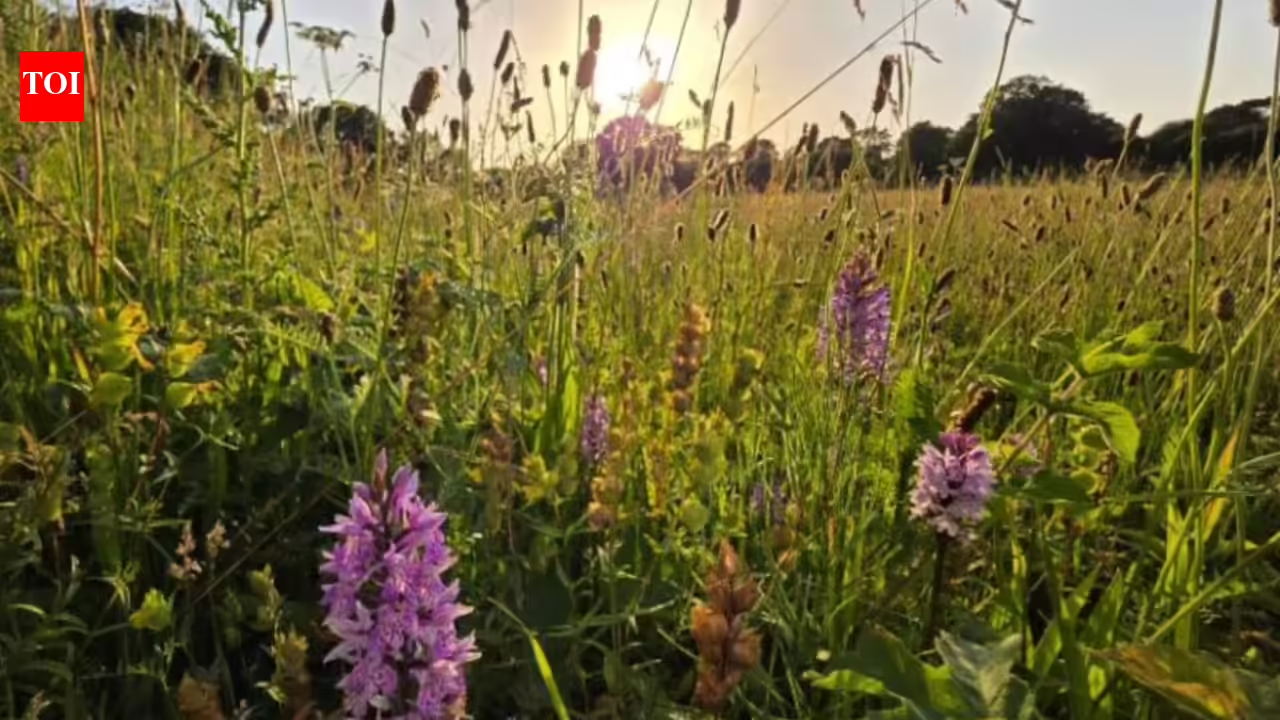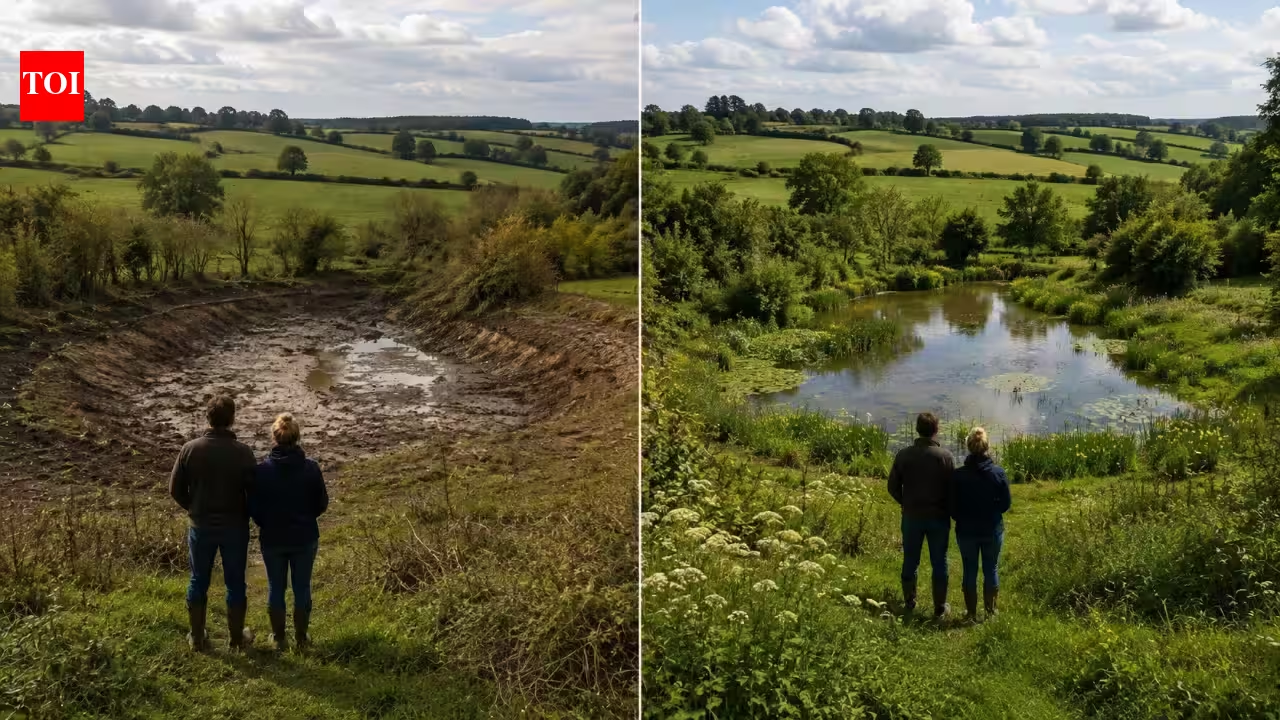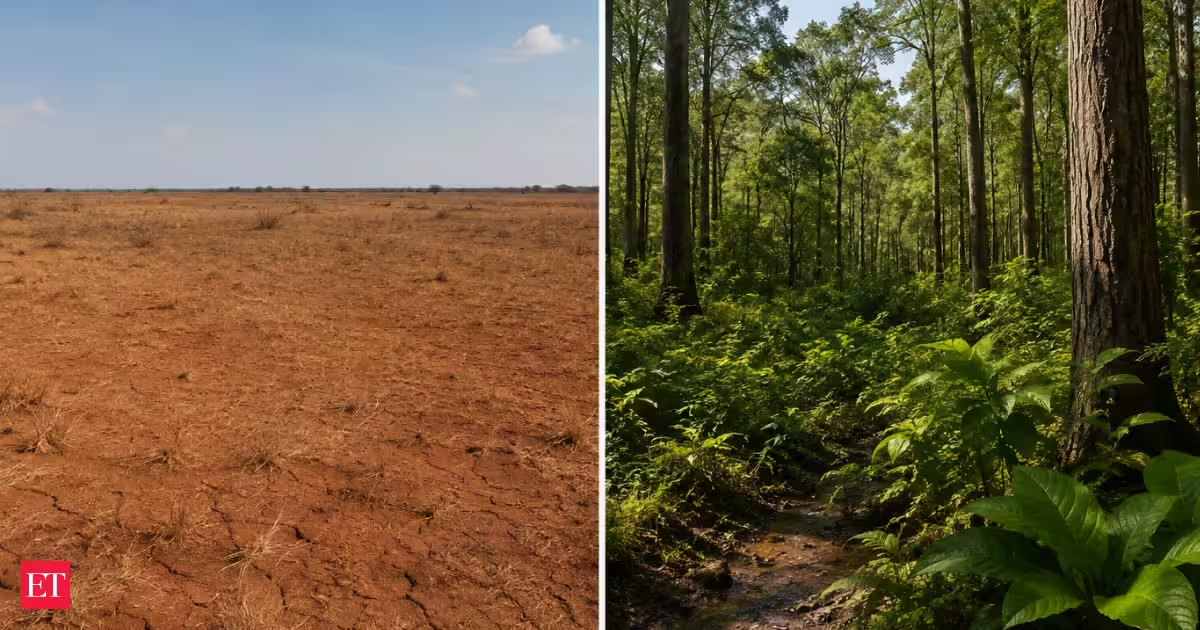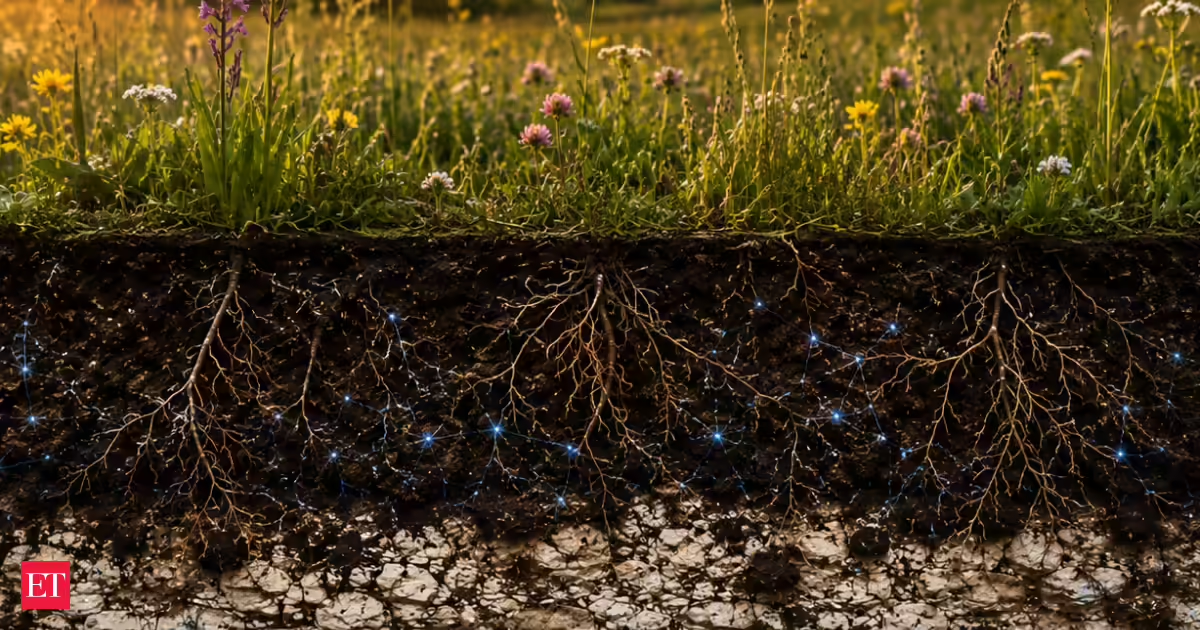
We usually think of land restoration as something we can see. Plant some wildflowers. Let the fields lie fallow. Watch for the green to return. Problem solved, right?Not really. According to this landmark study published in The ISME Journal by researchers at the UK Center for Ecology & Hydrology, the real recovery, the invisible underground kind, can take well beyond a century. And we may be seriously underestimating how long it takes.The experiment that spanned 143 yearsThe researchers chose Salisbury Plain in England as an ecological time capsule, a military training area so restricted that huge swathes of it never saw modern industrial farming.In this study, soils from four different land histories were compared: active farmland (0 years of recovery), grasslands recovering for 23 years, grasslands recovering for 67 years, and ancient grasslands undisturbed for at least 143 years. They examined plant diversity, soil chemistry, and the communities of microbes that live in the soil. What they found conflicts with much of what we know about restoration.Plants bounce back fast; soil doesn'tFirst, the good news. The study found that within the first 23 years after farming stopped, vegetation richness increased by about 300 percent, a huge win for anyone trying to restore native habitats in a human lifetime.But the underground story is messier. The research showed persistent legacy effects in soil chemistry, organic matter and nitrogen continued accumulating slowly, and the soil ecosystem remained distinct from the ancient grassland stage even after 67 years of recovery. Phosphorus and potassium chemical residues from decades of synthetic fertilizer use were still elevated in soils that had been “resting” for more than six decades. Those nutrient legacies don’t just go away.The military kept the farmers out. Science moved in. Image Credits: Wikimedia CommonsThis is supported by a 2019 study in Nature Communications, 'Soil carbon sequestration accelerated by restoration of grassland biodiversity,' which found that on degraded agricultural land, natural succession alone can be slow to rebuild soil carbon, though actively restoring plant diversity can significantly accelerate that process.The bacteria paradoxHere's the counter-intuitive part. Most people assume that more biodiversity is always better. But according to this ISME Journal study, bacterial species richness actually decreased as the grassland matured and became healthier.According to this research, farming creates a microbial free-for-all, so soils in farmed areas had the highest bacterial diversity. Fertilizers, tillage, and readily available carbon feed fast-growing opportunistic bacteria which bloom in huge numbers. It's quality over quantity.As the land recovered, environmental filtering came into play, this study says. Fewer but more specialized bacterial species took root, and those species possessed far more diverse genetic capabilities. Functional gene richness (basically the number of different things those microbes can do) increased substantially with restoration age, even as species counts went down. The community became smaller but more capable. In this research, the fungi and other non-bacterial organisms became steadily more dominant over time, a sign of a maturing, stable ecosystem.Why this is important for climateIt’s not just a biology story. Grassland soils are among the world’s most important carbon sinks. According to a study in Science, global grasslands could sequester 2.3 to 7.3 billion tons of carbon dioxide equivalent per year, if properly restored.Green on top, broken underneath: Salisbury Plain's grasslands tell a more complicated story. Image Credits: Wikimedia CommonsBut the study in the ISME Journal indicates that carbon accumulation in these soils is slow and continuous; organic matter was still increasing between years 67 and 143, with no plateau in sight. This work challenges conservation policies based on short-term funding cycles that may greatly underestimate the time needed to restore the complete soil carbon sink in these systems.“Just let nature do it” might not be enoughAccording to this study, the soil ecosystem after 67 years was still functionally different from the ancient grassland at 143 years. Specialized bacteria adapted to low-nutrient, complex-carbon conditions hadn't fully taken hold, perhaps because high phosphorus levels were blocking their way.One possible way forward suggested by this research is soil inoculation: seeding restoration sites with small amounts of soil from ancient grasslands to reintroduce the specialized microbes that passive regeneration might take generations to cultivate on its own.What this means for usIn theory, there are tens of millions of acres of degraded and former agricultural land in the US that could be reclaimed. But as the ISME Journal study notes, we need to stop measuring success based only on what we can see above ground. A field that appears restored, green, and full of wildflowers may still have soil that is decades or even centuries away from full functional recovery.Restoration is not only above ground. It’s in the soil. It’s in the microbes. And it is on a timeline for which no short-term policy or funding cycle has been established.
Britain's army fenced off Salisbury Plain from industrial farming; 143 years on, plants came back fast, but the hidden soil microbes still haven't caught up
A study reveals that while plant diversity in restored lands increases rapidly, the recovery of soil microbes and chemistry can take well over a century, highlighting the complexities of land restoration and the need for comprehensive approaches to ecological recovery.
792 words~4 min read