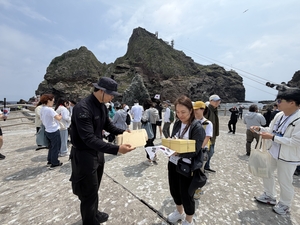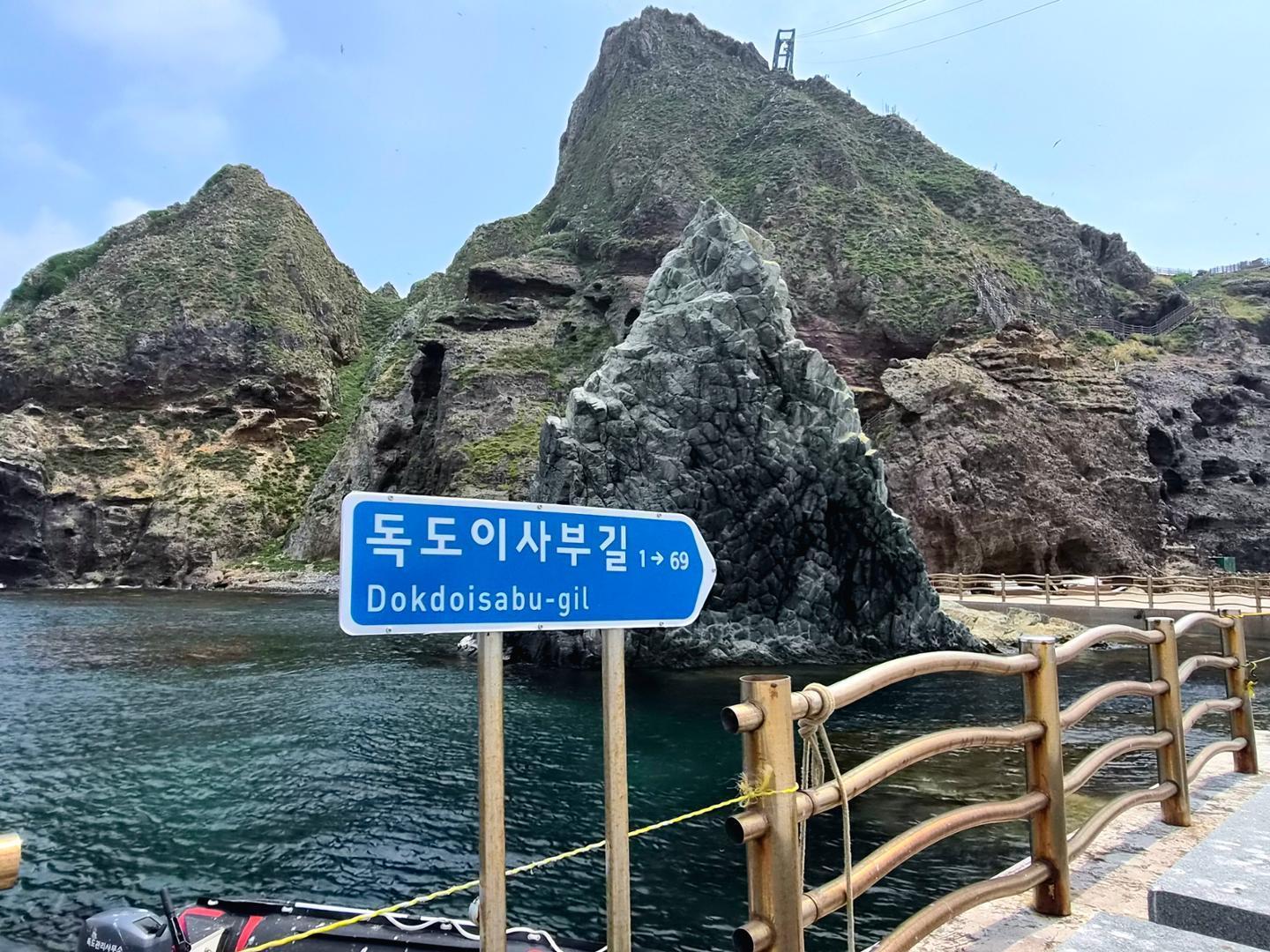
A signpost indicating Dokdo Isabu-gil stands on the eastern islet of Dokdo. Korea Times photo by Choi Da-won
In May 1881, amid growing foreign encroachment on the Joseon Dynasty (1392-1910), King Gojong appointed military officer Lee Gyu-won as inspector of Ulleungdo to respond to the illegal settlement of Japanese nationals on the island. Lee left Seoul on April 10 the following year, spent 15 days inspecting Ulleungdo and returned to Changdeok Palace on June 5 to report to the king.
According to Lee’s "Uldosan Sea Records," the Japanese had erected markers without permission on Ulleungdo and written "(Great Japan’s) Songdo" — in Japanese, Matsushima — on them.
"Those people are cunning and deceitful," Lee told Gojong, saying Joseon should send an official letter to Hanabusa Yoshitada, the Japanese minister, and another to Japan’s foreign ministry.
Gojong’s reply became the starting point for a long trail of records, monuments and territorial claims.