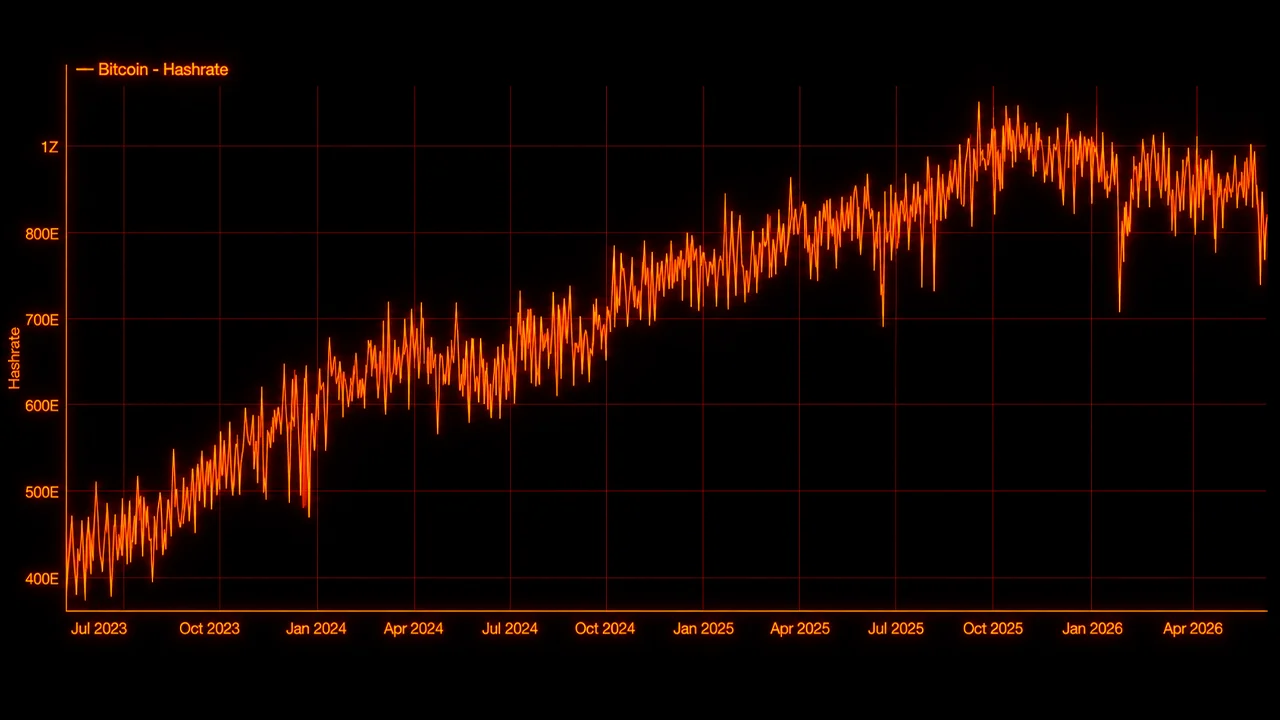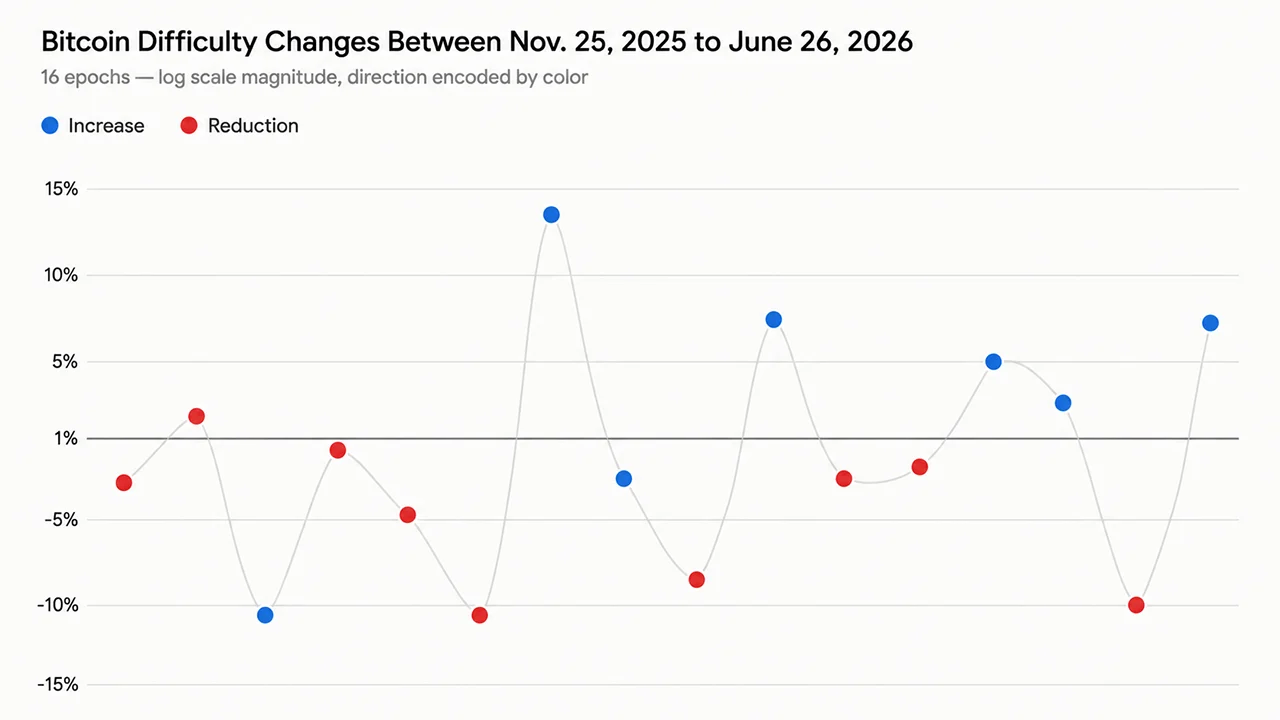
Bitcoin’s mining difficulty fell 10.09% at block 953,568 on June 14, marking the kind of dramatic recalibration that only happens when a meaningful chunk of miners decide the math no longer works in their favor.
The difficulty dropped from 138.96 trillion to 124.93 trillion. That makes it the 11th-largest single downward adjustment in Bitcoin’s entire history and the second-largest decline recorded in 2026.
What happened and why it matters
Every 2,016 blocks, roughly every two weeks, the network automatically recalibrates how hard it is to mine a block. If blocks are being produced too slowly, difficulty goes down. Too fast, it goes up. The whole system is designed to keep block times hovering around 10 minutes, regardless of how many miners are competing.
This particular epoch took 15.6 days to complete, well beyond the standard 14-day interval. Blocks were coming in slower than they should have been, which means miners were leaving the network faster than new ones were joining.