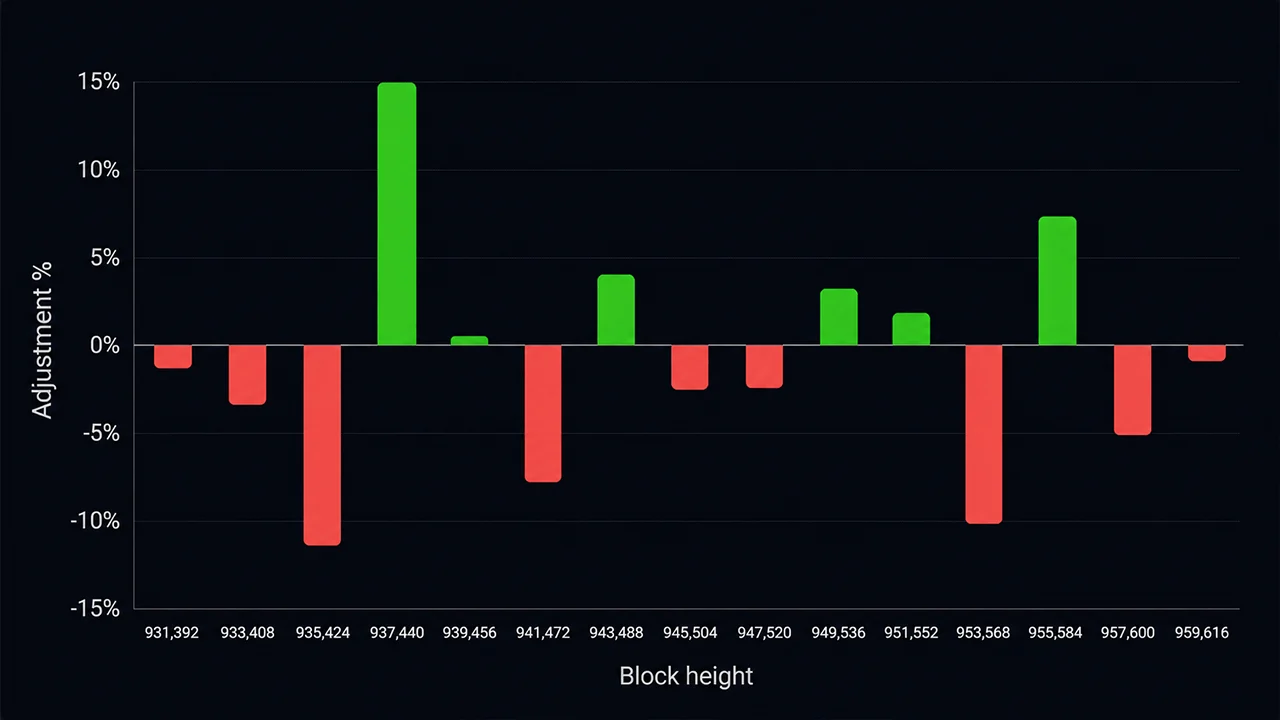
Bitcoin mining difficulty fell 10.09% over the weekend, dropping from 138.96 trillion to 124.93 trillion at block height 953,568, according to Galaxy Research. The adjustment ranks as the 11th-largest downward move in the network's history and the second-largest drop of 2026, after a move in early February. The new difficulty is the lowest level of 2026 so far, and the lowest level since July 2025.
Mining difficulty measures how much computational work miners, using high-powered chips, must perform to add a block to the blockchain. The difficulty readjusts every 2,016 blocks, or roughly every two weeks, to keep the average time between blocks near 10 minutes no matter how much hashrate is online.
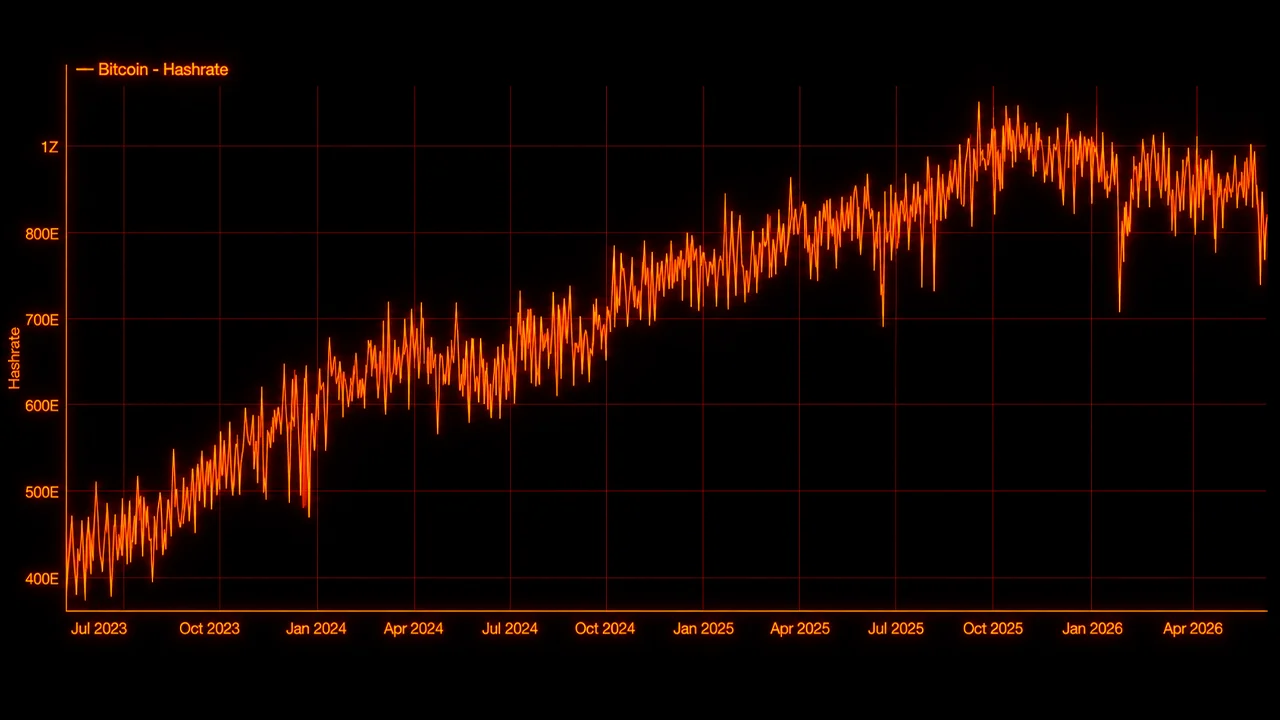
The latest cut to difficulty followed a roughly 15% decline in bitcoin's price so far in June, which compressed miner margins and prompted some operators to shut off unprofitable machines. As machines powered down, blocks arrived more slowly, and the prior epoch ran about 15.6 days against a target near 14, the condition that triggers a downward retarget.
Galaxy Research, the research arm of crypto financial services firm Galaxy Digital, attributed the latest cut to a price-driven margin squeeze, the same driver its ranking table assigns to Bitcoin's other major 2026 adjustments.