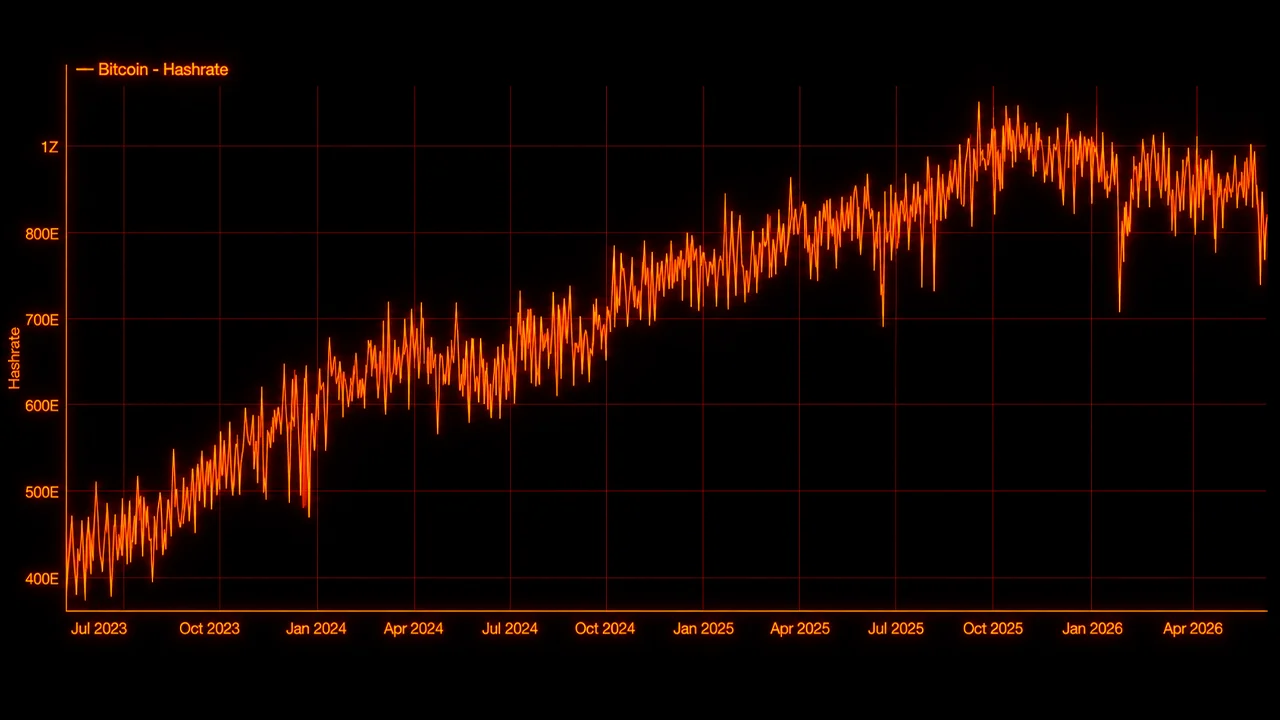
The amount of computing power pointed at the Bitcoin network has seen a heavy decline since October, with the 7-day average network hashrate falling from an all-time high peak of 1.151 zetahashes per second on October 18th to the most recent estimate around 0.888 zetahashes per second, according to data from Blockchain.com. It’s no coincidence that October was also the month that the bitcoin price hit its all-time high of around $125,000. While the roughly halving of that price in recent months certainly affected bitcoin miners’ profitability, reports indicate those tasked with effectively operating as the accountants of the Bitcoin network have also been diversifying into and chasing profits in the AI infrastructure industry. The decline in Bitcoin’s collective computing power can be inferred from network data. Although the specific amount of computing power at any one time is not available, estimates can be drawn based on Bitcoin Difficulty and the amount of time that has lapsed between each recently-found block. The Bitcoin Difficulty is basically a measure of how hard it is for miners to find a valid block. The protocol adjusts Difficulty every 2,016 blocks, roughly every two weeks, to try to keep blocks arriving about every ten minutes. Notably, the Bitcoin Difficulty Adjustment of -10.09% that occurred on Saturday was the 11th largest downward adjustment in the network’s history, according to Galaxy Research. Galaxy said the likely driver of this adjustment was the recent bitcoin price drop, which led to squeezed margins for miners. This was the second largest adjustment seen this year, although the previous drop in February was due to the effect of Winter Storm Fern on local electrical grids.
Bitcoin Miners Are Turning Off Their Rigs and Chasing AI Money
Over the weekend, it became 10% easier to mine bitcoin.
713 words~3 min read