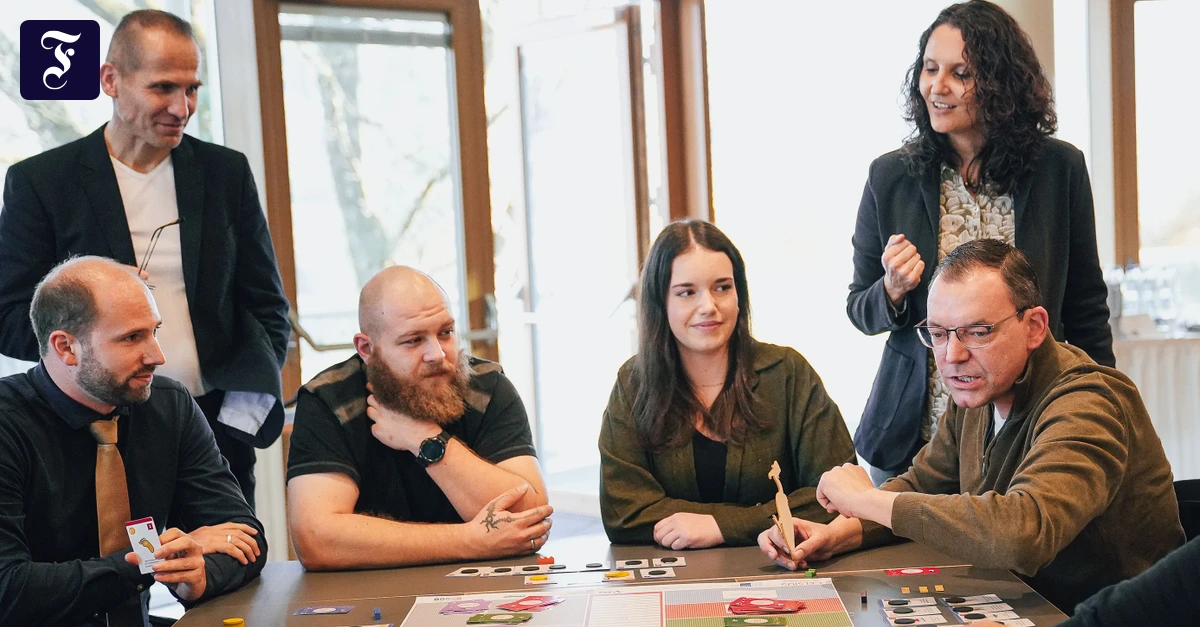
On a quiet afternoon in a college classroom, the tension is familiar. Students are waiting for the bell but something feels different. There are no ticking wall clocks or stern invigilators pacing the aisles. Instead, a screen glows with points and topics, and another features a timer and scoreboard tucked to the side. Each topic hid a question, which was unlocked when the points were bid. As points increased, each question moved to the next “level”. If you won, the point was yours; if you failed to answer the question,you lost the same number of points.“It didn’t feel like a test,” a student reflected. “It felt like I was solving something.”This sentence captures a growing shift in how educators and researchers are beginning to think about assessments. Across classrooms and campuses, traditional exams are slowly being reimagined. No discarded but redesigned through the lens of gamification.Weight of examsFor most learners, the words ‘test’ or ‘exam’ carry an emotional weight. They bring about memories of anxiety, silence, and the fear of getting things wrong. Over the years, the term ‘assessment’ has come to represent judgment rather than growth. Even high-achieving students often describe exams as stressful rituals rather than meaningful learning moments. Many students speak of nights lost to anxiety, minds going blank in exam halls, knowing the answer but failing to show that under pressure. These are not exceptions but patterns. Research shows that emotional states influence how learners perform and what they retain. However, assessment remains one of the least questioned structures in education.The idea of gamified assessment entered not through theory but through observation. In one study, students were asked to complete a routine assessment using the same syllabus and learning objectives but in a gamified format that followed the pattern on Jeopardy, a popular US-based quiz show that explores a range of topics. In the study, however, students engaged with a single topic and its syllabus. The atmosphere was similar to that of the show with a host quizmaster and the students being divided into teams. It was more, a friendly match of wits with progress indicators, immediate feedback, increasing levels of questions, and points to keep them on the edge. What followed was unexpected. Students stayed at the edge of their seats, excited and curious about the unexpected results. They discussed questions afterwards, not answers, and strategies for addressing them. Several asked if they could attempt the assessment again, not for marks, but “to do better”. When invited to reflect on the experience, one student wrote, “For the first time, I wasn’t scared of being wrong. I was curious.”Gamified assessment does not mean turning exams into entertainment. It is not about replacing seriousness with playfulness. Instead, it draws from what games do exceptionally well: sustaining attention, balancing challenge, and offering feedback, and encourages persistence. Games allow failure without humiliation. They frame mistakes as part of progress. Many students describe gamified assessments as “refreshing” and “fun”, and felt seen as learners.Why it worksResearch shows that learners thrive when they feel a sense of control, competence, and purpose. Gamified assessments support all three. Learners know where they stand, what to do next, and how to improve. Another concept, often cited in research, is “flow” or a feeling of being fully absorbed in a task. Several students described losing track of time during the assessment. This does not mean the assessment was easy. In fact, some questions were deliberately designed to be challenging, but the challenge felt inviting, not intimidating.Gamified assessment is neither an argument against rigour nor a call to abandon written exams. Traditional assessments have strengths, including standardisation, comparability, and scale. What gamification offers is a crossover space; a way to preserve academic standards while transforming learners’ experience. In hybrid models, the learning outcomes remain unchanged, but what changes is the emotional climate. The assessment becomes less about fear and more about engagement.Perhaps, the strongest case for gamified assessment comes from student reflection, not data. After one session, a student wrote: “This game helped me learn better. I had to think fast and link ideas, not just remember them.” Another added, “Answers where I was wrong were corrected on the spot and I will remember them at any point in my life.” This is not to claim that gamified assessments are perfect. Some students still prefer traditional formats while others find certain game elements distracting, reminding us that no single method is suitable for everyone. But it points to something essential: that learners want assessment to feel meaningful.There are also real concerns; designing effective gamified assessments requires time, pedagogical expertise and sensitivity. Poorly designed ones risk becoming gimmicks. Issues of digital access and inclusivity must be addressed carefully, especially in diverse classrooms. From a research standpoint, more long-term studies are needed. We must ask not only whether students enjoy gamified assessments, but whether these experiences support deeper understanding over time.At its core, assessment is meant to support learning. Somewhere along the way, it became something learners endured rather than engaged with. Gamified assessment invites us to pause and reconsider: what if tests did not have to be moments of fear? What if they could be moments of reflection, challenge and joy? In an era when student well-being is a growing concern and disengagement is widely reported, this question matters. As one student put it: “I didn’t feel like I was being tested. I felt like I was learning.” That, perhaps, is the most compelling result of all. Biju Kunnumpurath is a Professor at Christ University, Bengaluru, India. Sona Sunil, and Jack Joy are Ph.D. scholars at the same institute.
Why gamified assessment can help learning
Are gamified exams revolutionising learning?
932 words~4 min read