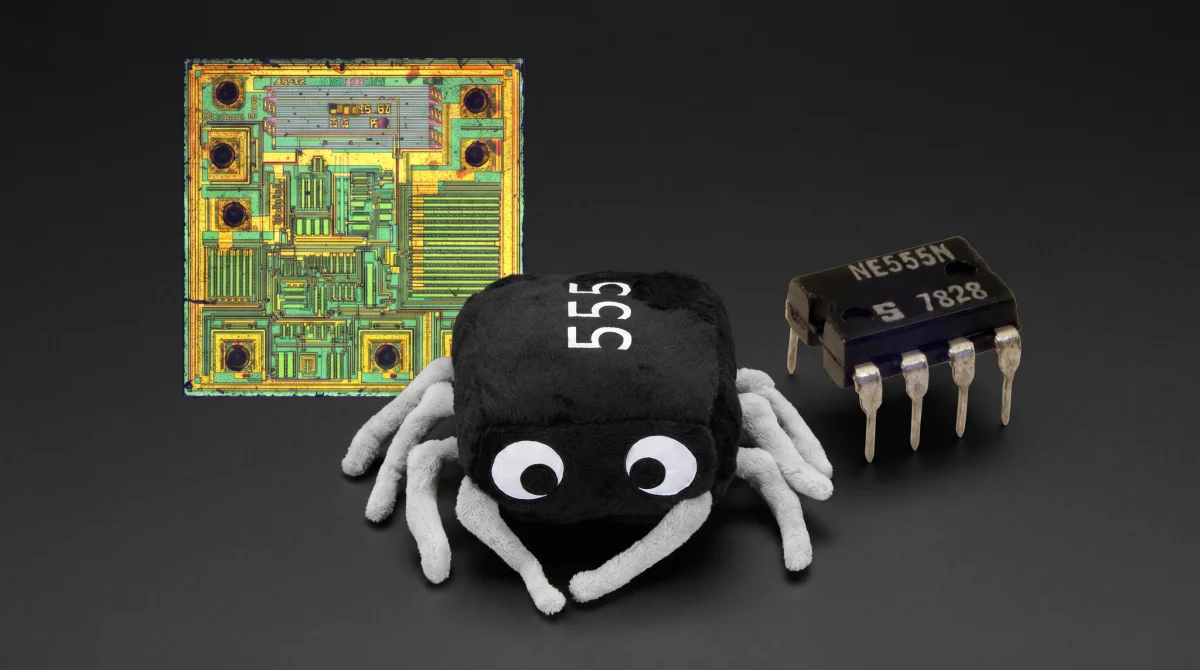
Ask someone to name the most important chip ever made and they will reach for a processor: an Intel CPU, an ARM core, maybe the microcontroller inside an Arduino. The real answer is humbler and far more widely produced. The best-selling integrated circuit in history is the 555 timer - an eight-pin part designed more than fifty years ago that is still manufactured by the billion every single year.
For anyone building connected hardware, the story of the 555 is more than trivia. It is a working lesson in the kind of engineering that lasts.
A chip designed by hand in 1971
The 555 was designed by Swiss-born engineer Hans Camenzind in 1971, working under contract for Signetics. There were no chip-design computers laying out the silicon for him - Camenzind drew the circuit and laid out the device largely by hand, iterating the design through the summer and autumn of that year. An early version used a constant current source and needed nine pins. A revision in October 1971 swapped that for a simple resistor, dropped the pin count to eight, and let the whole thing fit in a cheap eight-pin package.
Signetics released the SE/NE555 commercially in 1972. At the time it was the only timer IC you could buy off the shelf, and its combination of low cost and sheer versatility made it an immediate hit. Within a few years a dozen other manufacturers were producing their own versions, and it became the best-selling product of its kind. By 2003 Camenzind estimated that a billion 555s were still being made annually - a figure still quoted decades later.