Academia
When a state's police force expands its institutional power faster than the civilian mechanisms designed to oversee it, what grows stronger is not the rule of law, it is simply the apparatus itself.
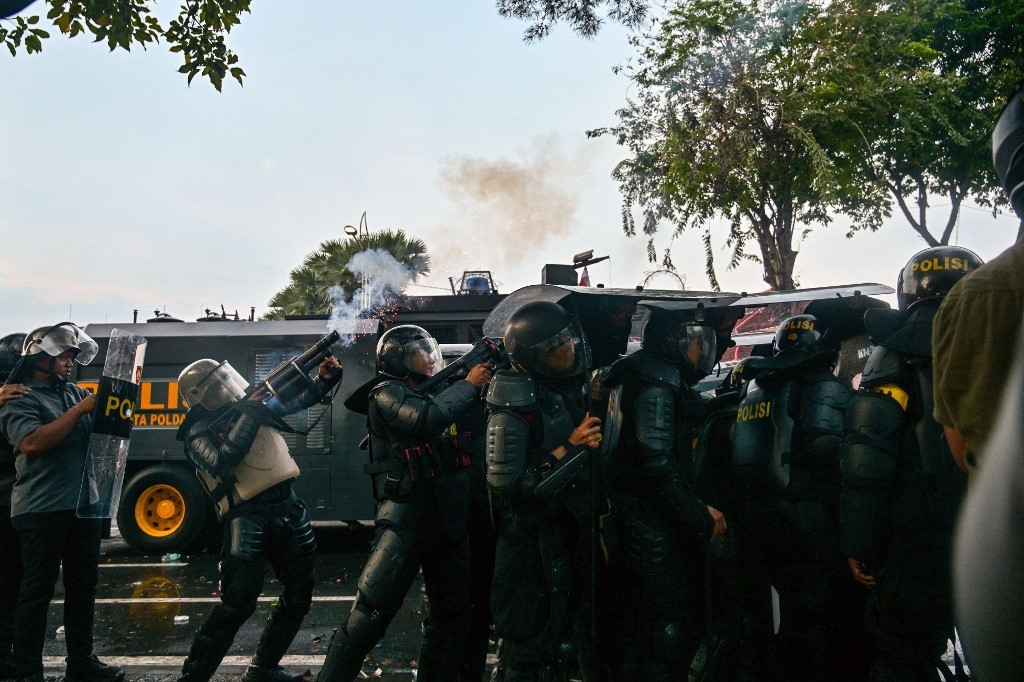
Police officers evacuate players and officials of Adhyaksa FC Banten during unrest following a playoff match against Persipura Jayapura in the 2025-2026 Pegadaian Championship, Indonesia’s second-tier soccer league, at Lukas Enembe Stadium in Jayapura, Papua, on May 8, 2026. (Antara/Gusti Tanati)
The House of Representatives’ passage of the revised Police Law has closed a debate that dominated public discussion for months. The government frames this revision as a broader effort to transform the force into a more professional, transparent, modern and service-oriented institution. On the surface, few would object to such goals.In politics, however, the real issue rarely lies in proclaimed objectives. More often, it lies in the institutional arrangements created to achieve them.
A closer reading of the revised law reveals a paradox. On one hand, it emphasizes transparency, oversight, political neutrality, human rights-based education and a strengthened National Police Commission (Kompolnas). On the other, it expands the police's institutional reach without introducing an equivalent expansion of civilian oversight.