Editorial
The newly amended Police Law betrays the spirit of the Reform era, turning the force into a political counterweight rather than a professional protector.
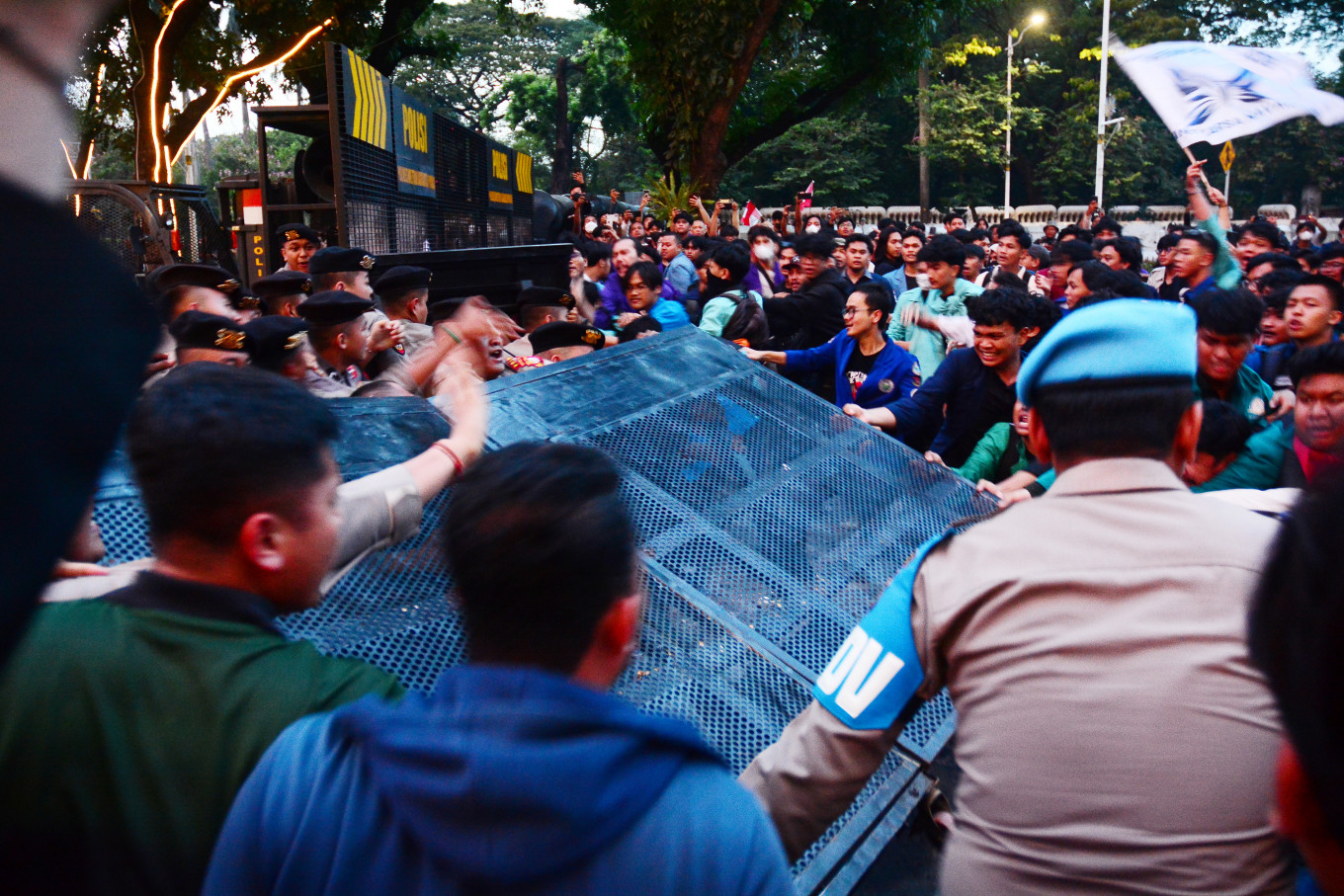
Police attempt to hold back protesters from the Aliansi Badan Eksekutif Mahasiswa Seluruh Indonesia (BEM SI) during a demonstration marking National Education Day on Jl. Medan Merdeka Selatan in Jakarta on May 2, 2026.
The demonstrators expressed their demand for reforms in education budget governance, including separating public education funding from official institutional budgets, ending excessive commercialization of education and ensuring equitable access to quality education. (JP/Iqro Rinaldi)
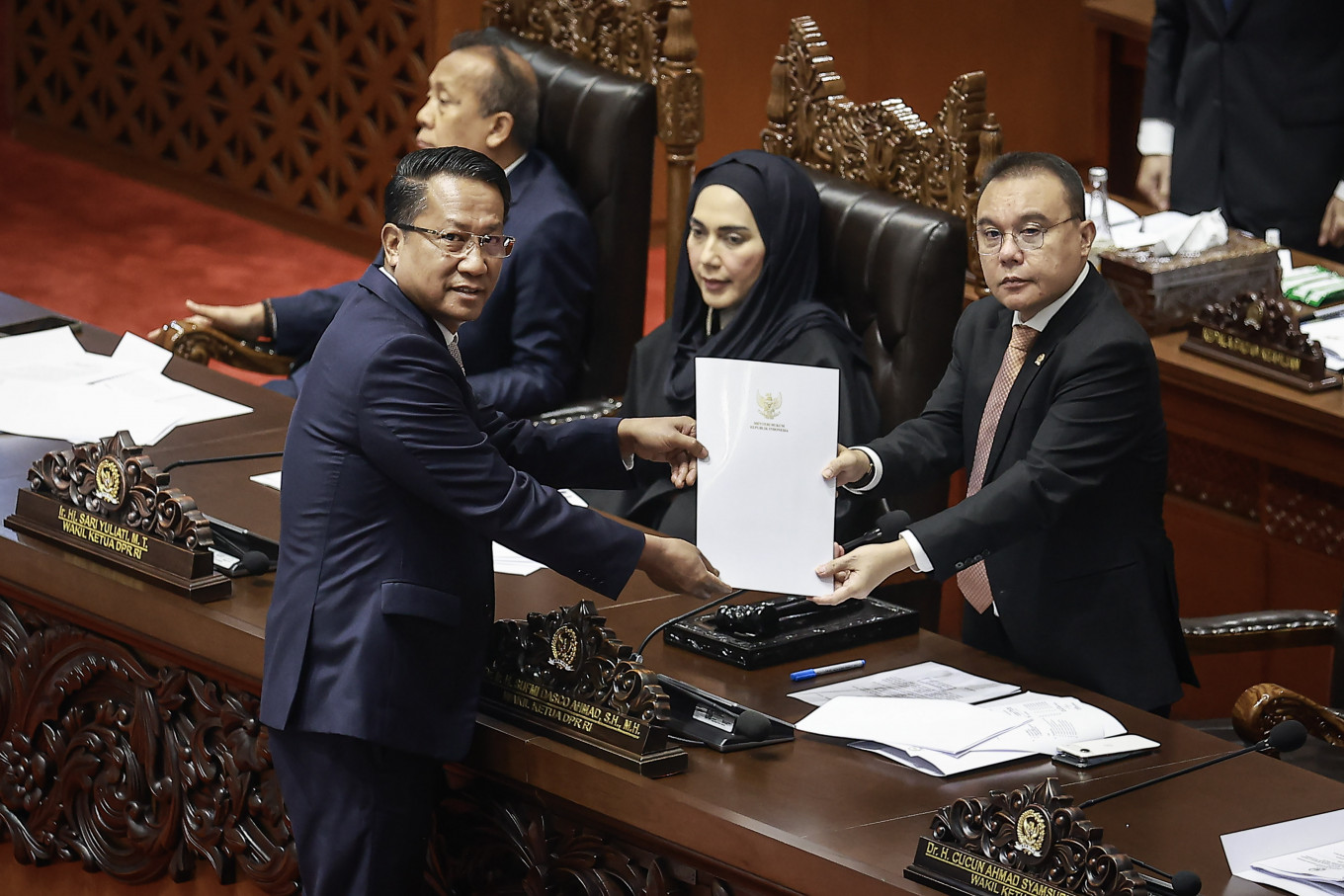
Just a few days ago, we expressed our eagerness to see the National Police follow a court order to investigate the parties behind the four Indonesian Military (TNI) personnel held responsible for the acid attack on human rights activist Andi Yunus and expose the true motives behind the criminal act.However, that may now be a false hope after the House of Representatives unanimously passed on Tuesday the amendment to the 2002 Police Law, morphing the institution into a more powerful body without adequate checks and balances. The rushed deliberation of the revision at the House, going through only two hearings on June 4 and 8, not only violates the prudent legislative principle of meaningful public consultation, but also demonstrates a political process laden with narrow, elitist interests.