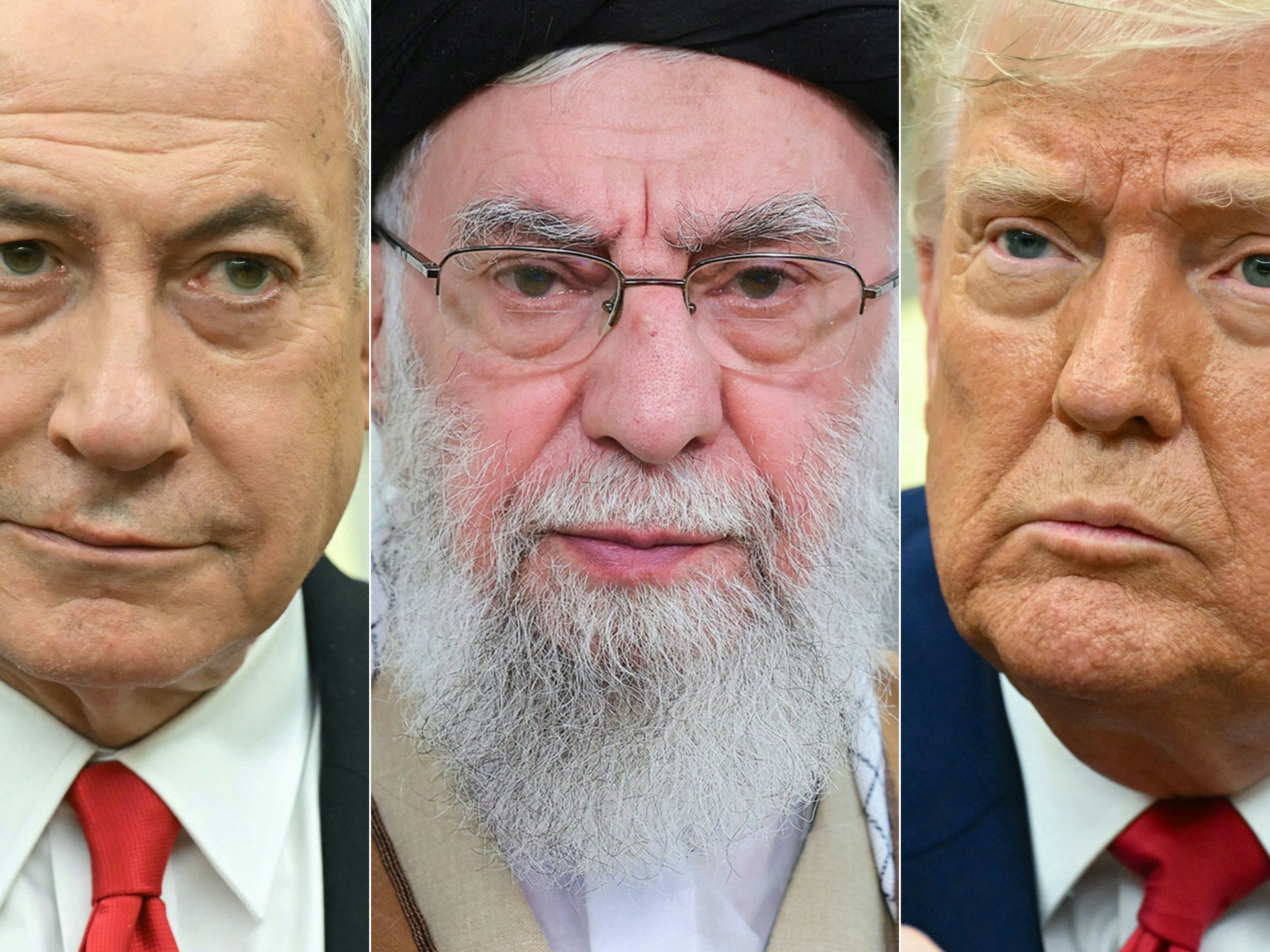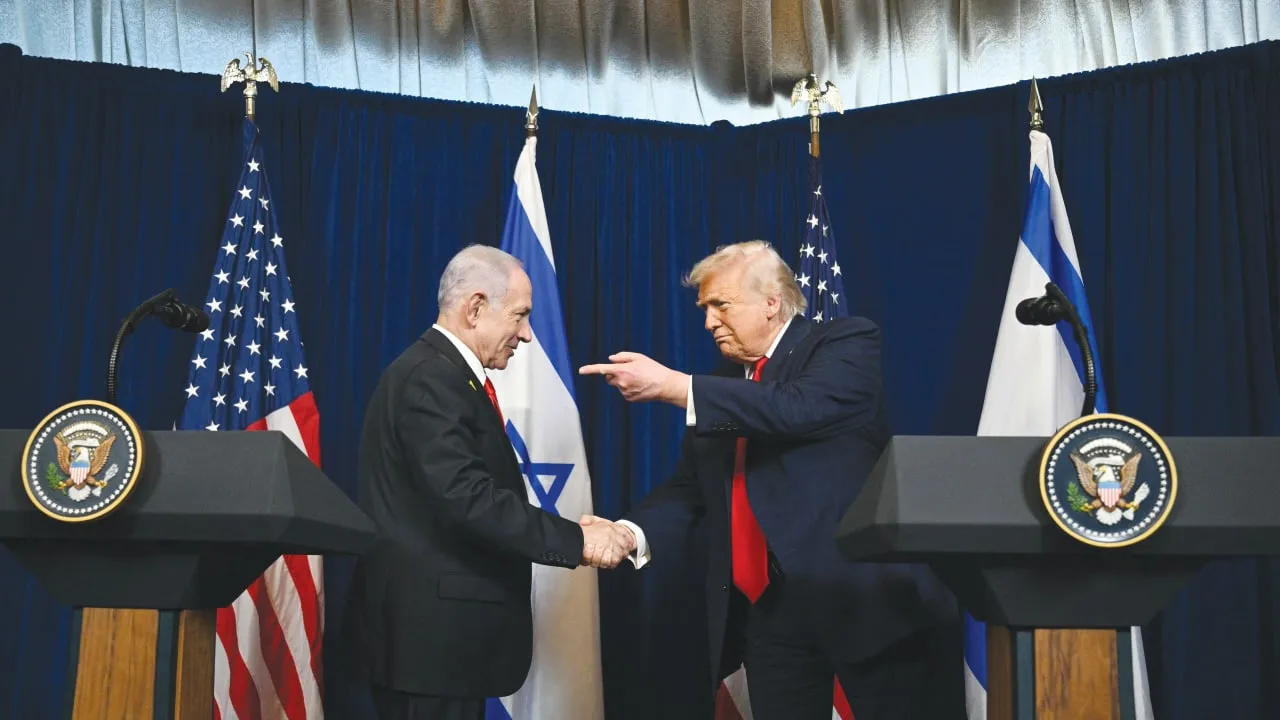
ByHERB KEINONJUNE 12, 2026 13:04Israel waged the Six Day War in June 1967. The 12-Day War with Iran in June 2025. And now, in 2026, the 12-hour war. Again with Iran. Again in June.To help make sense of what happened, what the country experienced, and what it means going forward, it is useful to look at other examples.In a Jerusalem Institute for Strategy and Security Zoom briefing this week, former National Security Council head Yaakov Amidror and Eran Lerman, a former senior NSC official, turned to two seemingly unlikely examples: North Korea and Google.No free lunch for IsraelFirst, Google.The week’s events made it clear to everyone in Israel that there is no free lunch. US President Donald Trump’s support for Israel – the steps he has taken across the board over the years to assist the country – is not without a cost. And the cost is that he gets a say, a big say, in what Israel can and cannot do.US President Donald Trump reacts as remarks are delivered to reporters about his administration's support for coal energy production, among other topics, in the Oval Office at the White House in Washington, DC, US June 4, 2026. (credit: REUTERS/JONATHAN ERNST)Never has Israel had a more supportive president in the White House. That’s the upside. The downside? Never has Israel been so dependent on a US president.And this is where Google comes into play.Amidror said that he has two friends with startups in which Google decided to invest. Both welcomed the partnership.But after a year, both realized that when Google is your partner, Google has something to say about how the company is run. Amidror said one of his friends disliked the arrangement and decided to sever the partnership and continue on his own.The other chose to stay with Google and figure out how to work with its input.“If someone thinks that when Google is your partner, you can neglect Google, I think they are making a big mistake,” Amidror said.“But you have to make a strategic decision. Do you want to continue with Google and have some flexibility here, or do you say, ‘Okay, I’ll continue alone without Google?’”Amidror said that when he posed that question to other friends, they all gave the same answer.“All my friends told me that if they had to make the decision, they would stay with Google. This is the situation of Israel today. We are with Google, and we have to take into consideration that Google is our partner.”The US, to carry the metaphor, is Israel’s Google. As a result, it will have a say in how we run our startup.At times, that smarts. At times, it is frustrating. At times, it limits your ability to make fully independent decisions.But it also carries enormous benefits – benefits that should not be overlooked in a moment of frustration over interference by the larger partner.Keeping the bigger picture in mindIT IS ALSO important to keep the bigger picture in mind. And what is the bigger picture? Iran’s nuclear capabilities.Prime Minister Benjamin Netanyahu often boasts that he has been sounding the alarm about Iran’s nuclear program for more than 30 years. And he has. It has been his top priority.When history is written a hundred years from now, one of the defining elements of Netanyahu’s legacy will be his efforts to prevent Iran from obtaining a nuclear weapon.That remains his overriding priority. Hezbollah, the Houthis, Hamas – all of that is secondary. What is key, what is essential, is preventing Iran from getting the bomb.Then along comes Trump and says, “I’m almost there. I’m just a step away from getting the Iranians to concede on the nuclear issue in negotiations. The military pressure, the economic pressure, it’s having an effect, and soon they will give it up in talks.”Do you believe him – a president who has declared peace where there is no peace, victory where there is no victory, and the destruction of Iran’s military capabilities when they clearly still possess them? Maybe not.But remember: he is Google, and Google has a say.Why Netanyahu bends to Trump's demandsThis is why Netanyahu deferred this week to Trump’s wishes and did not carry out the type of attack Israel had reportedly planned for Iran on Monday after the Iranian regime fired 11 ballistic missiles at Israel. Trump said stop shooting, and Israel – and Iran – stopped shooting.Why?To give those negotiations a chance.Trump, being Trump, cast this in terms of his own omnipotence – at least when it comes to Netanyahu.Netanyahu, he has repeatedly suggested over the last few weeks in various forums and in various ways, will dance obediently to his tune.“He’s fine. He will do whatever I want him to do. He’s a very good man,” Trump told reporters on May 20.On Sunday, he told the Financial Times: “I call all the shots. He doesn’t call the shots.”And on Tuesday, he told the BBC: “If I tell him to do something, he does it.”Those quotes will inevitably be trotted out by Netanyahu’s political opponents during the upcoming election campaign as evidence that the prime minister is Trump’s poodle and puppet.The widespread assumption, at least until recently, was that Netanyahu was Trump’s preferred candidate. If that is the case, doesn’t Trump realize that remarks like these could be politically toxic?Perhaps. But Trump, too, has domestic political considerations.According to Lerman, Trump has been stung by accusations from the Tucker Carlson wing of the MAGA movement that Netanyahu dragged him into the war with Iran.Comments such as “If I tell him to do something, he does it” need to be seen in the context of rebutting the charge, increasingly common in some US circles, that the Iran episode is a classic case of the tail wagging the dog.While Lerman said Trump has been “quite decisive” in shutting down the anti-Israel and antisemitic elements of the MAGA landscape, he added that the president is nevertheless “affected by the music and has responded to it.”Which brings us to North Korea.“One of the best examples of bad diplomacy in modern history is the success of North Korea in becoming a nuclear power,” Amidror said.One reason the US did not use force to stop North Korea, he argued, was South Korea’s adamant opposition.And why was South Korea opposed?Because of the fear that, in the event of a US attack, North Korea would unleash devastating force against Seoul, which sits only 60 km. from the Demilitarized Zone.The North Koreans have thousands of artillery pieces and rocket launchers dug into the mountains along the border that, South Koreans feared, could be used in a massive retaliatory barrage on the capital. So they forcefully urged the US not to strike.Iranians learned 'hostage strategy' from North KoreaThe Iranians have learned more from the North Koreans than just how to build missiles. They have also learned the value of this “hostage strategy.”IRAN IS effectively holding the Gulf states hostage in much the same way North Korea held Seoul hostage – not only deterring overwhelming American action but also helping persuade Washington to limit Israel’s attacks.“The Iranians are slowly building this same dynamic in the Gulf,” Amidror said. “What they are saying clearly is, ‘If you do something to Iran, we will destroy the Gulf countries.’“Under the table, these countries are saying to the Americans: ‘If you are going to take action, do it to the end. Finish this regime. Destroy its capabilities totally. But if you don’t finish the job, don’t put us – the Gulf countries – in a very dire situation. Because if you go halfway, at the end of the day we will pay the price.’”The Iranians have succeeded in creating a “coercive situation” in the Gulf because the Americans are not ready to go the extra mile and totally destroy Iran’s capabilities, Amidror said.Lerman, trying to make sense of Trump’s often contradictory rhetoric – one day talking about obliterating Iranian civilization, the next about meeting the new Iranian leader – offered a riff on the well-known saying by the ancient Chinese strategist Sun Tzu: “Know thyself and know thy enemy, and you will not lose a hundred battles.”The Trump version, he said, is: “If you don’t know what you’re doing, the enemy doesn’t either.”That said, Lerman added that Trump has shown a determination to prevent Iran from becoming a nuclear state. And that, too, may stem from North Korea.“The experience of trying to get Kim Jong Un to give up on his nuclear project during Trump’s first term – and failing – has taught him that these kinds of regimes have to be stopped before they have the bomb,” he said.“And on this, I think he’s been very consistent. Either they actually give him something distinctly better than the deal [then-president Barack] Obama struck, or we may go back to square one.”Meaning, back to a full-scale war.Whether Trump is right about the negotiations is anyone’s guess. What this week demonstrated, however, is something else entirely: that Israel’s strategic dependence on the US is now so deep that when the president says stop, Israel stops.That may be frustrating. It may even be uncomfortable and humbling.But, as Amidror’s start-up story illustrated, that is the price of having Google as your partner.Follow us on Google
Understanding the 12-hour Iran war: Why Israel stopped when Donald Trump said stop | The Jerusalem Post
DIPLOMATIC AFFAIRS: A startup’s relationship with Google and North Korea’s path to the nuclear bomb offers unexpected insights into this week’s 12-hour war with Iran.
1,539 words~7 min read