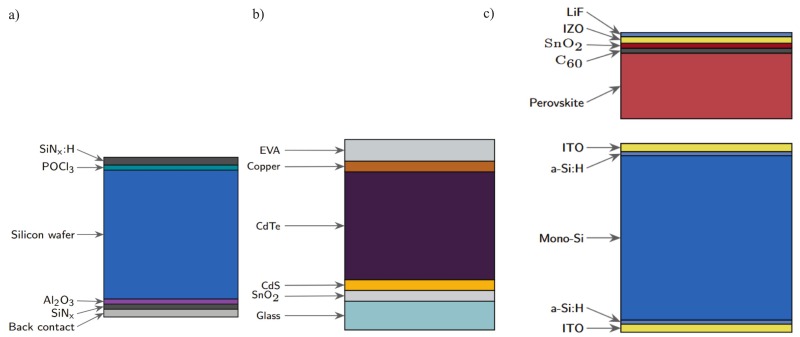
A Spanish research team conducted a cradle-to-gate LCA of eight PV technologies across three generations, finding that tandem solar cells can outperform silicon-based systems in environmental terms due to higher efficiencies. However, cadmium telluride thin-film technologies still show the lowest overall impacts, while tandem systems require long lifetimes and improved stability to deliver clear sustainability advantages over established PV technologies.
A research group from Universitat Politècnica de Catalunya (UPC) in Spain has conducted conducted a cradle-to-gate life cycle assessment (LCA) of eight PV panel types across three generations and has found that tandem technologies demonstrate improved environmental performance over silicon-based systems, although they require long lifetimes and low degradation to deliver clear sustainability advantages.
“Perovskite-silicon tandem technologies have shown a reduced environmental impact compared to current dominant silicon-based cells,” corresponding author Julia Otero told pv magazine. “Conversion efficiencies over 30% in lab-scale, though not yet achieved at an industrial scale, significantly contribute to these positive environmental impacts. However, when compared to thin-film technologies such as cadmium telluride (CdTe) and copper, indium, gallium and selenide (CIGS), these tandem models show a higher environmental footprint. On this point, we highlight that the absorber layers of thin-films feature a 20 to 80 times lower thickness than traditional silicon wafers. This low material consumption directly drives the environmental performance of thin-films.”