With Europe and Australia facing a significant wave of end-of-life solar panels, researchers point to silver recovery as the most important lever for improving unit economics, but technical barriers and the absence of industry-wide purity standards are slowing progress.
Almost all the economic value in a crystalline silicon solar module is concentrated in one material. Silver accounts for just 0.03% of a panel’s mass, but, according to data presented by Dr. Andreas Obst, head of recycling at Fraunhofer CSP, a German solar research institute, it can be worth more than the glass, aluminum and silicon combined.
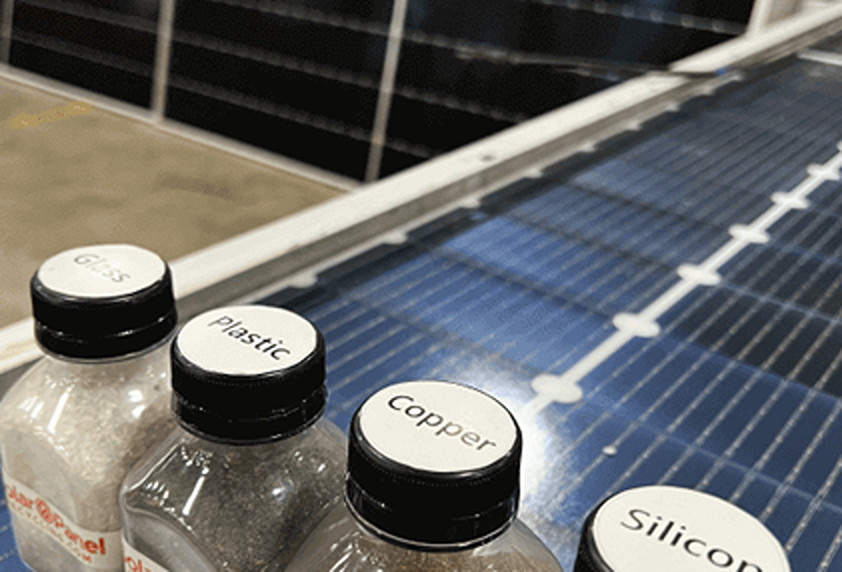
A standard crystalline silicon solar module weighs approximately 11.6 kg. Obst said glass accounts for 67.5% of that weight but yields only around EUR 34 ($39) per module at current prices. The aluminum frame – 12.7% by weight – yields around EUR 229. The silicon cells, at 2.7% of module weight, generate roughly EUR 38. The silver contacts, representing just 0.03% of module mass, are worth approximately EUR 600 per module at the material prices cited by Obst.
“When you’re talking about recycling of solar modules, you should talk about silver recovery,” said Obst. “The silicon from the solar cells just accounts for roughly 2.7% of the weight of an individual module – it’s really not that much money which would come out of the solar cells itself.”