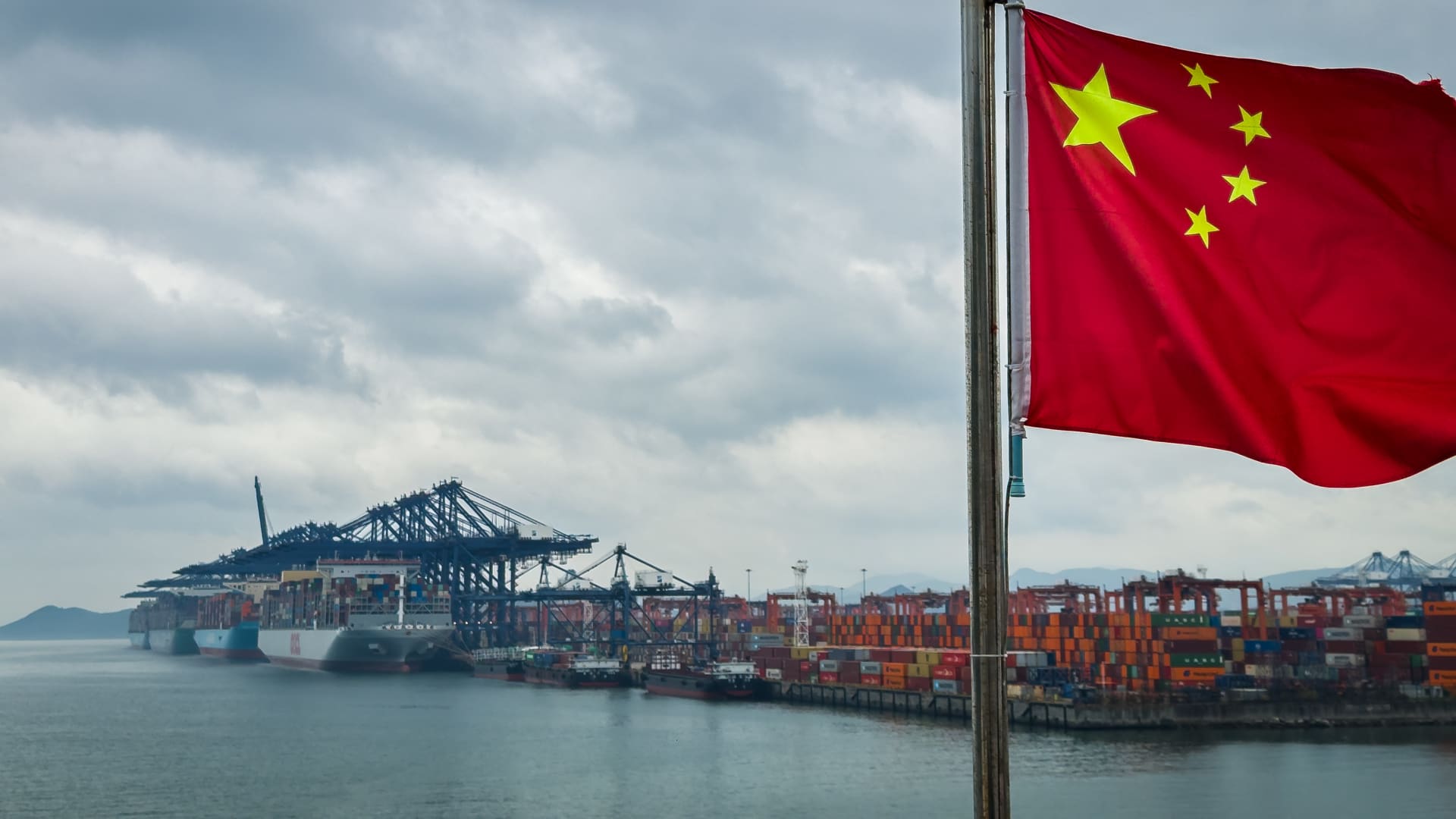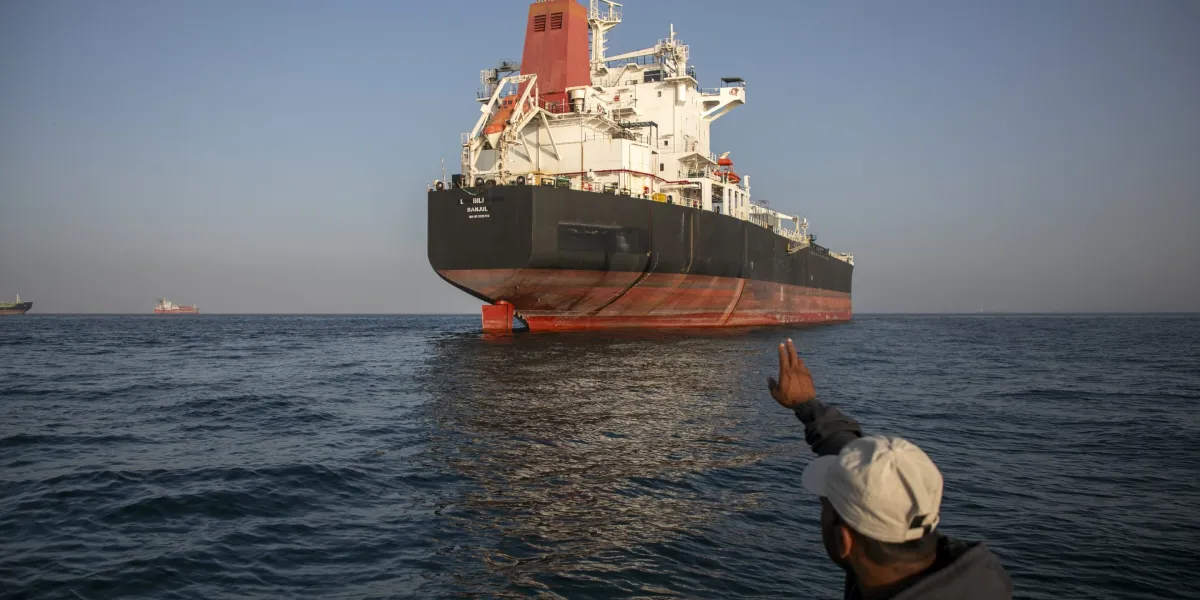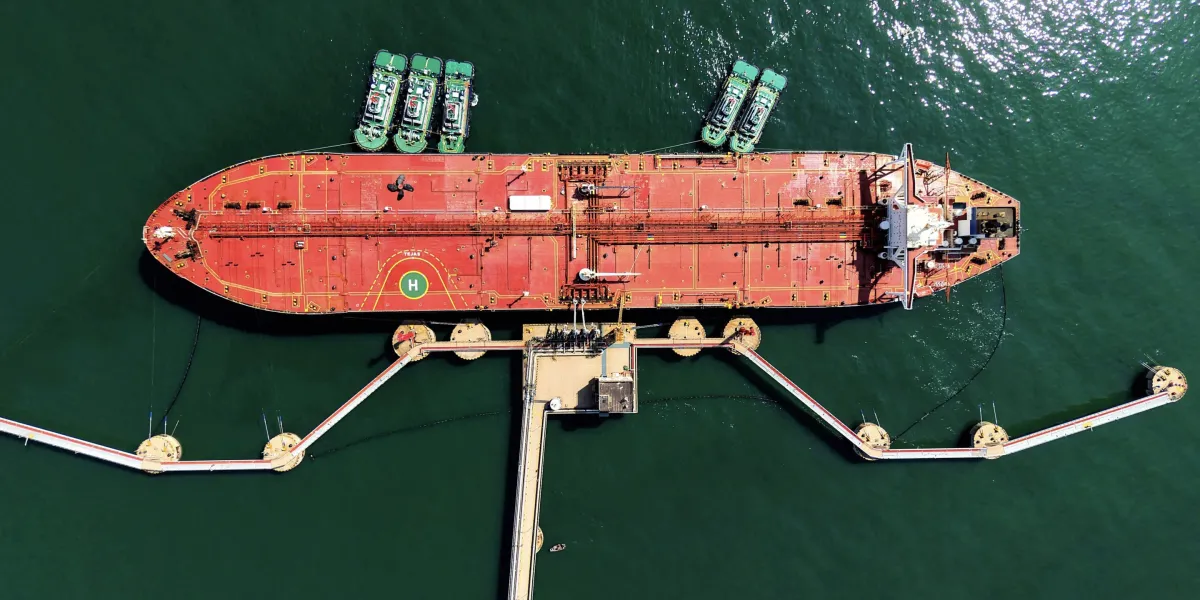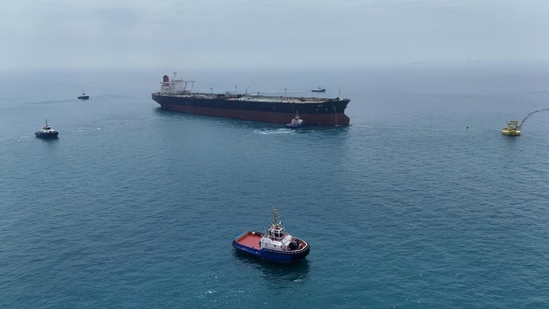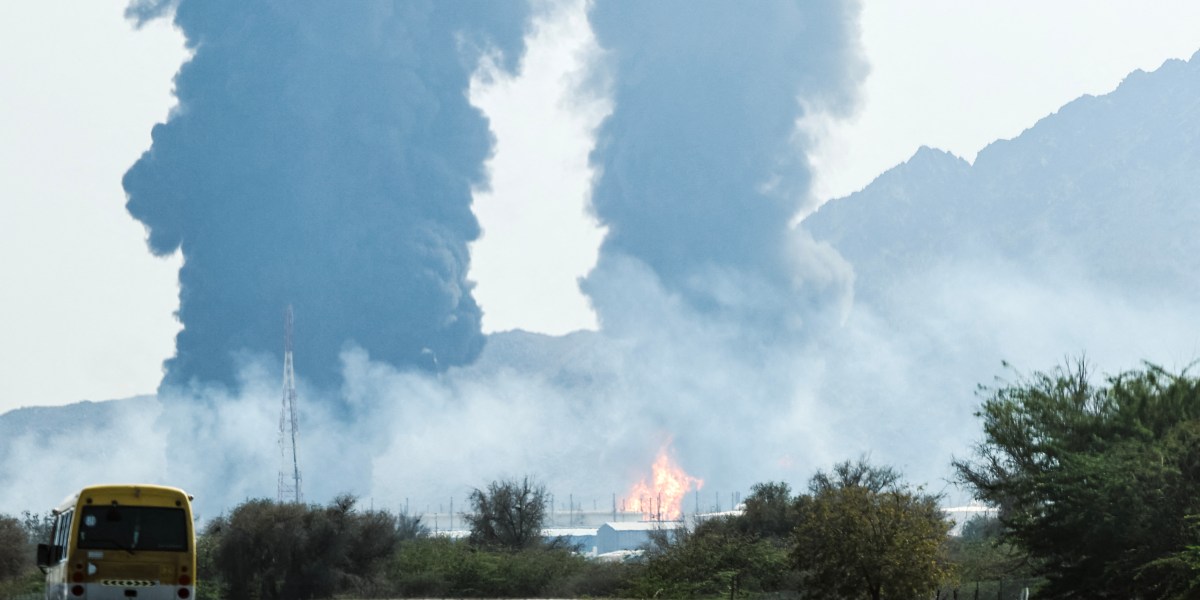
Regular readers will know that I’ve been more sanguine than many about the likely impact what is undoubtedly a massive oil shock being delivered by the war in Iran. But the market has still managed to surprise me: More than 100 days into the war, oil is still below $100 a barrel.It’s not an aberration: Both the financial and the physical oil markets have remained soft, at least in historical terms, and many other indicators — including time-spreads, physical premiums, shipping costs, even refinery margins — have declined too. The market isn’t weak, but it is weaker than most anticipated. Remember back in April when hedge funds and Wall Street banks predicted oil would hit $200 a barrel?Of course, this could all change very quickly. The ceasefire between the US and Iran is fragile, with both sides trading attacks in recent days.Still, prices remain well below previous levels. What’s going on? The supply shock is the largest ever, so all signals point the other direction. Before the war, an average of 20 million barrels a day of crude and refined products transited the Strait of Hormuz — about a fifth of global demand. To reconcile current prices with that loss of supply requires digging into the convoluted plumbing of the global oil market. It also requires honestly: We don’t know for sure what’s happening or why — the March and April data are only starting to become available. But given that incomplete information, here’s my best effort at explaining the top 10 forces at play.Bloomberg1. China, China and ChinaThe global oil market is incredibly complex, with myriad factors interacting to keep prices under $100 a barrel. But if I had to pick just one, it would be China. Beijing has managed to slash its oil imports, providing a massive — and unexpected — relief valve. Last month, China imported 6.7 million barrels a day of crude via tanker, down nearly 40% from the 2025 average, according to Vortexa, a market intelligence firm. That drop of 4 million barrels a day is roughly equivalent to the consumption of Germany and France combined. BloombergHow has China managed to dramatically reduce imports without suffering economic damage? We don’t know for sure. The country’s oil demand seems surprisingly weak, and it may also have surreptitiously tapped its strategic petroleum reserves. I think the Chinese import collapse is the most important story in global finance and geopolitics. If Beijing was buying as much oil as it did in the past, prices would be much higher, global inflation would be rampant and central banks would be forced to hike interest rates quickly, panicking stock markets. President Donald Trump would also be in a far weaker position in his talks with the Iranians. In short: China has essentially bailed out both the global economy and the political fortunes of the US president.2. Demand destructionThe amount of oil refineries are processing into fuel and petrochemicals has fallen by about 5 million barrels a day. Either consumers are cutting back significantly, or refineries are running down their inventories. Likely, both factors are at play, with demand destruction, mostly in the petrochemical sector, probably accounting for 3 million to 4 million barrels a day. That’s a lot considering that prices have not increased as much as many expected. Perhaps the world has become structurally more responsive to higher oil prices. Over the last 20 years, the center of the petroleum market has shifted to Asia, where consumers may be reacting more quickly than those in the US and Western Europe did during previous shocks. The availability of electric vehicles may have moved the needle in China. Or, it could be that fuel simply hasn’t been available. In India, for instance, cooking fuels like butane and propane have vanished from large swathes of the country. And surprisingly, Asian nations have quickly switched to other options, notably coal and firewood, in a way I very much doubt Western consumers would do.3. Oil is still leaving HormuzThe Strait of Hormuz has been closed for more than 100 days. Yet oil still flows from the Persian Gulf. The first route is obvious: bypass pipelines that circumvent the waterway, crossing Saudi Arabia and the United Arab Emirates. The pipelines, which were previously little known outside the energy industry, have kept about 5 million barrels a day flowing. More recently, oil has started to leave by tanker, with Emirati and Kuwaiti vessels shuttling from terminals inside the Persian Gulf, through Hormuz, to anchorage areas just outside the bottleneck, and then offloading their cargo to other ships. The tankers cross the strait hugging the Omani coast, and with their beacons off. What started as a trickle has now become a constant flow, to the tune of about 2 million barrels a day.Bloomberg4. The original oversupplyThe war has overshadowed a crucial fact: The oil market was massively oversupplied on Feb. 27, before the conflict started. By how much? Probably 3 million to 4 million barrels a day during the seasonally low-demand period between the end of the winter and the beginning of spring. That oversupply, built on the impact of the US shale revolution and OPEC+ output hikes during the preceding year, has provided an invaluable cushion. 5. Release, baby, releaseWhen Iraq invaded Kuwait in 1990, rich nations didn’t tap their strategic petroleum reserves until six months later. This time, the US pushed its allies in the International Energy Agency to tap reserves during the first two weeks of the war. On March 11, the 32 members of the Paris-based IEA announced they would release 400 million barrels over the following months — the largest release in organization’s history. Still, it took time for those barrels to hit the market, only gathering speed in late April. Now, the oil is flowing at a rate of about 2.5 million barrels a day. But with the US reserve, a major contributor, already at its lowest level in 40 years, it won’t go forever. At the same time, the oil industry is burning through millions of barrels of commercial stockpiles that could approach critical levels by August. 6. The big refinery flexToday’s refineries are far more flexible, both in what they produce — gasoline, diesel, jet fuel, fuel oil, petrochemicals — and in what they process, than those of even a few years ago. The previous facilities were picky, only processing a handful of crude varieties. Now, thanks to investment in new units called cokers, they can process a much wider range. The new refineries can also shift, to a point, the percentage of each refined product they output. That translates into an ability to generate more of what’s needed. Take jet fuel. Before the war, it accounted for 10.5% of the US refinery output. That yield has now climbed to a record high of nearly 13%.Bloomberg7. The art of jawboningWhen it comes to oil, the White House seems to have gone into the war with lots of hope and not much strategy. Still, Trump has excelled in one area: jawboning the market. Via social media and interviews, he kept oil traders on their toes, warning nearly 40 times over 100 days that a deal was just around the corner. For any oil trader betting on price hikes, the president’s pronouncements created an enormous risk of being stopped out, with prices often falling as much as 10% after some posts. The jawboning wouldn’t have worked, however, without a receptive audience. Wall Street not only believes Trump, it wants to trust him. If former President Joe Biden had made similar comments, the oil market would have laughed him out of the trading room. 8. Buy insurance, not oilFor decades, buying oil futures was the only way to hedge against Middle East conflict. As everyone went long, the buying spree invariably created a self-fulfilling price spiral. The options market, which allows traders to buy insurance without betting prices will rise, simply wasn’t liquid enough. Over the last decade, however, that market has grown exponentially. Back in 2016, the average daily volume of call options — which provide upside price protection — for Brent crude was around 25,000 lots; it now averages 200,000 lots, reaching peaks of 550,000 lots a day recently.Bloomberg9. The thinning fog of warVeteran oil traders recall the market-intelligence innovation of the 1990-1991 Gulf War was jerry-rigging a satellite dish to watch grainy night-vision footage on CNN. It was difficult to distinguish between real and rumor. Today, the fog of war is thinner thanks to the availability, at a reasonable price, of commercial satellite photographs that allow traders to observe what’s happening in near real-time. Satellites have also improved the tracking of tankers. Simply put, the current oil market is trading more on information, despite imperfections, and less on speculation.10. Higher prices, higher productionThe oil market is — rightly — so obsessed with the output losses in the Persian Gulf that few are paying enough attention to the production gains elsewhere. But they are real, and very large. The American continent is enjoying a production boom, with output up about 2 million barrels between the second quarter of 2025 and the same period of 2026. Brazilian output is up a staggering 20% year-on-year, to a record. Guyanese and US production also hit all-time highs in April, according to preliminary data. Canadian output is also strong, and Venezuela’s is recovering. To be sure, the gains are only a fraction of the losses in the Middle East, but in a tight market every barrel helps. Chinese oil production, too, is at a record high.For 100 days and counting, those factors have kept oil prices under control. Some, like the flexibility in refining or growth of the options market, are structural and will continue to cap any price rally; others, like strategic reserves and commercial stockpiles, are ephemeral and will eventually peter out. The biggest and most crucial uncertainty is China. How long can Beijing continue whatever it is it’s been doing? Oil’s next 100 days may depend on the answer to that unknown.
Ten reasons oil is still below $100 a barrel
Global oil prices remain surprisingly low despite the ongoing war in Iran. China's drastic cut in oil imports is a major factor. Demand destruction and increased production from other regions also contribute. Refineries show greater flexibility in processing and output. The market is also influenced by improved information flow and strategic reserve releases.
1,670 words~8 min read