For decades, oil traders, executives and analysts warned that closing the Strait of Hormuz would be a global economic catastrophe.
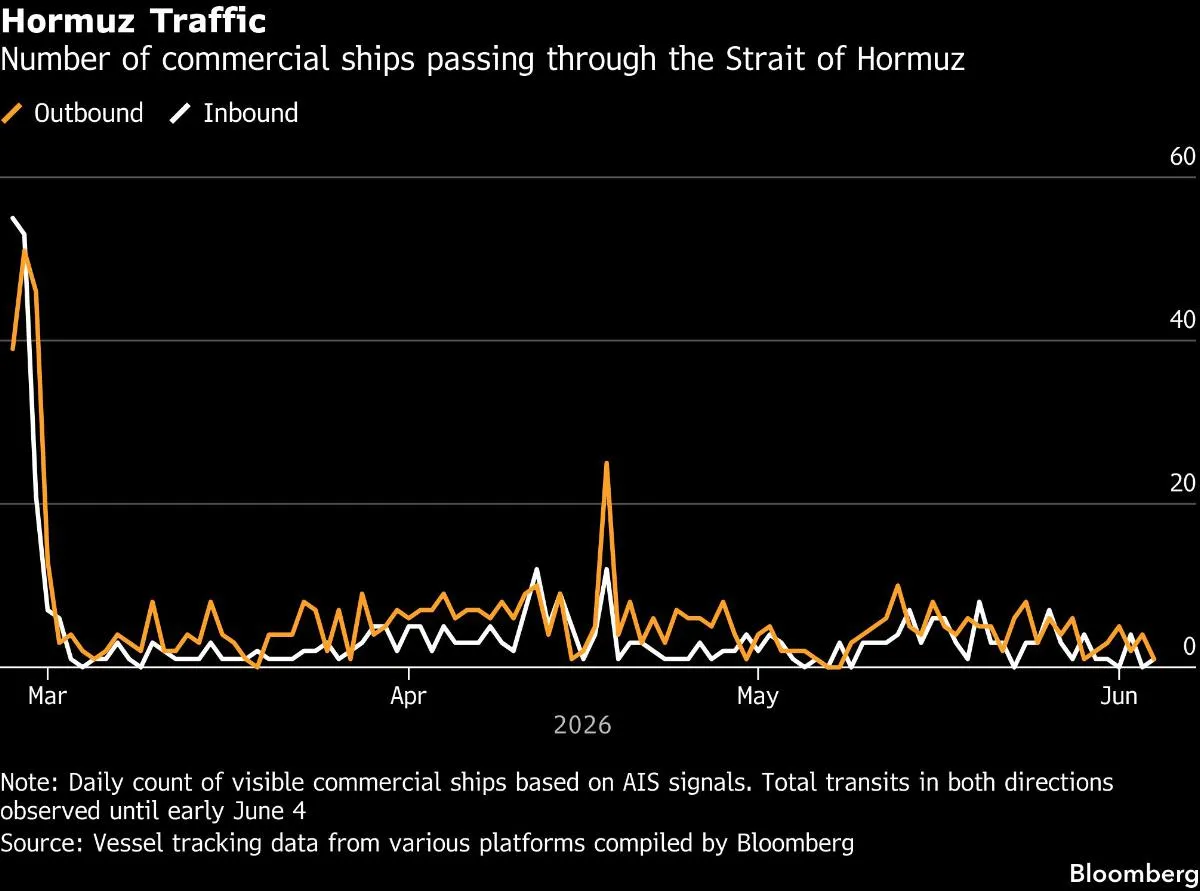
It’s now been more than three months since the waterway was effectively blocked, creating the worst supply shock in modern history. But a slew of workarounds is keeping crude oil below $100 a barrel, defying many of the industry’s grimmest forecasts for prices as high as $200.
A combination of record US exports, a sharp and unexpected slowdown in Chinese demand and a steady trickle of crude still finding its way through the strait has helped absorb much of the shock from the loss of more than 10 million barrels a day of Middle Eastern supply. A pre-war surplus has also eased the blow.
“People thought it was going to be a lot worse,” President Donald Trump said Friday. “Today I looked at $96 a barrel, people thought that was going to be $300 a barrel.”
All eyes now are on how long those buffers can hold, while the question of when flows might resume through the strait, and where oil prices are headed, have become the biggest wild cards for the global economy.