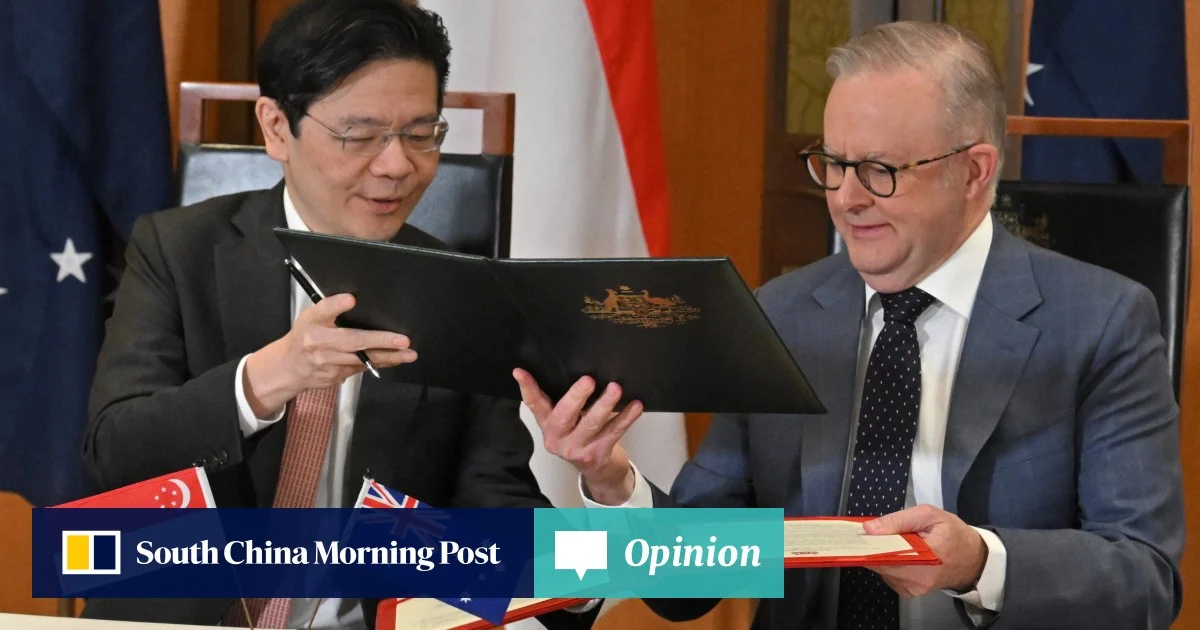
In the wake of intensifying great power rivalry, the spotlight has fallen on middle powers — states that lack the comprehensive capabilities of great powers but can still exert influence through diplomacy, coalition-building and leadership. Singapore demonstrates how smaller middle powers can advance their own national interests by defending and strengthening multilateralism.
Singapore is probably not the first name that appears on any list of middle powers. After all, the city-state is one of the smallest countries in the world — barely a tenth of the size of Shanghai — with a population of only 6 million, including a sizeable foreign labour force. Nor do its leaders explicitly describe Singapore as a middle power, preferring instead to emphasise its role as a proactive and constructive participant in the international system.
But set aside its size and population, Singapore looks very different when assessed against other metrics of state power. Singapore is among the world’s richest countries. It is also arguably the most connected, making it a central node for global trade and commerce. It houses an airport, maritime port facilities and oil refineries that are consistently ranked among the best — if not the best — in their respective industries. Its population is among the most educated in the world. Its model of governance, while hardly perfect, is often seen as an example for many countries in the so-called Global South.