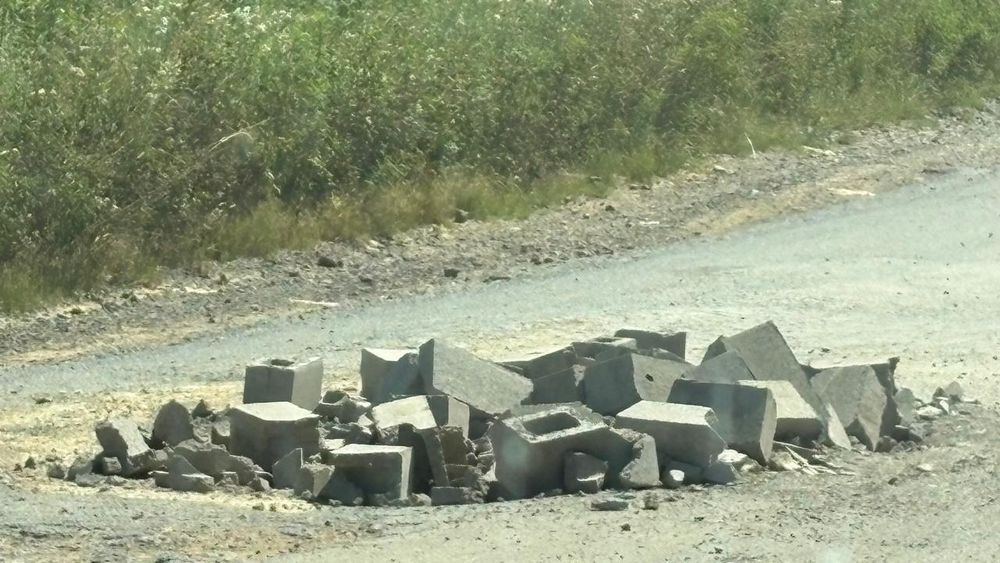
My hometown, Bethal, in Mpumalanga, is more than 120 years old and in a state of decay. Like many other municipalities across South Africa, Bethal faces existential challenges: ageing infrastructure, wasteful spending, poor service delivery and pressure to grow its economy. However, these multiple challenges can be resolved by increasing reliance on data, AI, digital platforms, smart infrastructure and predictive analytics to make local government more efficient. The question is no longer whether these tools work but how towns like Bethal can benefit while partnering with the private sector. The town is surrounded by coal mines, power stations and a hybrid renewable energy plant. The operations involve heavy trucks moving coal, and as a result roads in the area are deteriorating faster than they can be repaired. Worse still, water systems are outdated and the energy infrastructure is crumbling. These challenges are not limited to Bethal. In the 2023/24 fiscal year, just 41 of the country’s 257 municipalities received a clean audit — a sign of impending disaster.Smart partnershipsPublic-private partnerships (PPPs) stand out as a solution and not a fantasy. In his book Illusions: The Adventures of a Reluctant Messiah, author Richard Bach reminds us: “Every problem has a gift for you in its hands.” PPPs are a gift for Bethal and other similar dying dorpies. In such smart partnerships, the government brings policy direction, accountability and development goals, while the private sector brings capital, tech expertise, innovation and implementation. The Govan Mbeki Municipality, which includes Bethal, Secunda and Evander, can fix infrastructure and improve efficiency without breaking public finances. Imagine a small town like Bethal using predictive analytics to forecast road decay from mining traffic, for example, then deploying AI-driven maintenance schedules. Digital platforms could enable residents to report potholes or water leaks in real time. Smart infrastructure such as sensors on water pipes could quickly detect stress areas and leakages. Private tech firms can build and operate these systems, while the municipality oversees governance. For its part, the Govan Mbeki Municipality could develop an e-toll system on roads regularly used by mines. Revenue generated by the toll system could be used to repair roads, create jobs and open new business opportunities.Governance In another observation, Bach writes in Illusions: “What the caterpillar calls the end of the world, the master calls a butterfly.” Bethal’s decay looks like an ending, but with PPPs it could be a beginning. Investors are likely to deploy capital where governance is transparent, procurement is fair and outcomes are measurable. Municipalities must see themselves as economic enablers, not just service providers. They own land, utility networks and transport corridors — assets ready for structured collaboration. Tech companies are eager partners. Through PPPs, Bethal could introduce smart traffic lights that adapt to mining truck hours, digital service portals that cut queues and AI-powered utility monitoring that reduces leaks and electricity losses. These tools lower costs and improve daily life. Besides, better roads attract investment, and new investment starts businesses. That cycle is what Bethal and other municipalities need. South Africa has world-class engineers, tech firms, developers and financiers. Expertise, capital and innovation already exist. What’s missing is a new mindset: public servants who see business not as an enemy but as a partner. The future of local government won’t be built by the public sector alone but through collaboration, shared purpose and a commitment to sustainable value. Bethal’s roads, and those of other municipalities, can still be fixed. Municipalities like Govan Mbeki have to invest in fibre connectivity for all municipal offices and appoint young data analysts and tech-savvy graduates who understand the internet of things (IoT). Without fast, reliable fibre and skilled IoT talent, Bethal and other municipalities cannot unlock the promise of predictive analytics or smart infrastructure. PPPs can help fund the fibre and training, but the political will to hire for skills, not connections, must come from within. The future runs on data; local governments must run on talent. The partners are ready. The time to build together is now. • Lourie is founder and editor of TechFinancials.
GUGU LOURIE | Smart partnerships offer hope for SA’s decaying towns
Data-driven solutions and private investment can revive struggling municipalities
675 words~3 min read