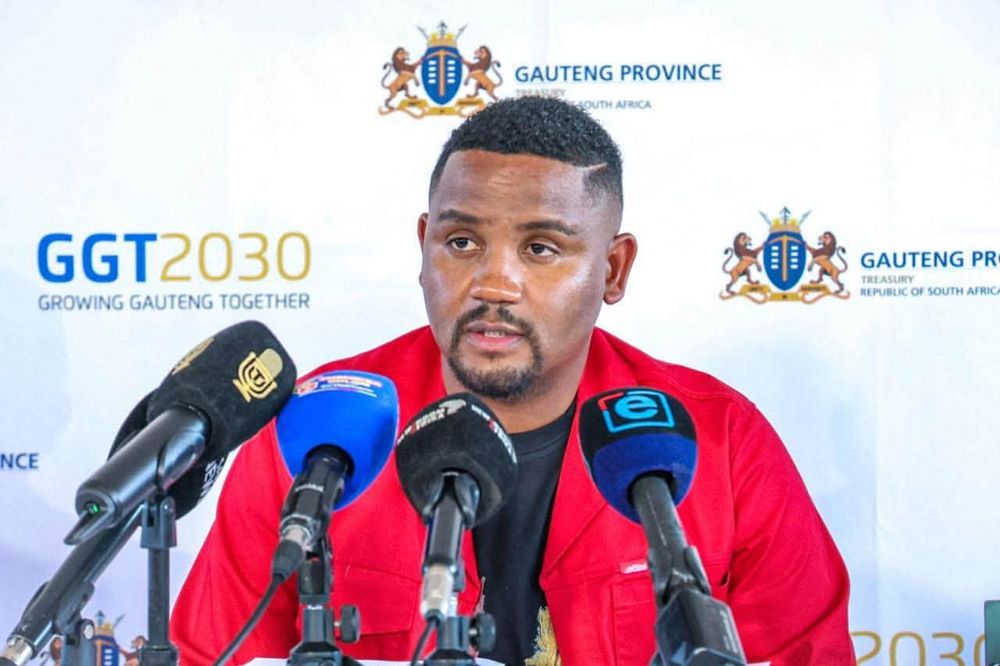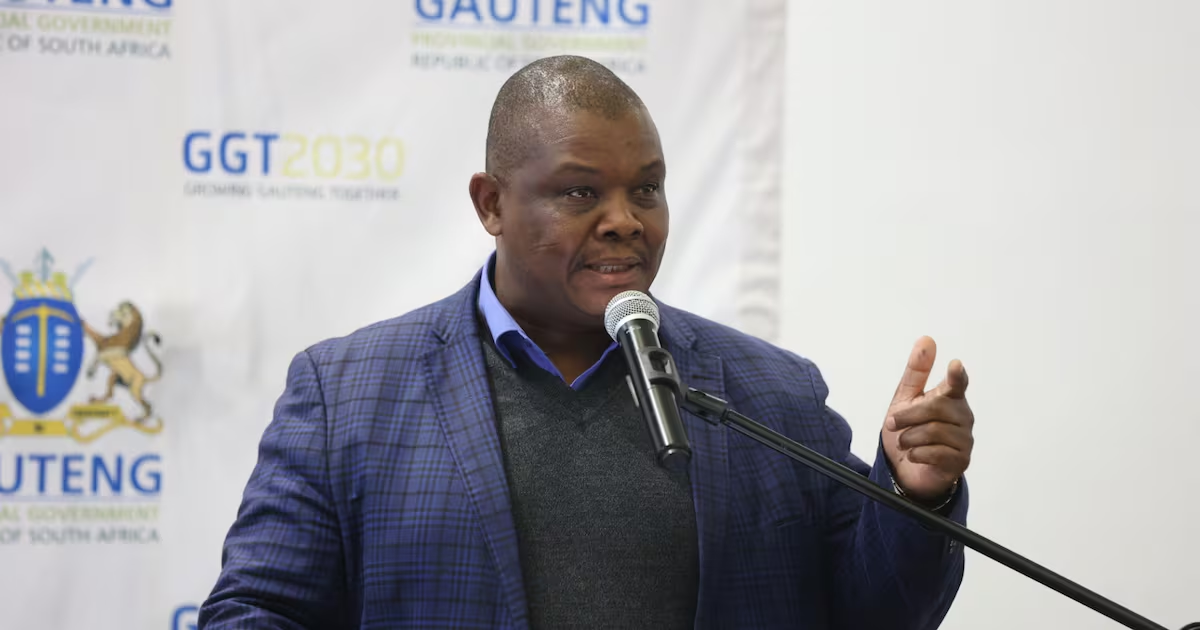
Gauteng municipalities are beginning to show measurable improvements under the province’s Local Government Turnaround Strategy (LGTAS), though debt, water losses and infrastructure failures continue to weigh heavily on service delivery.Gauteng co-operative governance & traditional affairs and infrastructure development MEC Jacob Mamabolo on Sunday provided a progress report on the implementation of the strategy, alongside members of mayoral committees from municipalities across the province.The briefing, held under the theme “Building Gauteng as a Smart City Region through Integration, Innovation and Digital Solutions”, focused on progress made since the October 2024 Local Government Turnaround Summit.Mamabolo said the strategy was aimed at strengthening municipal capacity, improving accountability and using integrated planning to address persistent service delivery failures.“As directed by the president, we must build sustainable capacity not only within local government, but across the province, to effectively respond to the service delivery challenges affecting our communities,” Mamabolo said.“We need to ensure that organs of state have the necessary institutional capacity to address these issues in a sustainable manner.”The province also introduced the Gauteng Smart City Performance Monitor, a real-time dashboard designed to track key performance indicators across all 11 municipalities.The dashboard will monitor areas including governance, financial management, infrastructure delivery, climate resilience, disaster preparedness and service delivery. The province says it will also allow residents to access municipal performance data and track progress in their own communities.Integrated technology platforms, including CCTV networks, the LIMIT land invasion monitoring system and smart water management dashboards, form part of the province’s broader digital transformation programme.Mamabolo said the use of intergovernmental relations structures was intended to improve co-ordination between national, provincial and local government.“What we are doing through our intergovernmental relations structures is precisely to ensure greater integration and co-ordination so that when we commit to resolving the 13 priority challenges identified by Premier Panyaza Lesufi during the state of the province address, we do so with clear programmes and interventions that deliver long-term solutions,” he said.“I am encouraged that national, provincial and local government are increasingly recognising that we are stronger when we work together, and that blame-shifting or reacting to problems in isolation will not assist us in addressing the complex challenges that continue to hamper service delivery.”Municipal debtAccording to the province’s progress report, municipalities have recorded improvements in audit performance. Audit findings resolved increased from 35% in the third quarter of 2023/24 to 55% in the same period in 2024/25.Repeat audit findings declined from 30% to 28%, while non-compliance findings decreased from 35% to 27%. Two municipalities maintained clean audit outcomes and all 11 municipalities now have functional audit committees.The province said the professionalisation of municipal administrations had also gained momentum. The filling of senior management positions improved from 70% in March 2025 to 86% in March 2026, while all municipal and city manager posts are now filled.About 88% of critical technical posts have also been filled, which the province says has strengthened institutional capacity across municipalities.However, the progress report shows that municipalities remain under severe financial pressure.Provincial government debt payments of R209.24m were received by March 2026, while debt settlement arrangements have been secured with most municipalities on Rand Water obligations. The province said several municipalities had also improved current account payments to key service providers.But municipal debtors reached R173.3bn by March 2026, with 86.8% of the debt older than 90 days. Eskom debt increased to R31.27bn, up about R1bn.Emfuleni, Lesedi, Rand West City and Merafong were flagged for not honouring debt settlement arrangements with Eskom.The province said it would continue working with municipalities to strengthen revenue collection, improve financial controls and accelerate infrastructure investment.Infrastructure and service delivery remain among the most serious challenges confronting the turnaround programme.Water supplyGauteng’s average non-revenue water losses exceed 35%, above the national target of 25%. Rand West City recorded water losses of 58%, Emfuleni 60.17% and Lesedi 54%.The province said new interventions aimed at reducing water losses, protecting infrastructure and improving service delivery outcomes were being prioritised under the LGTAS.These include digital monitoring platforms, smart water management dashboards and the “Amanzi Fix” initiative, which will deploy artisan trainees to assist with leak repairs.Most municipalities also remain below Treasury’s 8% benchmark for infrastructure maintenance spending. Johannesburg spends 4% on maintenance, while Tshwane spends 2%.Despite these challenges, the province pointed to some gains in basic service delivery. All nine municipalities assessed have indigent policies in place, with overall free basic services coverage at 98%. Weekly waste collection in formalised townships was reported at 100%.On water quality and sanitation, Ekurhuleni was identified as the province’s best-performing water services authority, with six Green Drop certifications. Tshwane achieved more than 95% compliance with Blue Drop standards.The province also reported progress in integrated law enforcement operations, which it says contributed to reductions in contact-related and property-related crimes.CCTV camerasMore than 960 CCTV cameras have been installed across strategic corridors. Joint operations were conducted in Johannesburg, Emfuleni, Ekurhuleni, Tshwane and Midvaal between April 2025 and February 2026.The province said contact-related crime declined 9.4%, property-related crime declined 7.8% and serious crime declined 4.9% in the third quarter.Members of mayoral committees serving as workstream leads presented key performance indicators and progress achieved since the October 2024 summit.The province said the indicators showed that Gauteng was deepening collaboration between municipalities to address infrastructure protection, financial recovery, governance, disaster preparedness and service delivery challenges.The Gauteng government said the LGTAS was not a one-off intervention, but an ongoing programme aimed at rebuilding municipal capability, strengthening accountability and improving service delivery outcomes.It said the next phase of the strategy would focus on “fixing the basics” while building smart cities of the future through integration, innovation, digital transformation and co-operative governance.
Gauteng launches dashboard to track municipal turnaround
Province reports governance gains, lower crime and improved appointments
929 words~4 min read