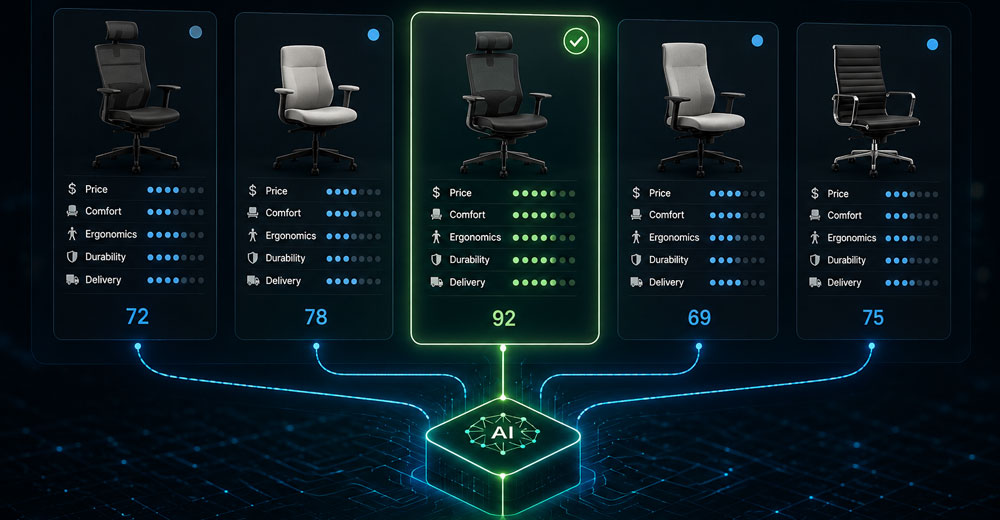
AI agents are moving beyond assisting with purchases to making them, raising new questions about trust, marketing, procurement, and customer experience in both B2C and B2B commerce.
As AI takes a more active role in purchasing decisions, company leaders must answer important questions about how they should rethink generative engine optimization (GEO) strategies and what their marketing teams should prioritize when creating content that resonates with AI buyers.
The shift toward autonomous AI buyers requires businesses to rethink how the traditional marketing funnel functions when the decision-maker is an algorithm rather than a human.
Matt McGinnis, VP of product, industry, and solution marketing at Five9, an AI-powered customer experience (CX) solutions platform, is concerned about the broader implications of AI taking on the role of the buyer and what it means for businesses moving forward.
Over time, Five9 expects enterprises to deploy negotiation-aware AI agents that represent the seller’s interests when interacting with autonomous buyer-side AI agents. As AI begins participating directly in procurement, companies will need intelligent systems that can dynamically protect margins, enforce policy guardrails, preserve brand positioning, and optimize commercial outcomes in real time.