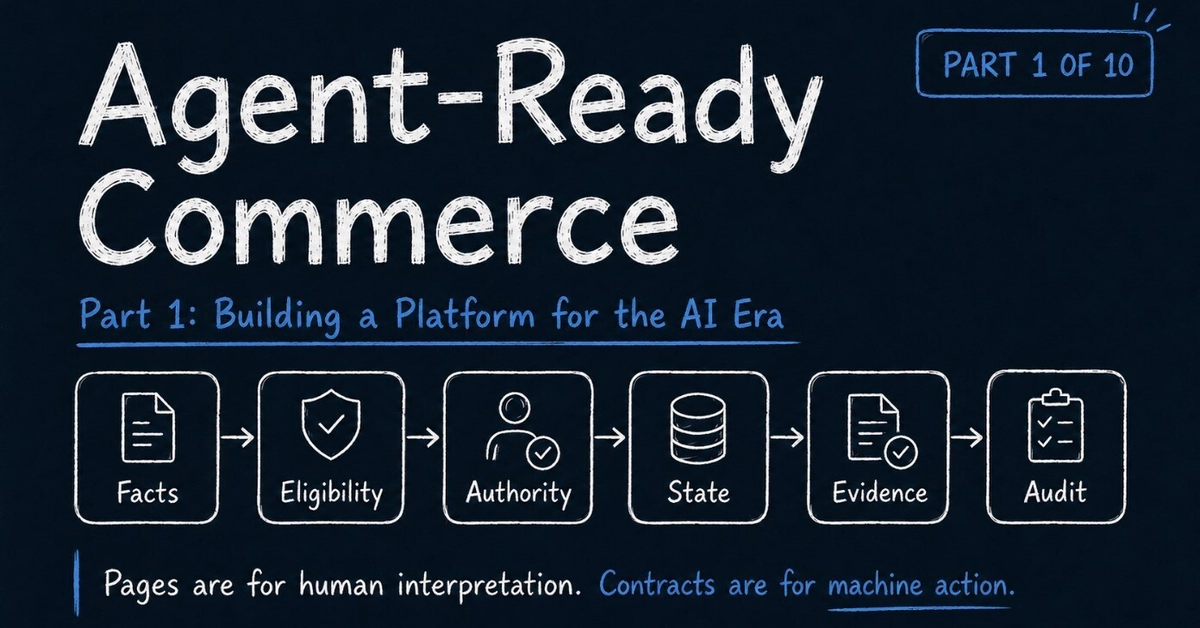
Across retail, payments, and big tech, AI-enabled checkout, automated product comparison, and autonomous purchasing tools are becoming critical for e-commerce. The industry has moved beyond talking about AI to managing the transition to agentic commerce.
The audit and assurance, consulting, and tax services firm PwC sees agentic commerce influencing what products get surfaced, compared, and chosen, often without humans in the loop. This change is rewiring retail power, loyalty, and visibility in ways many brands are not yet prepared for.
The National Retail Federation's recent research insights and its latest Digital Trends reports show that AI agents are rapidly moving from experimentation to execution in commerce. The findings suggest that agentic commerce is no longer a future concept. It is the new infrastructure, anchored by protocols like Google’s Universal Commerce Protocol.
The emergence of agentic commerce is creating a new retail environment where the gatekeeper isn’t the store selling the product but the digital entity that decides whether the product is even seen.
Eric Shea, principal for customer and commercial excellence at PwC US, observed that what changed this year is that the infrastructure stack finally started to mature at scale. AI agents are no longer operating as isolated chat interfaces.