AI agents are starting to change the assumptions behind commerce software.
For a long time, ecommerce platforms were designed around human interpretation. A product page could contain a mixture of structured data, marketing copy, policy fragments, trust signals, pricing information, availability indicators, and checkout calls to action. A human user could interpret that mixture well enough to make a decision.
That model does not transfer cleanly to agentic commerce.
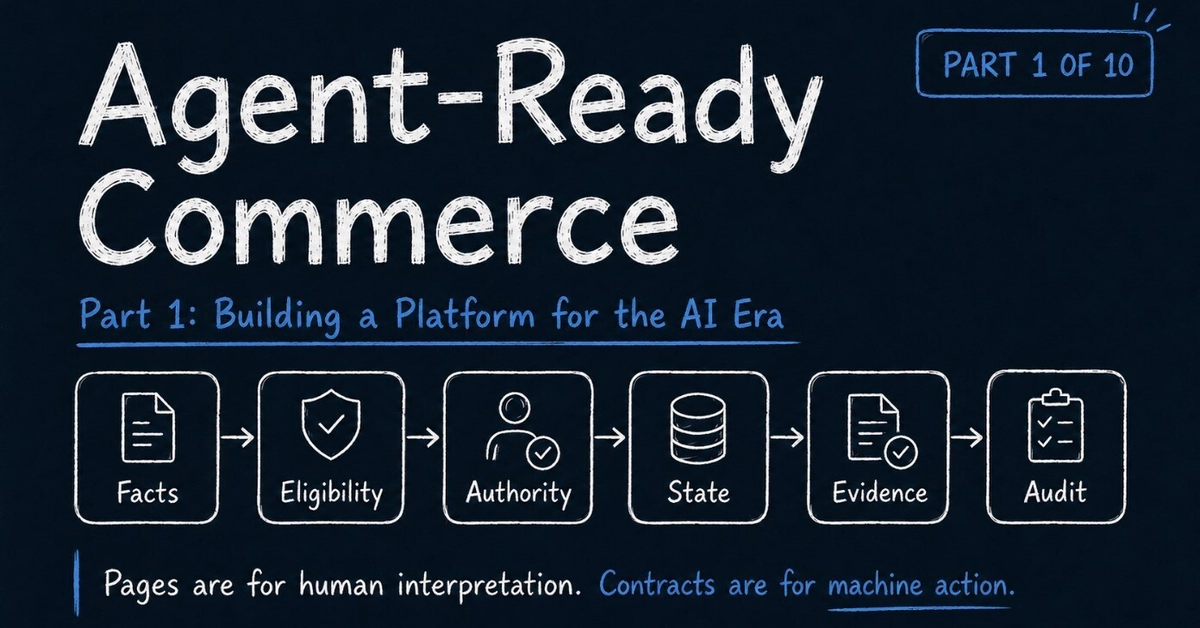
When an AI agent interacts with a commerce system, ambiguity becomes a system-design problem. The agent should not need to infer whether a product can be recommended, whether inventory is fresh, whether a policy applies, whether checkout is allowed, or whether payment authority exists. Those decisions need to be represented explicitly by the platform.
This article is the first in a technical series about designing an agent-ready commerce platform. The focus is not on adding a chatbot to an ecommerce UI. The focus is on the lower-level architecture required when external agents, tools, and protocols need to interact with commerce workflows safely.