See more Daily Mail on Google - save us as a Preferred SourceBy SABRINA PENTY, FOREIGN NEWS REPORTER Published: 15:57 BST, 10 June 2026 | Updated: 16:09 BST, 10 June 2026
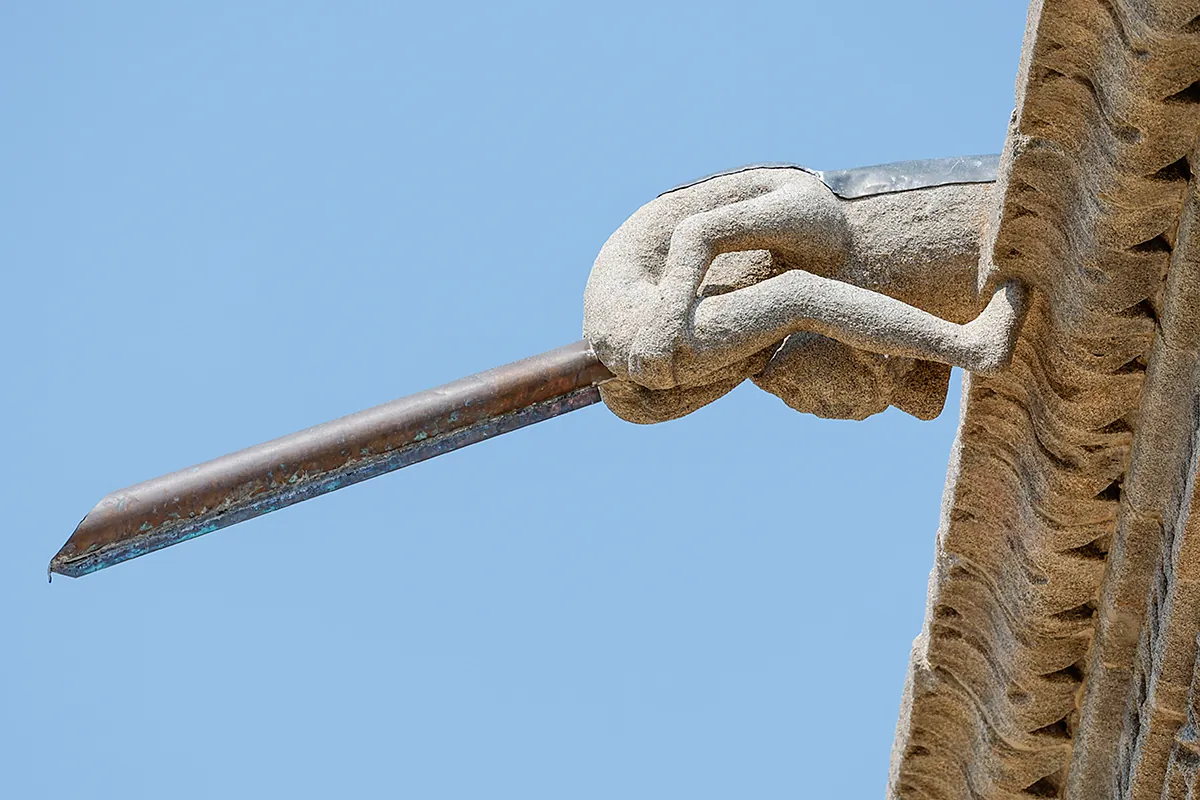
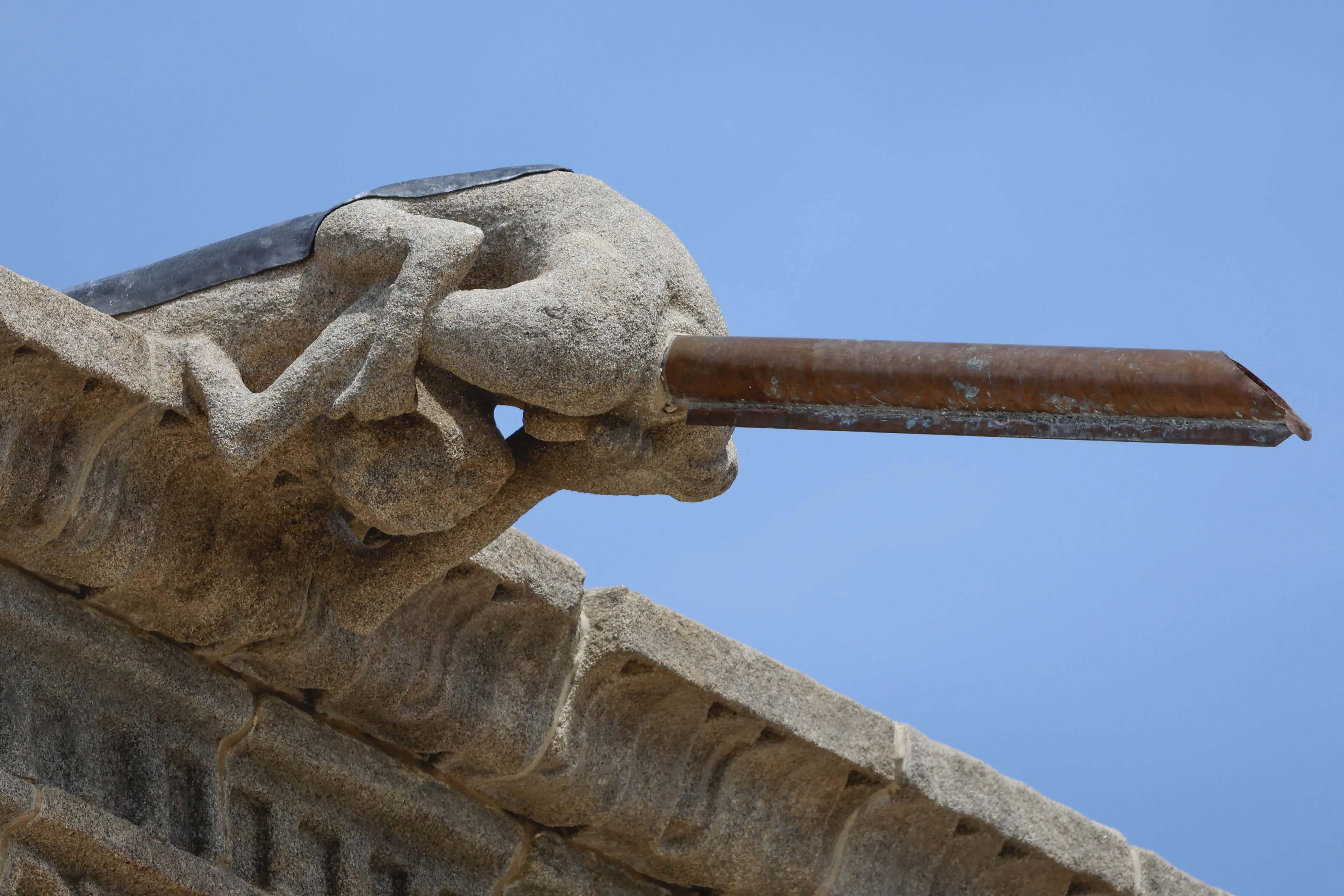
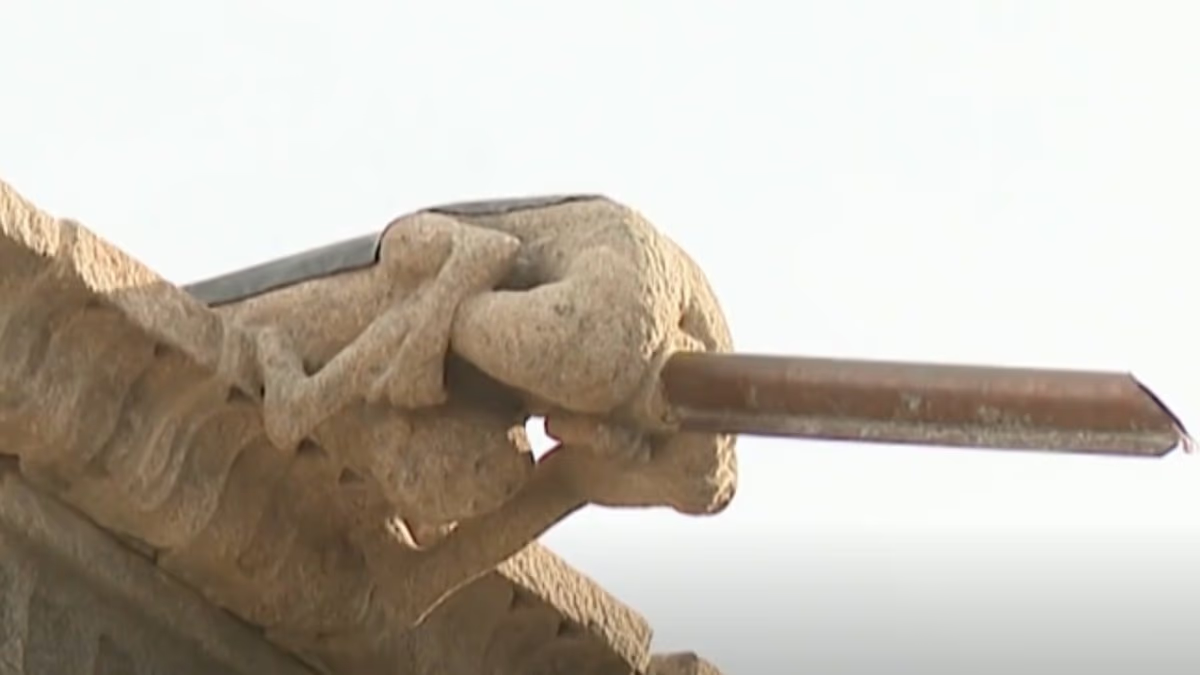
An architect behind the restoration of Spain's oldest hotel, which was ridiculed for its 'sodomised gargoyles', has hit back at his critics. Fernando Cobos carried out the works at the Hostal dos Reis Católicos in Santiago de Compostela, but sparked an outcry after critics complained about the building's gargoyles having water pipes attached to their backsides. Defending his design choice during a lecture in the northern Spanish city, Cobos argued it was 'the least bad' solution to deal with intense rainfall. 'If you see a sodomised gargoyle where there is a spout, there is not much I can do,' he told his critics. 'I am an architect, not a psychiatrist.'The controversy surrounds the early Renaissance gargoyles on the facade of the Hostal dos Reis Católicos, a former royal hospital in the Praza do Obradoiro turned hotel. One gargoyle - a crouching man which appears to be expelling water through his rear - became the focus of public criticism after restorers attached a drainage pipe to the figure's backside. Galicia's heritage association, as well as residents and conservation groups, said the restoration was visually intrusive and disrespectful to such an emblematic monument. Pictured: A gargoyle with a water pipe attached to its backside Pictured: A gorgoyle before the controversial restorationIn his lecture, Cobos explained how the building's stonework and gargoyles had been damaged by water erosion, noting that the drainage pipes were necessary to protect the building's facade. 'The spouts come out, they do not go in,' Cobos said as he insisted the gargoyles were not sodomised. 'I haven't broken anything.'He added that critics had focused on aesthetics rather than conservation needs. However, because of the controversy surrounding the restoration, Galicia's regional government has since announced that alternative solutions are being explored. Outcry over the gargoyles comes a year after the restoration of an iconic 17th-century statue of the Virgin Mary sparked huge protests in Seville after worshippers said her makeover left her looking like she had undergone plastic surgery. The Virgin of La Macarena is one of Spain's most famed Catholic effigies, and many Spaniards travel south every year to catch a glimpse of the wooden figure during the city's Holy Week parades. So when the Brotherhood of the Macarena unveiled the surprise restoration last June, her devotees were outraged, with critics saying she had been disfigured.According to her worshippers, her face was given a glossier finish, while her eyelashes were made longer, which they say altered her gaze.'Her facial expression has completely changed,' one outraged worshipper told Spanish newspaper El Pais. 'It pains me deeply to say it, but she looks like a poor copy of the original.' Fernando Cobos carried out the works at the Hostal dos Reis Católicos (pictured) in Santiago de CompostelaHundreds of protesters gathered outside the Basilica de la Macarena afterwards, calling for the resignation of the Brotherhood's leader. Footage showed faithful gathered around the church singing hymns about the Virgin as they demanded answers. 'This isn't her; this isn't the Virgin of Seville. It's sad. My heart is about to burst out,' one protester told ABC newspaper. 'They should have left her as she was.' The religious icon's controversial makeover has been likened to the botched art restoration of a painting of Jesus Christ, which resulted in the artwork being dubbed: 'Monkey Christ'. In 2012, Cecilia Giménez, 82, decided to touch up the 'Ecce Homo' (Behold the Man) fresco in the Sanctuary of Our Lady of Mercy church in Borja, northern Spain.However, her brushwork completely obliterated the face of Jesus, transforming the painting into what locals described as more like a hedgehog or hairy monkey rather than Jesus.