Companies are increasingly evaluating and discussing the complexity in enterprise AI adoption- increasing AI use comes with higher costs and in that case does AI’s positioning as a cost saving tool hold good?
| Photo Credit:
Getty Images
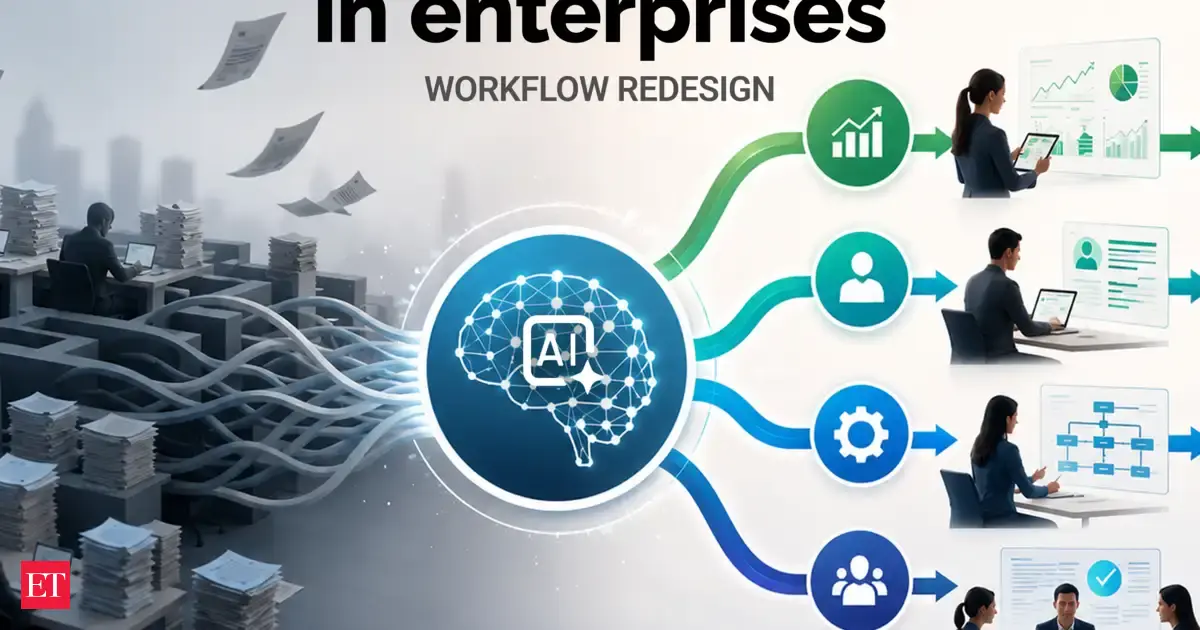
After all the frenzy around AI adoption, enterprises are now beginning to think about a key question of return of investment on AI spending.Companies are increasingly evaluating and discussing the complexity in enterprise AI adoption- increasing AI use comes with higher costs and in that case does AI’s positioning as a cost saving tool hold good? A major concern is that rising compute and infrastructure costs are making large-scale AI deployment significantly more expensive without any direct linkages to returns.Ramprakash Ramamoorthy, Director of AI at software major Zoho Corporation told businessline that for the first time in in two years, the whole conversation around “ROI on AI” is getting louder.The input cost has gone up by a huge margin for enterprise adopters of AI, he said. “Every software company’s balance sheet is going to look very different because compute costs are going through the roof. Typically your HR cost is the biggest item, but now we may see this change if the prices [AI hardware/infra] remain to continue to remain at the same rate they are right now. The same spec of hardware that we got in December 2025 is 4X more expensive in June 2026,” he added.Zoho is dealing with the rising costs in various ways. “Right sizing models is one strategy that we have been practicing and have been selling to our customers as well; only when you need that extra creativity, use a small language model or a medium language model,” he said. Measuring performance per watt also becomes strategic, he added, noting that it’s important for organisations to optimise compute usage.Speaking at the company’s annual AI forum last week, Cognizant CEO Ravi Kumar S said that the buzz around AI has led to massive token consumption without linkages to ROI and outcomes. “There is a gap between AI capability and production value because of the reckless token consumption without linkage to outcomes. Companies need to create more efficient, more predictable and effective economics for token consumption,” he added.Take Uber for instance. Speaking on a global podcast recently Uber President and Chief Operating Officer Andrew Macdonald said that it was still hard for them to draw a direct link between the company’s rising use of Claude Code and product features/innovations for consumers.Cognizant’s Kumar added that the issue of token consumption will create opportunities for system integrators such as Cognizant. “Token consumption must be looked at as an architectural problem, where factors such as providing better context to models, routing tasks to the right AI models, reusing past learnings, and designing efficient agent workflows can significantly reduce costs.Anushree Verma, Senior Director Analyst at Gartner, estimates that today’s focus on agents deployment will gradually lead to a rise in cost management measures by enterprises by end of 2026/2027 given the overall economic pressures. “By 2027, 80 per cent of enterprises will face significant budget overruns from consumption‑based AI coding tools, and in many cases, software costs may exceed human costs,” she said.Balaji Sethuraman, CTO and Partner at Catalincs, a tech growth advisory firm, said that in the near term, AI infra and inference costs are going to be high, and IT services firms will continue to evolve governance approaches to manage these. Longer term, as with any tech evolution, the cost of infra and inference will be driven down with more clarity on relevant models.Besides the large scale upfront spends involved, enterprises are realising that success depends on more factors than just compute power or model performance.“The real value of AI lies in how it helps people work better and make faster, more informed decisions...The conversation is no longer about replacing people with AI, it’s about finding the right balance between human expertise and intelligent automation,” Ritwik Batabyal, CTO & Innovation Officer, Mastek, said.Sethuraman said that certain employee profiles may become redundant with AI usage making the argument for AI cost being lower than employee. “By the same token, there will be new roles which will demand higher compensation structures,” he said.With inputs from Rohan DasPublished on June 10, 2026