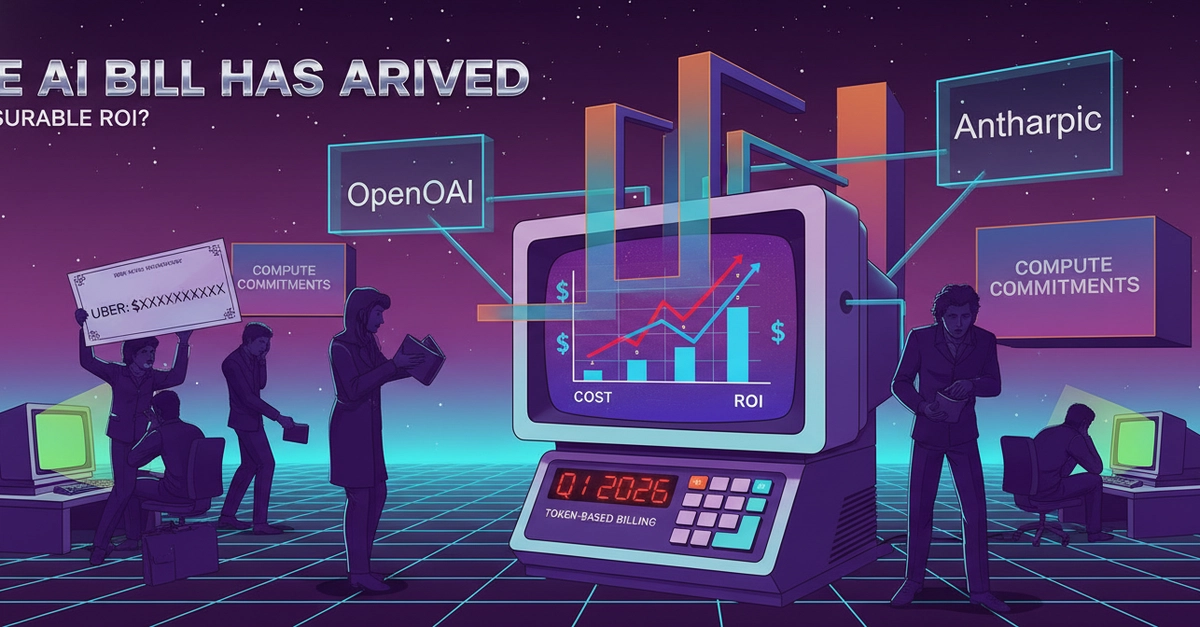
Leadership wants to scale AI. Budgets are tripling. Adoption is up.
Then the CFO asks the question every board now asks: which of these initiatives is actually profitable?
Most organizations cannot answer that question, not because they lack visibility into cost, but because the cost data they have was never designed to produce that answer.
Applying lessons learned from managing cloud spend won’t be a fix for the AI and ROI quandary. True, cloud taught a generation of CFOs that billing without business context is noise. So to get cloud ROI, they stitched two data sources together: cost data plus business data. AWS reveals which account, which region, which tag, which resource. Merge in customer and product mappings on top and the ROI of the cloud spend comes into focus.
But AI is harder. It requires three data sources: cost, business, and telemetry—the automatic collection of data from disparate sources that helps to clarify the whole picture of what happened and why. An executive or engineering lead can have AI invoices and customer revenue. But they have no way to connect them to business value. The token count on the OpenAI invoice does not specify which customer triggered which call, which feature it served, or whether the prompt produced a business outcome. That data does not exist in the provider’s billing.