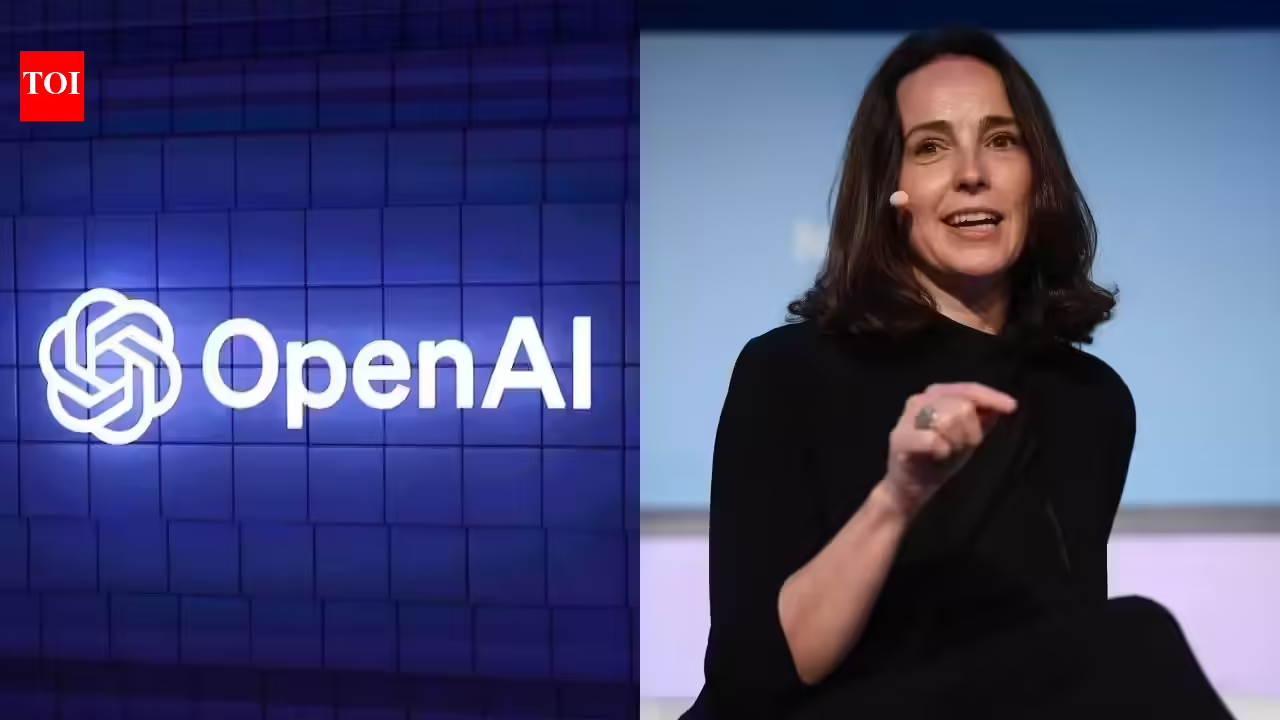
Is your AI paying off? Today, OpenAI CFO Sarah Friar published the scorecard she uses for telling whether you are actually getting economic value from AI spend.
For years, software success was measured through adoption—seats, active users, and renewals, Friar notes. She argues that AI is different: it must be measured by the work it actually accomplishes.
“The basic economic question facing CFOs and other business leaders is whether the value of the work AI completes grows faster than the cost of producing it,” Friar wrote in a blog post. Answering that question, she says, requires going deeper than simple metrics like cost per token.
She argues that the metric that matters for AI is what she calls “useful intelligence per dollar.” It has four elements: Is AI completing work that matters? What does each successful task cost? Can people depend on the result? And does each dollar produce more value as usage grows?
In practice, that means leaders should track the volume of AI-completed work that meets a defined quality bar, add up the full cost of completing that work, and then divide by the number of successful tasks to get a cost per successful task. From there, the test is whether people can reliably depend on the output and whether, over time, high-quality completed work grows faster than total cost while quality holds or improves. If it does, each AI dollar is producing more value—and compute sits at the center of that equation, Friar explains.