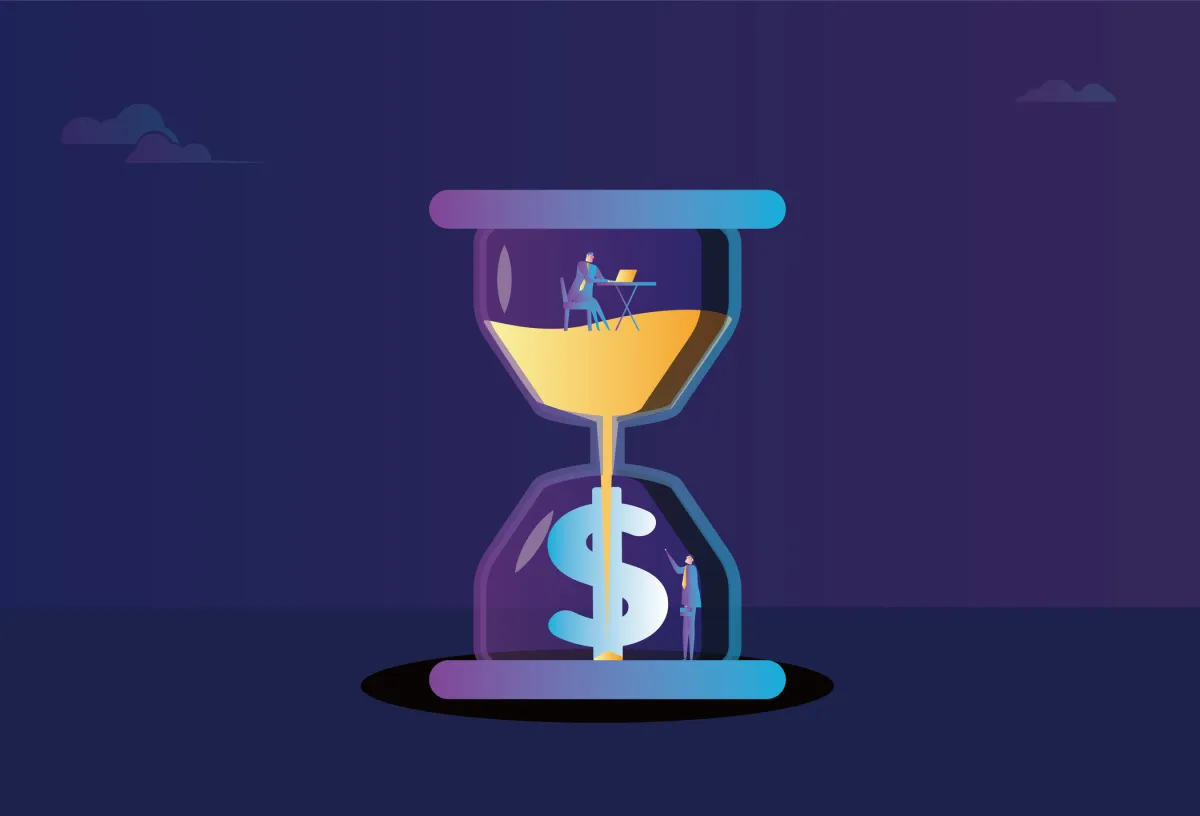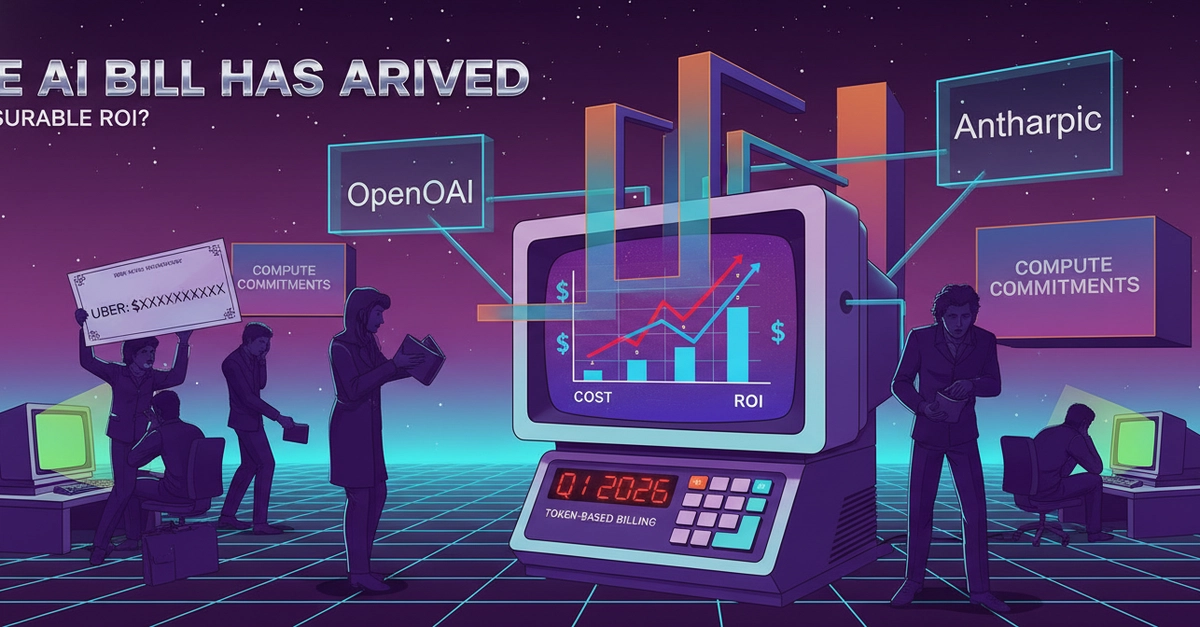
In Q1 2026, OpenAI and Anthropic moved enterprise customers from flat-rate plans to token-based billing. The change looks administrative, but it had a direct consequence for engineering teams: the real cost of AI became visible for the first time. The market's reaction over the following two months was enough to reopen a question many considered settled: does AI actually deliver measurable ROI?
What happened when the bill arrived
The most documented case is Uber. The company had encouraged all employees to use agentic tools as much as possible and even ranked AI usage internally on leaderboards. The result: the entire annual budget was consumed in four months. The response was a $1,500/month cap per employee per agentic coding tool (Claude Code, Cursor, and similar). At Brex, engineers were limited to $500/week in tokens; employees outside engineering received a $5/week cap. T-Mobile temporarily capped usage at $2,000/month per user with plans to migrate to a tiered system. One unnamed company, according to Ed Zitron in "AI Is Slowing Down" (June 2026), spent $500 million on Anthropic models in a single month due to absent spend controls.
These are not isolated cases. A KPMG survey reported by the Wall Street Journal in June 2026 found that only 26% of companies have a comprehensive view of their AI costs; 50% have partial visibility; and 22% only find out what they owe after the bill arrives. Steve Chase, KPMG's global head of AI, told the Journal: "It's a new resource that needs to be managed that didn't exist quite that way, and we're seeing exponential growth."