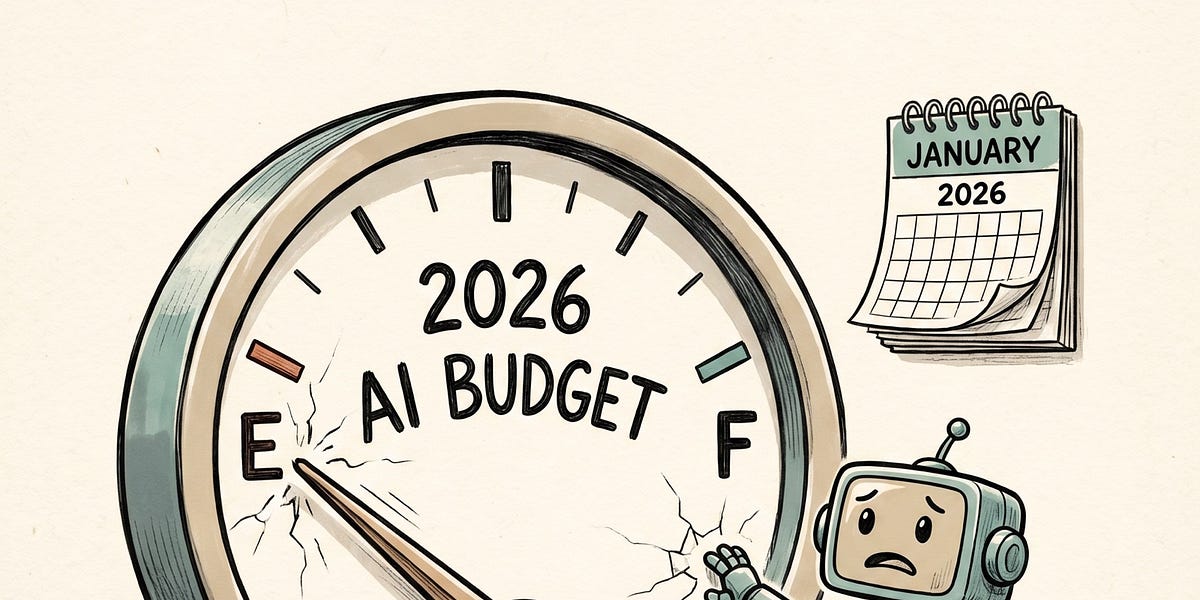
Token Use Is Exploding: Are you reacy?gettyUber burned through its entire 2026 AI budget by April. AT&T’s internal AI system now consumes twenty-seven billion tokens a day, up from one billion eighteen months ago. A major healthcare insurer watched its monthly AI token consumption go from three million to over one hundred fifty million in under a year. The line on that chart doesn't curve gently. It goes vertical.This is the token explosion, and it is coming for every enterprise on the planet because the demand for digital intelligence as a complement to human intellligence is massive and growing.A token is the fundamental unit of AI computation, roughly a word fragment or data chunk consumed each time a model processes input or generates output. Every interaction with a large language model burns tokens. Every automated agent, every background reasoning loop, every multi-step workflow burns far more. When enterprises move from chat-based AI to agentic AI, systems that chain multiple calls, retrieve documents, reason over data, and take action autonomously, token consumption doesn't double or triple. It explodes by an order of magnitude or more.The math is no longer abstract. It's showing up on quarterly invoices that no one budgeted for.Three Forces, One TrapThe token explosion is not a single problem with a single fix. It is the result of three forces hitting every CIO simultaneously.MORE FOR YOUThe first is innovation dependence. Frontier AI vendors — OpenAI, Anthropic, Google, are shipping new models and capabilities at a pace no enterprise can match internally. You need them. But that need creates a power asymmetry: when a vendor knows you cannot walk away, they set the terms. And with consumption spiraling, those terms get more expensive every quarter.The second is Jevons Paradox in action. Per-token costs have fallen a thousandfold in three years, but the token explosion has overwhelmed the savings. Enterprises are consuming more, not spending less. The providers see where this is heading: Anthropic eliminated flat-rate enterprise pricing after discovering developers were burning thousands of dollars in compute on $200-per-month plans. OpenAI moved Codex to per-token billing the same month. Every major AI vendor is converging on metered pricing, and the rest will follow.The third is structural lock-in. Under metered pricing, every new agent you deploy deepens your dependence on providers who set the rate and control the terms. Without an alternative in the mix, every quarterly renewal is a negotiation where only one side has leverage.Visibility Is Not CertaintyThe first instinct when costs become unpredictable is to build better dashboards. The AI market has responded with exactly that: token-level spend tracking, budget alerts, real-time cost breakdowns by model, team, and API key. Finance teams can now see exactly what their AI programs consume. None of that tells them what they will consume next month.Rate limits and budget caps give the CFO a number to hold, but the CIO loses the workload, when the cap hits, the AI stops. Caching and smart routing reduce the bill where workloads repeat, but agentic workloads don't repeat, and the provider still sets the rate. Reserved capacity with major cloud providers fixes a rate for a block of throughput, but simply transfers the forecasting risk to the enterprise: instead of an unpredictable bill, you get an unpredictable capacity mismatch.Every tool available today helps the enterprise see the risk more clearly. Not one of them reduces it. A better dashboard does not give the CIO leverage. Visibility without optionality is just watching the bill arrive.What Smart CIOs Are DemandingThe enterprises that will win the agentic AI era are those that solve cost predictability before the next budget cycle forces the conversation. That means going beyond the standard menu of frontier-model metered pricing and asking a harder question of the market: who will sell me AI on terms I can plan against?A growing category of infrastructure providers is built around exactly this proposition, absorbing token-volume risk and converting it into a predictable monthly cost. The mechanics vary: traffic shaping, intelligent caching, model routing, deep capacity planning. What they share is a structural commitment that the per-token volatility stops at their layer, not yours.This is not a niche concern for IT procurement. It is a strategic question about who holds leverage in your AI supply chain. Enterprises that add at least one fixed-price or value-based AI infrastructure provider to their supply base, one that absorbs inference-volume risk rather than passing it through, gain two things simultaneously: cost predictability, and a credible alternative that changes the negotiating dynamic with every frontier provider they use.The enterprises still running pure metered relationships with every AI vendor, hoping the per-token prices keep falling fast enough to offset the consumption surge, are playing a game where the other side controls all the variables.Uber and AT&T saw the token explosion. The rest of the Fortune 500 is next. The question is whether your organization finds out at planning time — or at invoice time.
The Token Trap: Why Your Enterprise Might Lose Financial Control Of Its AI Program
Worried about AI costs. Agents are blowing apart AI budgets. Here's three practical things to do.
820 words~4 min read