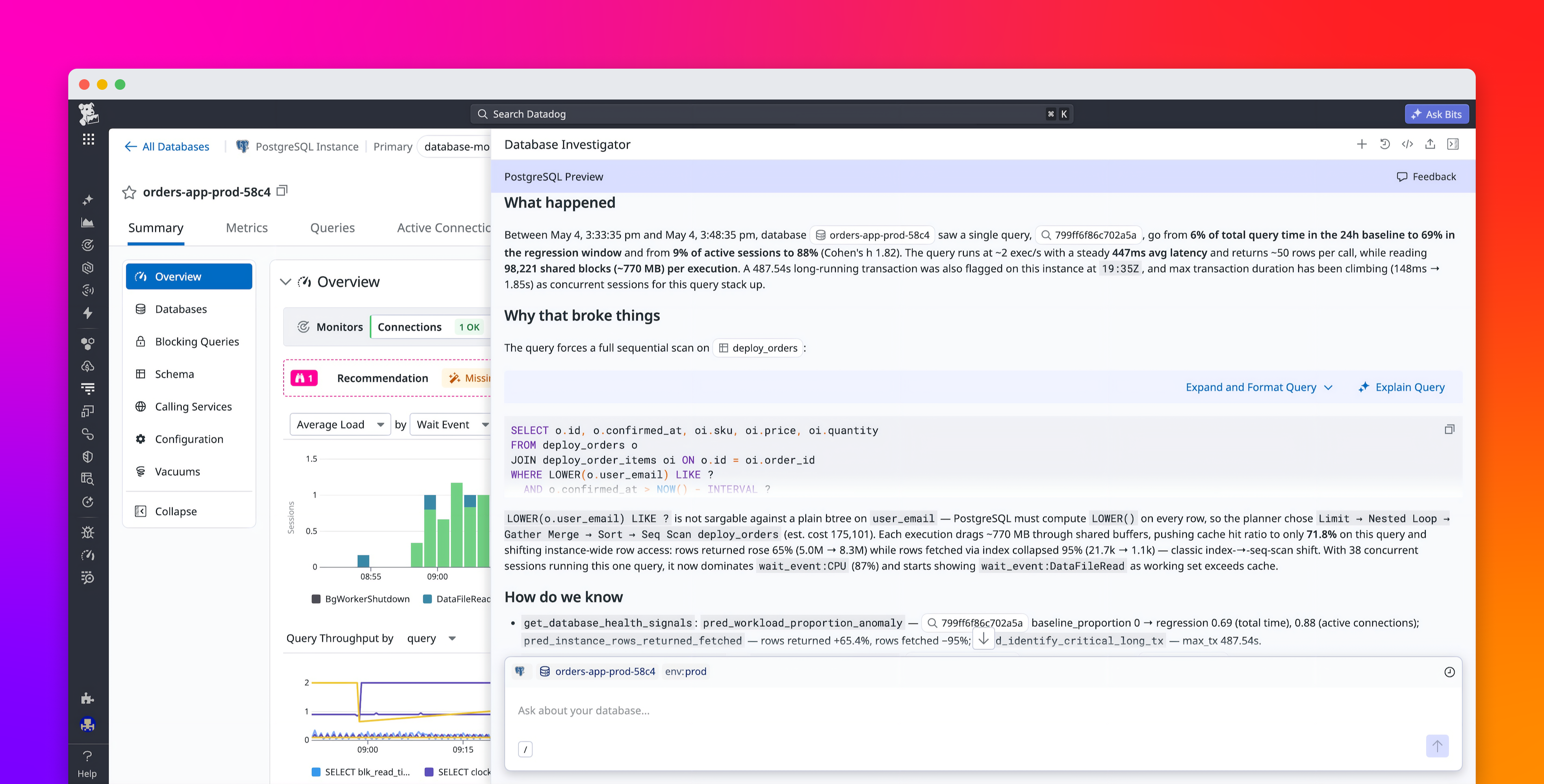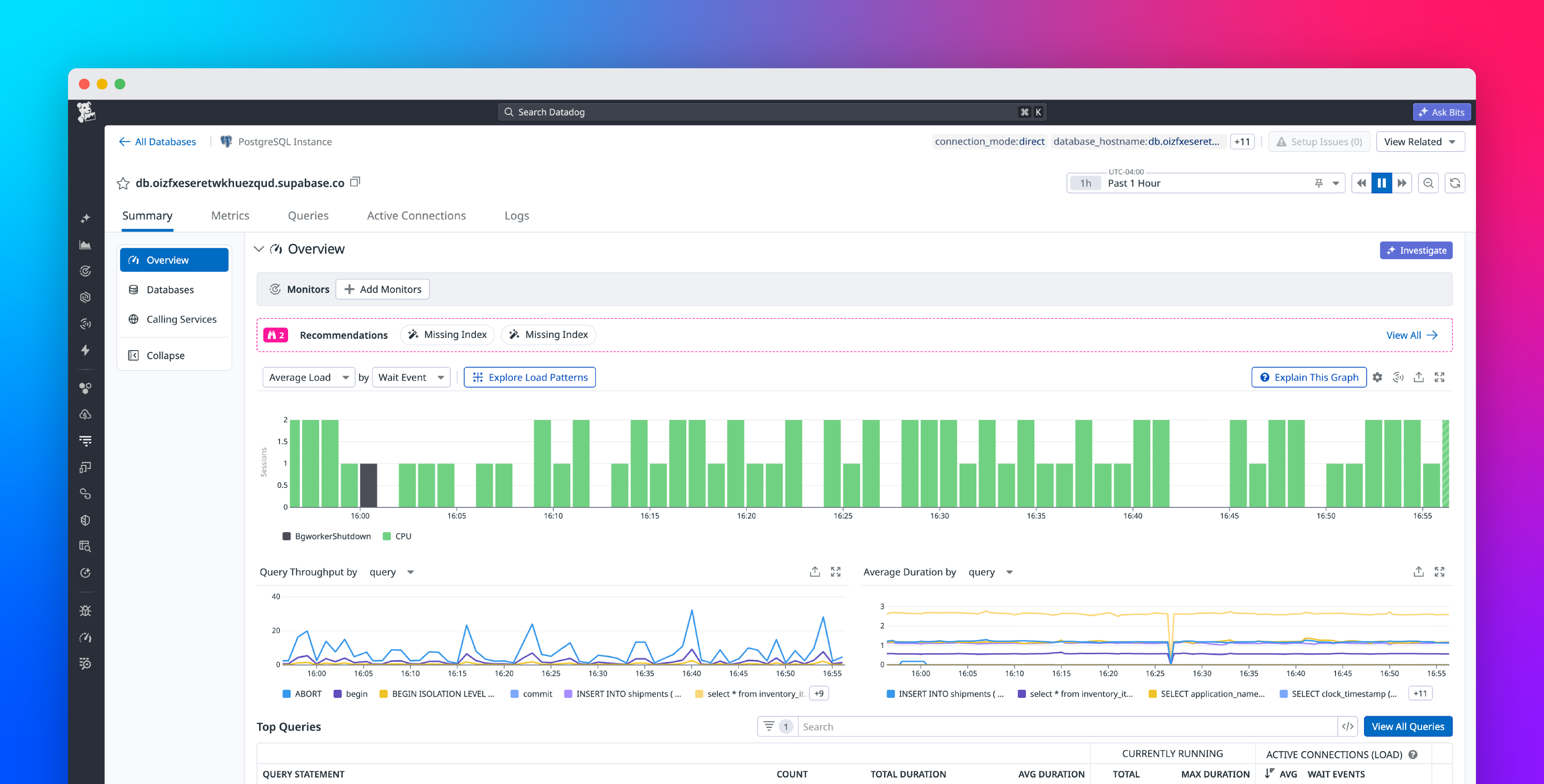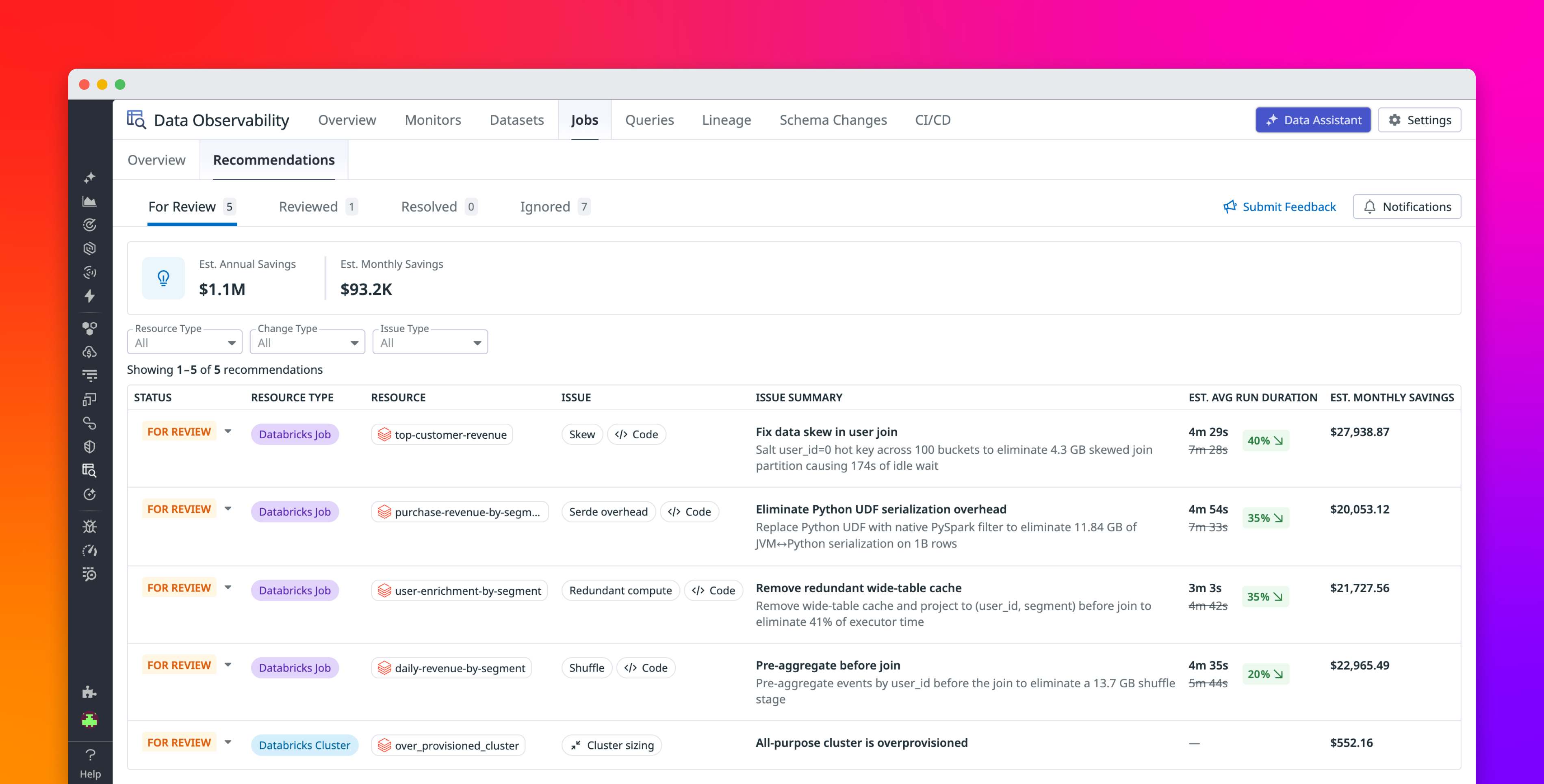
Query optimization is a problem every team knows they should address but few have the time or expertise to do well. Identifying slow queries, reasoning about how to fix them, validating that a fix actually helps on your specific schema, and finding the right line of code to change all require deep database knowledge and careful testing. As a result, optimization usually becomes reactive to incidents, when the cost of inaction is already high.
Most database tooling stops at detection or, at best, a heuristic-based recommendation. Engineers are still left to interpret the suggestion, test it against their own environment, locate the code that produced the query, and decide whether the change is safe to ship.
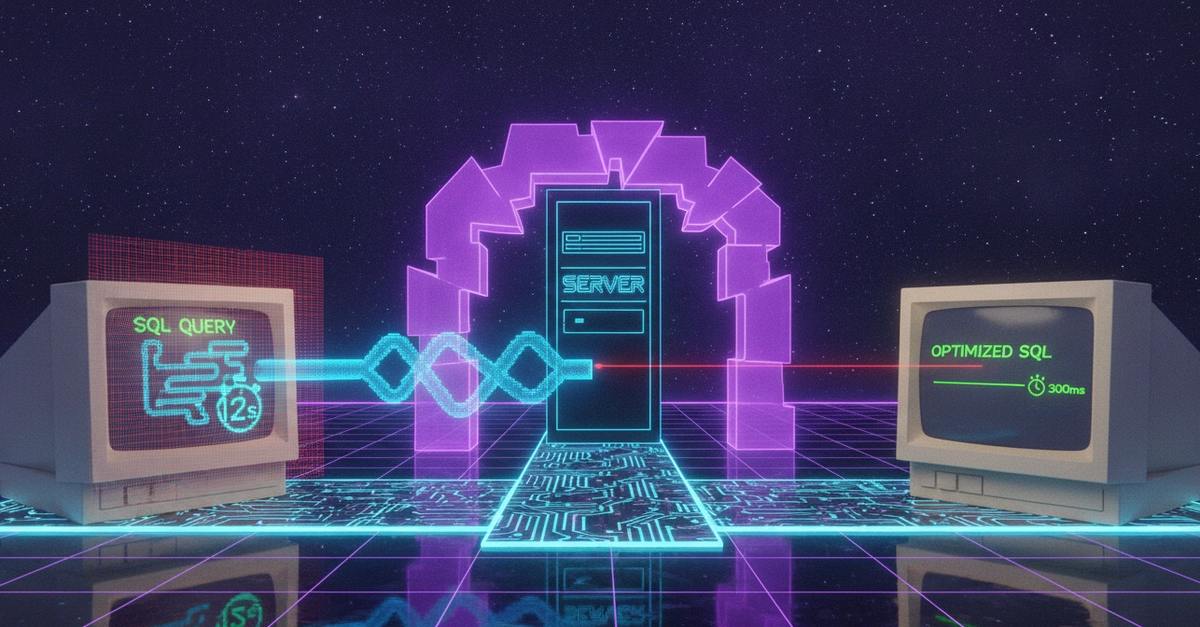
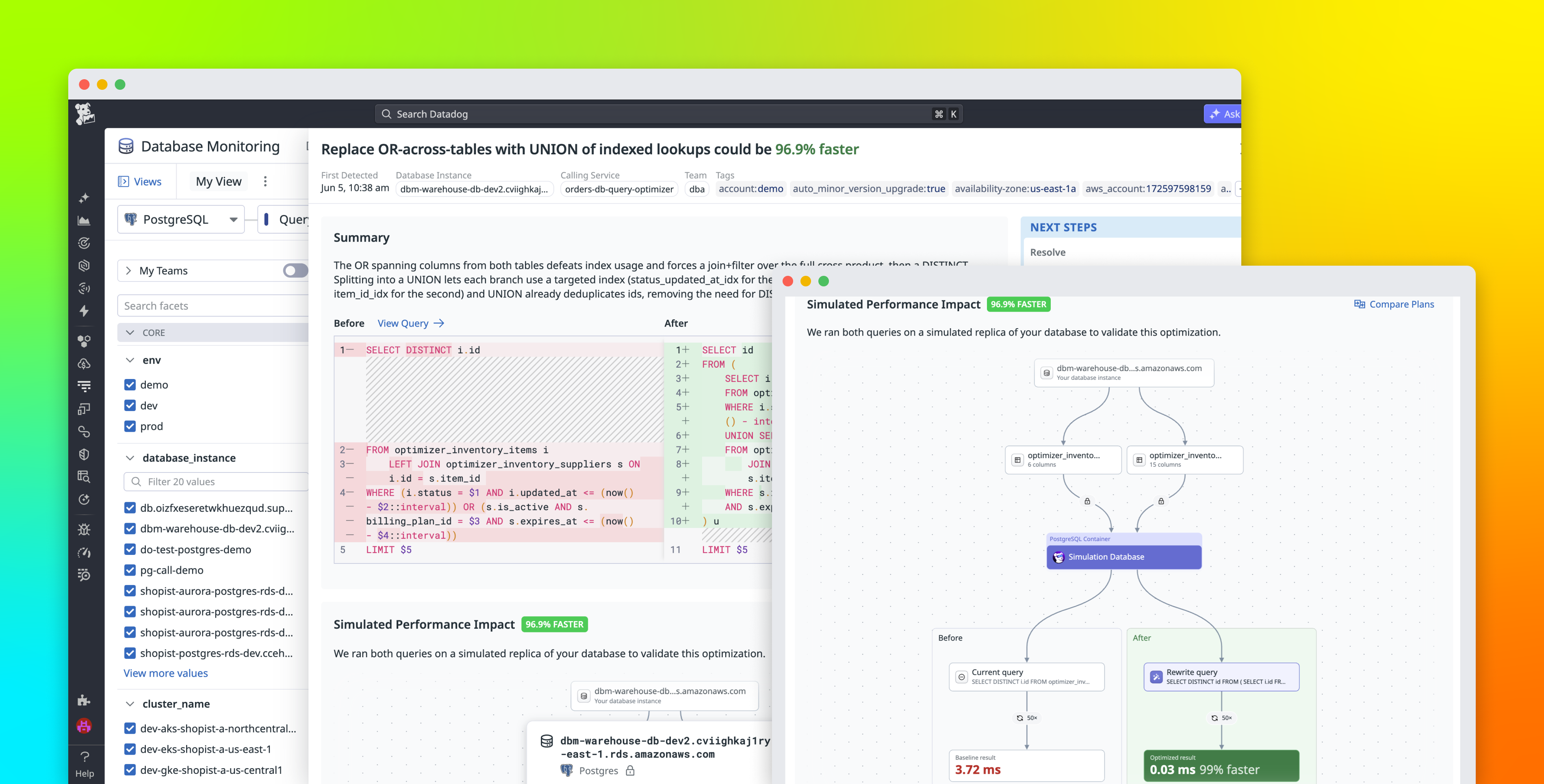
Bits Database Optimization closes that loop by taking each candidate query through the full optimization life cycle. When Database Monitoring (DBM) detects a problematic query, it generates a candidate fix, runs both the original and the rewrite against a simulated copy of your schema, and only surfaces the optimization if the simulation proves it’s more efficient. From there, DBM hands the validated fix to Bits AI, which locates the code that built the query and opens a pull request with the diff. The PR includes the simulation evidence inline, so reviewers can ship the change without leaving their normal workflow.