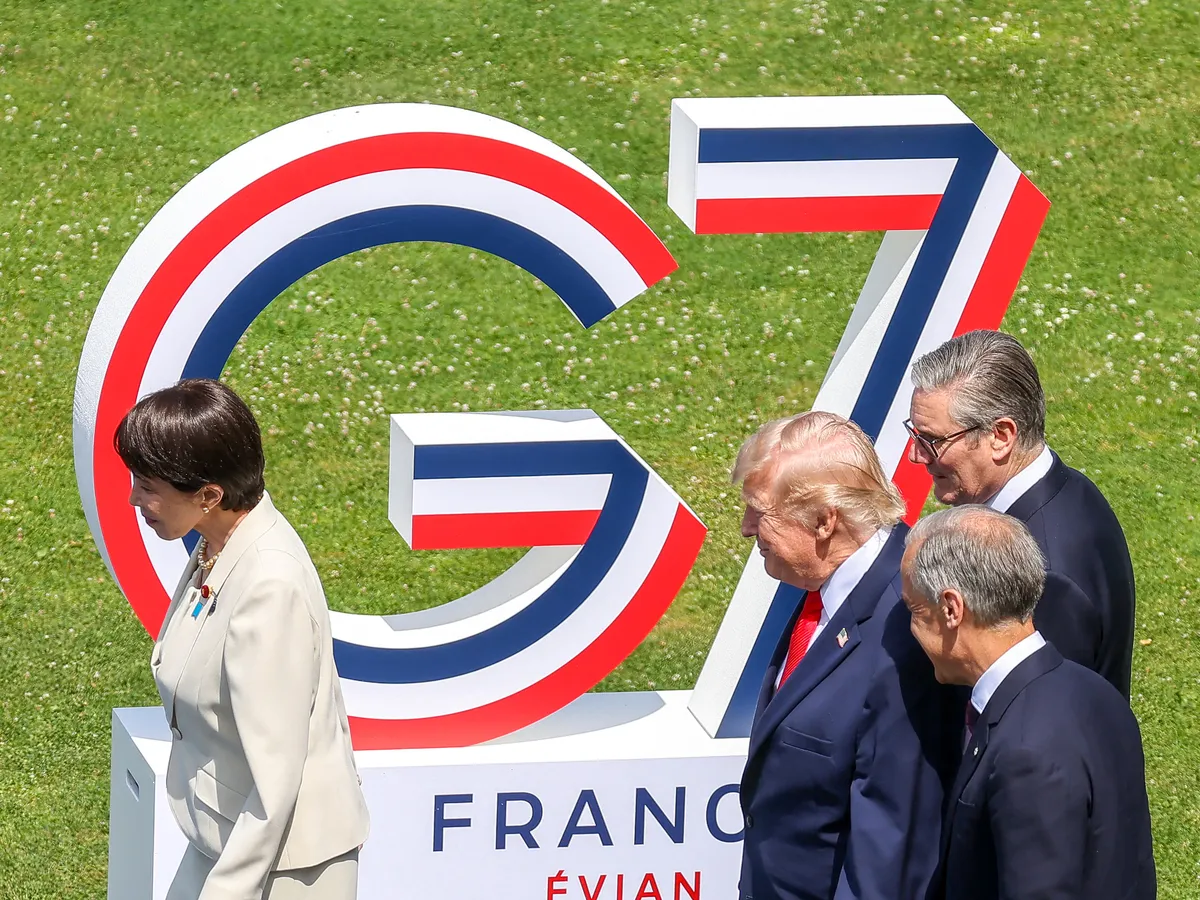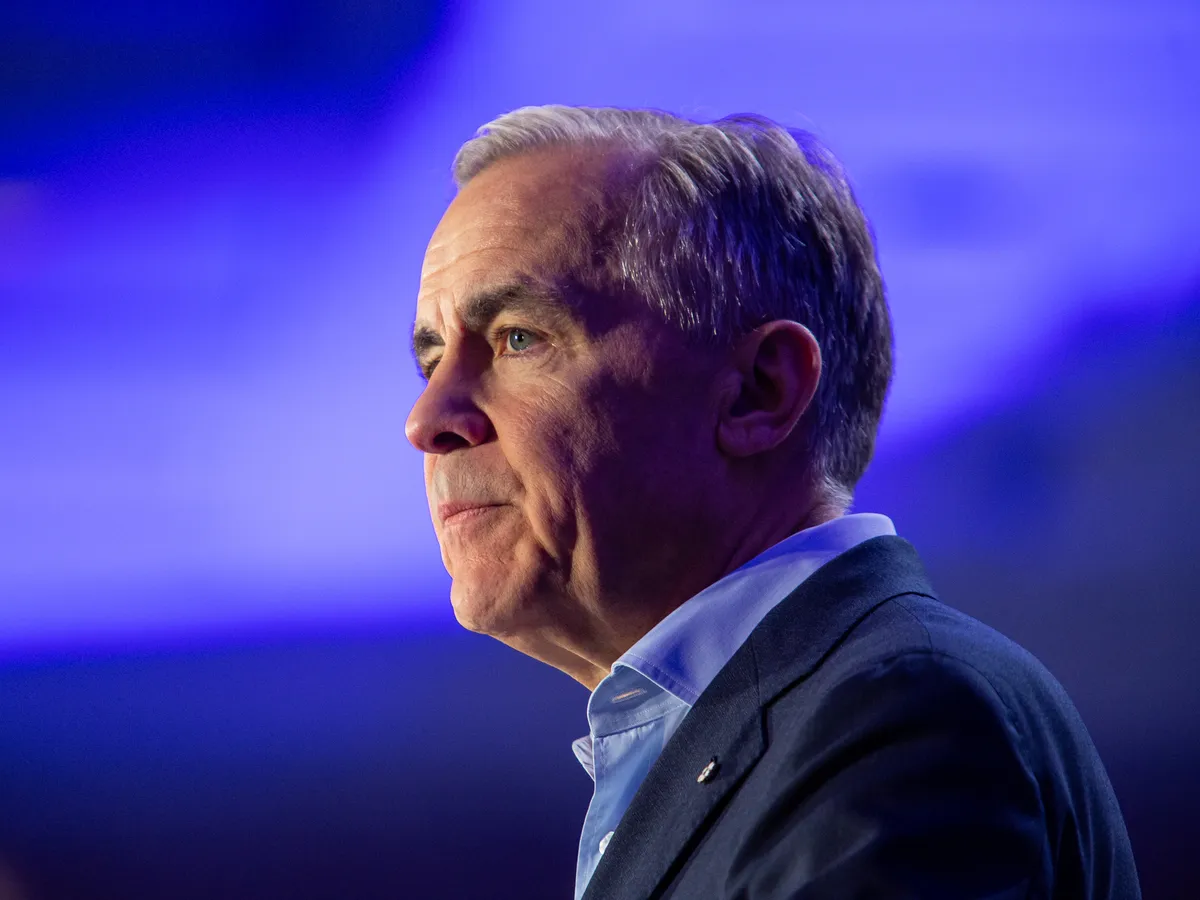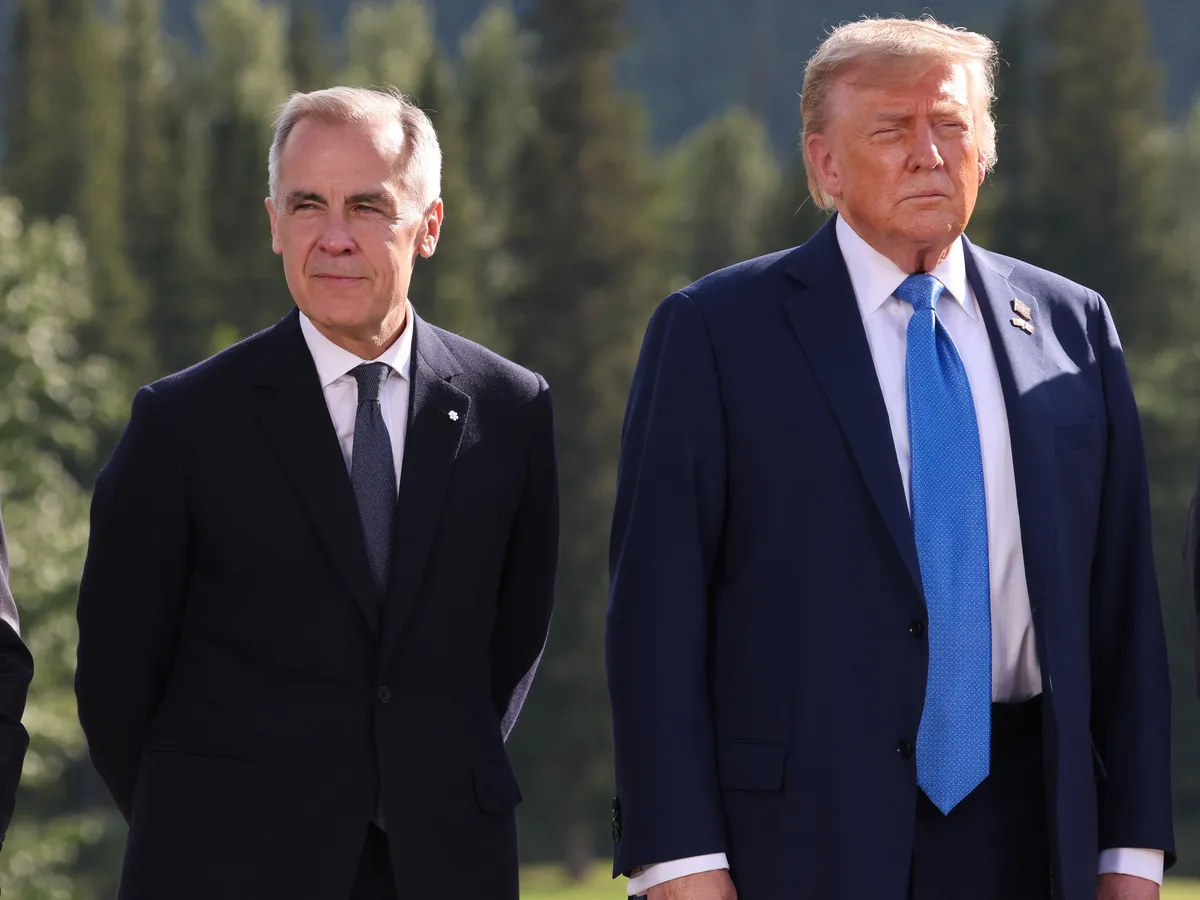
Skip to Content News Archives Economy Energy Oil & Gas Renewables Electric Vehicles Mining Commodities Agriculture Real Estate Mortgages Mortgage Rates Finance Banking Insurance Fintech Cryptocurrency Work Wealth Smart Money Wealth Management Investor Personal Finance Family Finance Retirement Taxes High Net Worth FP Comment Executive Women Puzzmo Newsletters Financial Times Business Essentials More Innovation Information Technology FP500 Podcasts Small Business Lives Told Tails Told Shopping Financial Post Store Obituaries Place a Notice Advertising Advertising With Us Advertising Solutions Postmedia Ad Manager Sponsorship Requests Classifieds Place a Classifieds ad Working Profile Settings My Subscriptions Saved Articles My Offers Newsletters Customer Service FAQ News Economy Energy Mining Real Estate Finance Work Wealth Investor FP Comment Executive Women Puzzmo Newsletters Financial Times Business Essentials HomeFP CommentTerence Corcoran: Carney and Trump lead the G7 into modern statismPursuing a new consensus based on accelerating industrial strategies, state interventions and deficit fundingLast updated 1 hour ago You can save this article by registering for free here. Or sign-in if you have an account.Prime Minister Mark Carney, left, and U.S. President Donald Trump. Photo by POSTMEDIA NEWS ARCHIVESFifty years ago this month Canada officially joined the Group of Seven (G7) nations that represented the most prosperous economies on the planet. They had come together to find ways to emerge out of recessions brought on by a series of events including a global monetary crisis and an oil crisis, situations that parallel today’s global troubles.Subscribe now to read the latest news in your city and across Canada.Exclusive articles from Barbara Shecter, Joe O'Connor, Gabriel Friedman, and others.Daily content from Financial Times, the world's leading global business publication.Unlimited online access to read articles from Financial Post, National Post and 15 news sites across Canada with one account.National Post ePaper, an electronic replica of the print edition to view on any device, share and comment on.Daily puzzles, including the New York Times Crossword.Subscribe now to read the latest news in your city and across Canada.Exclusive articles from Barbara Shecter, Joe O'Connor, Gabriel Friedman and others.Daily content from Financial Times, the world's leading global business publication.Unlimited online access to read articles from Financial Post, National Post and 15 news sites across Canada with one account.National Post ePaper, an electronic replica of the print edition to view on any device, share and comment on.Daily puzzles, including the New York Times Crossword.Create an account or sign in to continue with your reading experience.Access articles from across Canada with one account.Share your thoughts and join the conversation in the comments.Enjoy additional articles per month.Get email updates from your favourite authors.Create an account or sign in to continue with your reading experience.Access articles from across Canada with one accountShare your thoughts and join the conversation in the commentsEnjoy additional articles per monthGet email updates from your favourite authorsSign In or Create an AccountorBut there is one major shift that makes the G7 of 50 years ago significantly different from the G7 summit set to take place next week in Evian, France. The economic and trade principles that were initially laid down in 1975 in Rambouillet, France, before Canada became a member, have long been abandoned.One lost principle stands out: free trade. In the 1975 “Declaration of Rambouillet,” the six original nations (the United States, Great Britain, Italy, Germany, France and Japan) stood behind the idea that “Growth and price stability will be maintained by an open trading system. In a period where pressures are developing for a return to protectionism, it is essential for the main trading nations to confirm their commitment to the principles of the OECD.” (See Nota Bene below.)Get the latest headlines, breaking news and columns.By signing up you consent to receive the above newsletter from Postmedia Network Inc.A welcome email is on its way. If you don't see it, please check your junk folder.The next issue of Top Stories will soon be in your inbox.We encountered an issue signing you up. Please try againAt the 1976 Summit, the G7 declaration warned that “countries yielding to the temptation to resort to commercial protectionism would leave themselves open to a subsequent deterioration in their competitive standing.”No such declaration has been on the agenda for years, and the best idea the G7 has come up with for this year’s summit is to “reaffirm the importance of dialogue and co-operation to support economic prosperity through trade, while enhancing economic resilience and economic security.”Some day somebody will outlaw use of the word “resilience.” But don’t expect it to disappear from Prime Minister Mark Carney’s vocabulary when he joins next week’s summit. Carney has opposed liberal principles of free trade based on market forces such as prices. He has been dismissive of what came to be known as the Washington Consensus, an international policy trend that evolved during the 1980s based on the principles of free trade, fiscal discipline, privatization, and moderate tax rates.Since taking over as the CEO of the Canadian economy, Carney has thrown these principles overboard. Along with U.S. President Donald Trump, Carney has consistently dismissed trade liberalization in favour of government-managed trade and industrial policy. State policy, not the markets, should determine the economic future of a nation.On trade and economic policy, Carney and Trump share methods and approaches, but not reasons. Carney sides with leftist economists, while Trump aligns his trade and economic policies based on the views of what might be considered right-wing economists.Among many other influences, Trump has adopted the trade ideas of such economic theorists as former U.S. trade representative Robert Lighthizer, who believes Communist China poses a threat to America in a free trade world. In his 2023 book No Trade is Free: Changing Course, Taking on China, and Helping America’s Workers, Lighthizer argues that global free trade and deals such as the North American Free Trade Agreement (NAFTA) and the Canada-United States-Mexico Agreement (CUSMA) created trade imbalances that harmed American workers and the U.S. economy. No more free trade, argues Lighthizer; bring on tariffs.Trump and Carney are also fans of sovereign wealth funds. In April, Carney announced the formation of the $25-billion Canada Strong Fund that will invest government money in private Canadian corporations. Last year in Washington, Trump outlined his own national wealth fund that would use US$5.7 trillion in government assets to invest in U.S. corporations. The objective is to leverage corporate returns “to promote fiscal sustainability, lessen the burden of taxes on American families and small businesses, establish long-term economic security, and promote U.S. economic and strategic leadership internationally.”The wealth fund idea was endorsed last week by Bernie Sanders, representing the left-wing socialist branch of the Democratic Party. That Trump and Sanders are on the same page is another demonstration of the fine line that allegedly divides the economic ideas of politicians on the left and right.One of the influences on Carney has been University of Sussex economist Mariana Mazzucato, the author of books and articles promoting government intervention in the economy. Her books have included The Entrepreneurial State (2014) and The Value of Everything (2018), which Carney has described as “magisterial.” Mazzucato is one of the world’s leading opponents of free trade, deregulation and fiscal discipline. In 2021 she represented Italy on a G7 Economic Resilience Panel that called for dismantling all aspects of the Washington Consensus in favour of a new consensus based on accelerating industrial strategies, state interventions and deficit funding.That, today, has become the dominant G7 economic model. And last year, in a commentary in The Toronto Star, Mazzucato urged Prime Minister Carney to develop a major series of “mission-oriented” industrial strategies to shake up the Canadian economy. That’s what he is doing.Carney, Trump and other G7 leaders may debate some issues, but today they are all following the same agenda.Excerpt from the November 1975 Declaration of Rambouillet following the first Group of Seven (G7) summit held in Rambouillet, France. What had been the G6 did not become the G7 until Canada officially joined the group in June 1976.As domestic recovery and economic expansion proceed, we must seek to restore growth in the volume of world trade. Growth and price stability will be fostered by maintenance of an open trading system. In a period where pressures are developing for a return to protectionism, it is essential for the main trading nations to confirm their commitment to the principles of the OECD (Organisation for Economic Co-operation and Development) pledge and to avoid resorting to measures by which they could try to solve their problems at the expense of others, with damaging consequences in the economic, social and political fields. There is a responsibility on all countries, especially those with strong balance-of-payments positions and on those with current deficits, to pursue policies which will permit the expansion of world trade to their mutual advantage …We believe that the multilateral trade negotiations should be accelerated … (T)hey should aim at achieving substantial tariff cuts, even eliminating tariffs in some areas, at significantly expanding agricultural trade and at reducing non-tariff measures. They should seek to achieve the maximum possible level of trade liberalization therefrom. We propose as our goal completion of the negotiations in 1977. Join the Conversation This website uses cookies to personalize your content (including ads), and allows us to analyze our traffic. Read more about cookies here. By continuing to use our site, you agree to our Terms of Use and Privacy Policy.
Terence Corcoran: Carney and Trump lead the G7 into modern statism
Terence Corcoran: Pursuing a new consensus based on accelerating industrial strategies, state interventions and deficit funding. Read more.
1,552 words~7 min read