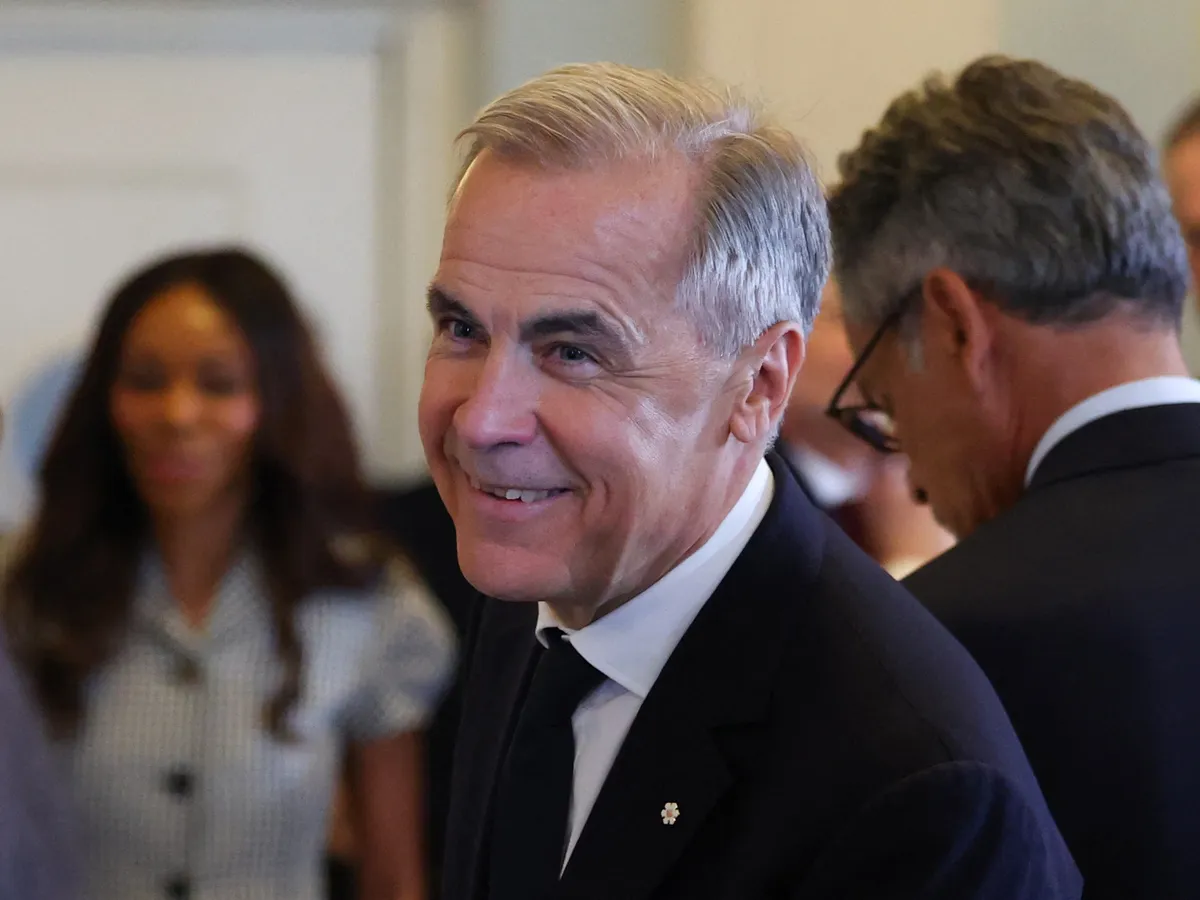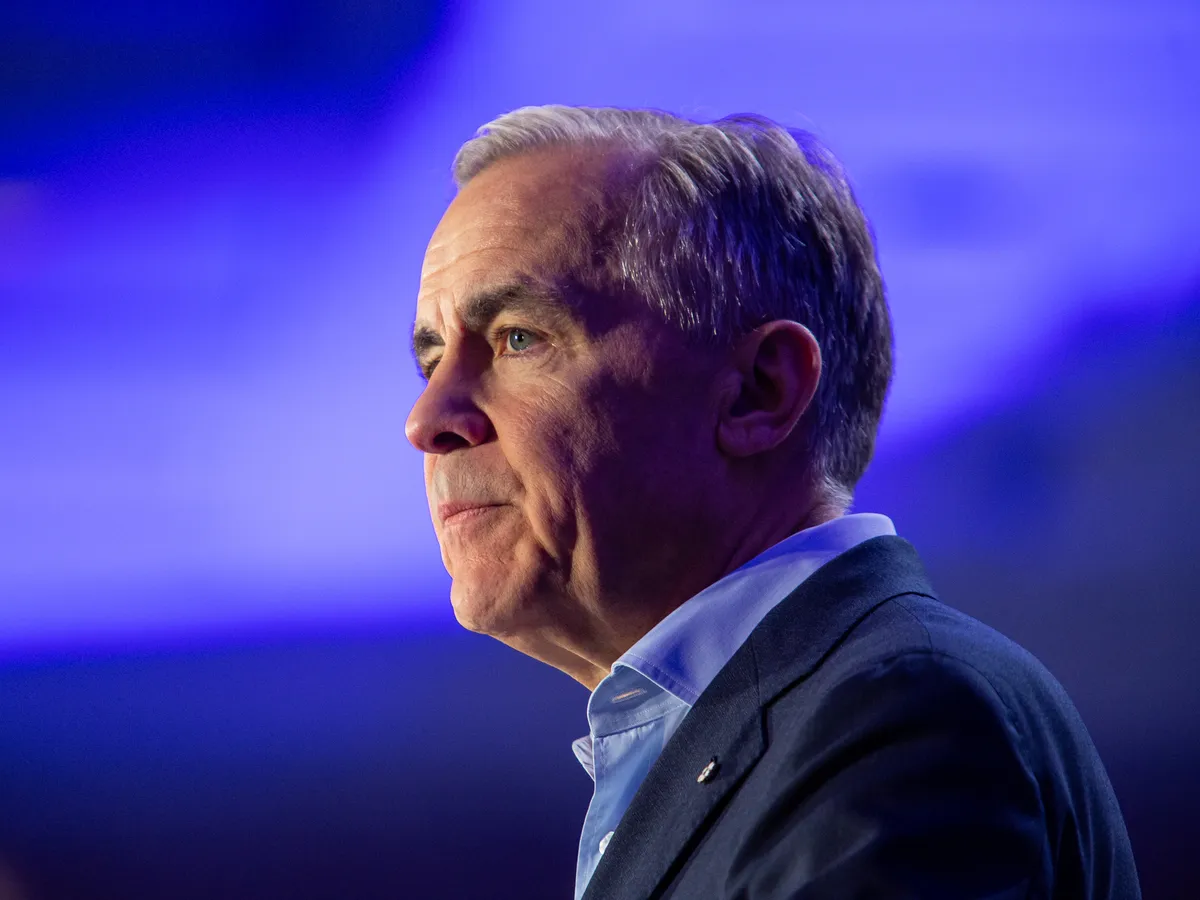
Skip to Content News Archives Economy Energy Oil & Gas Renewables Electric Vehicles Mining Commodities Agriculture Real Estate Mortgages Mortgage Rates Finance Banking Insurance Fintech Cryptocurrency Work Wealth Smart Money Wealth Management Investor Personal Finance Family Finance Retirement Taxes High Net Worth FP Comment Executive Women Puzzmo Newsletters Financial Times Business Essentials More Innovation Information Technology FP500 Podcasts Small Business Lives Told Tails Told Shopping Financial Post Store Obituaries Place a Notice Advertising Advertising With Us Advertising Solutions Postmedia Ad Manager Sponsorship Requests Classifieds Place a Classifieds ad Working Profile Settings My Subscriptions Saved Articles My Offers Newsletters Customer Service FAQ News Economy Energy Mining Real Estate Finance Work Wealth Investor FP Comment Executive Women Puzzmo Newsletters Financial Times Business Essentials HomeFP CommentTerence Corcoran: Mark Carney’s '(climate) tragedy of the horizon' no longer existsThe latest scientific research knocks the prime minister's ‘implausible’ catastrophic climate scenarioLast updated 1 hour ago You can save this article by registering for free here. Or sign-in if you have an account.Prime Minister Mark Carney probably knows that RCP8.5 is a false alarm and he will be able to defend his recent pullback from carbon emissions policies. Photo by Nick Kozak/PostmediaGreen activists and their political representatives such as former Liberal environment minister Steven Guilbault are metaphorically marching on Parliament Hill over Prime Minister Mark Carney’s indisputable about-face away from hard-line climate policies. By agreeing to promote pipelines and delay the $130/tonne corporate carbon price until 2040, the head of Climate Action Network Canada said the PM is “taking a sledgehammer to one of the last remaining pillars of Canada’s climate plan.”Subscribe now to read the latest news in your city and across Canada.Exclusive articles from Barbara Shecter, Joe O'Connor, Gabriel Friedman, and others.Daily content from Financial Times, the world's leading global business publication.Unlimited online access to read articles from Financial Post, National Post and 15 news sites across Canada with one account.National Post ePaper, an electronic replica of the print edition to view on any device, share and comment on.Daily puzzles, including the New York Times Crossword.Subscribe now to read the latest news in your city and across Canada.Exclusive articles from Barbara Shecter, Joe O'Connor, Gabriel Friedman and others.Daily content from Financial Times, the world's leading global business publication.Unlimited online access to read articles from Financial Post, National Post and 15 news sites across Canada with one account.National Post ePaper, an electronic replica of the print edition to view on any device, share and comment on.Daily puzzles, including the New York Times Crossword.Create an account or sign in to continue with your reading experience.Access articles from across Canada with one account.Share your thoughts and join the conversation in the comments.Enjoy additional articles per month.Get email updates from your favourite authors.Create an account or sign in to continue with your reading experience.Access articles from across Canada with one accountShare your thoughts and join the conversation in the commentsEnjoy additional articles per monthGet email updates from your favourite authorsSign In or Create an AccountorClimate control advocates had better get used to falling policy pillars, in part because science pillars are also crumbling, including one that has helped elevate global warming and carbon emissions to the top of the Canadian political agenda. In 2014, the Intergovernmental Panel on Climate Change (IPCC) published a range of estimates on the future impact of climate change, including an alarming warning that the planet could hit killer temperature increases by 2100. The scenario projection — known as RCP8.5 — estimated that temperatures could rise by up to 4.5 degrees above average by the end of the century. If the path to RCP8.5 was not stopped, the Earth would face a deadly climate catastrophe.Get the latest headlines, breaking news and columns.By signing up you consent to receive the above newsletter from Postmedia Network Inc.A welcome email is on its way. If you don't see it, please check your junk folder.The next issue of Top Stories will soon be in your inbox.We encountered an issue signing you up. Please try againA newly released research paper by the European Geosciences Union that will form a basis for a new IPCC set of climate scenarios to be published by 2029 concludes that the RCP8.5 scenario is “implausible” and therefore unusable. “For the 21st century, this range will be smaller than assessed before” and the high emission levels “have become implausible, based on trends in the costs of renewables, the emergence of climate policy and recent emission trends.”That conclusion prompted Roger Pielke Jr., a U.S. climate science policy researcher and critic, to declare that “RCP8.5 is officially dead,” dealing a serious blow to the climate movement that has been using the gloom scenario to stir up political anxiety around the world. Since the RCP8.5 scenario’s launch a decade ago, it has been labelled the “business as usual” scenario.Pielke and Canadian researcher Justin Ritchie have been attacking RCP8.5 for some time. Ritchie, an Adjunct Professor at the University of British Columbia’s Institute for Resources, Environment and Sustainability, produced a paper in 2017 that put down the doom scenario due to its reliance on an illogical premise that the world would be forced to dramatically expand coal production through to 2100. Ritchie concluded such coal dependency was “exceptionally unlikely.” Therefore, RCP8.5 was undependable as a basis for future science research and climate policy.Neither Ritchie nor Pielke are climate deniers, but they are consistent in their insistence on scientific rigour they see as lacking in the official climate scenarios produced as part of the United Nations’ IPCC science system. Even the original IPCC scenario reports, which covered six emission levels leading to a range of temperature gains between 1.5 to 4 C by 2100, warned that the scenarios “cannot be treated as a set with consistent internal logic” and the RCP8.5 scenario “cannot be used as a no-climate-policy reference scenario for the other RCPs [Representative Concentration Pathways].”That warning has been comprehensively ignored over the years, especially by activists but also by politicians around the globe, including Prime Minister Mark Carney.One year after the 2014 IPCC released the official extreme RCP8.5 climate risk scenario, Carney (then head of the Bank of England) delivered one of his celebrity speeches, this one titled “Breaking the Tragedy of the Horizon: Climate Change and Financial Stability.” The tragedy of course refers to the looming climate crisis that creates a need for massive financial industry and corporate adjustment to deal with the challenge.The corporate climate bandwagon was a big deal in 2014, with Carney backing U.S. executives such as Michael Bloomberg, Tom Steyer, Henry Paulson, George Shultz and other members of the Risky Business Project, which claimed the extreme RCP8.5 scenario represented a “business as usual” forecast that demanded action. Without action, American food, water, political and financial systems would be at risk. By implication, so would Canada’s systems.The U.S. Risky Business Project ended operations in 2016, but the myth of RCP8.5 continued to attract Carney. In his 2021 book, the 450-page Value(s), Carney outlined his plan for reshaping the global carbon economy with a specific reference to RCP8.5 projections. The world is on track for 2.6 C by the end of the century, he said, “and there is little to suggest at this stage that the planet is not headed for up 4.C warmer,” i.e. RCP8.5.Actually, there was a lot to suggest the 4 C scenario was trouble. Carney obviously has paid little attention to the science behind his statements, neither as it was presented by the IPCC or as revealed by critics such as Pielke and Ritchie — and others. Although maybe Carney’s views are changing.The implausibility of the RCP8.5 scenario, according to the European Union paper, is based on the claim that the extreme temperature risk has been removed thanks to “trends in the costs of renewables, the emergence of climate policy and recent emission trends.” That claim is not accurate, according to Pielke. In a commentary posted this week Pielke outlines how the extreme projections were in fact based on fundamentally flawed assumptions that increasing use of coal and population growth (from eight billion today to 13 billion by 2100) would send global temperatures soaring. Such projections are unsupportable by science, according to Pielke and Ritchie.In Pielke’s view, the IPCC knows that it needs to “save face” by claiming climate policies are becoming more effective in reducing crisis risk. In fact, however, “It is important for the community to understand how the RCP mess came about and take steps to ensure that it does not happen again.”My guess is that Prime Minister Carney knows that RCP8.5 is a false alarm and he will be able to defend his recent pullback from carbon emissions policies. Look, he will say, we are winning the battle against extreme climate risks and our new plan to delay carbon taxes and build pipelines can be achieved without creating new bouts of global warming.Excerpt from “The Scenario Model Intercomparison Project for CMIP7 (ScenarioMIP-CMIP7)” issued April 6 by the European Geosciences Union to explain why carbon emissions scenario RCP8.5 has been abandoned as “implausible.”The scenarios should encompass a wide range of policy-relevant emission trajectories considered to be plausible (i.e., that have a non-negligible likelihood of occurring). As a set, the ScenarioMIP scenarios should thus cover plausible outcomes ranging from a high level of climate change (in the case of policy failure) to low levels of climate change resulting from stringent policies. For the 21st century, this range will be smaller than assessed before: on the high end of the range, the CMIP6 high-emission levels (quantified by SSP5-8.5) have become implausible, based on trends in the costs of renewables, the emergence of climate policy and recent emission trends. At the low end, many CMIP6 emission trajectories have become inconsistent with observed trends during the 2020–2030 period.Plausibility is a subjective judgment. Moreover, in several cases our plausibility judgments are conditional on assumptions that are themselves hypothetical. For example, in all scenarios we assume that there are no climate change impacts (see further in this document). This can be justified by the overall scenarios framework in which impact analyses will be carried out by impact models using ScenarioMIP ESM simulations (and human drivers) as inputs. In other words, the ScenarioMIP scenarios are judged to be plausible conditional on the assumption of no climate change impacts. This conditionality is most consequential for the high climate change scenarios, in which impacts would be largest. The medium scenarios make subjective assumptions on current policies (see further). For low scenarios, we take into account geophysical and techno-economic limits, particularly regarding ramp-up rates of emission reduction and CDR, and technology and policy trends/constraints in the short-run. Views on plausibility evolve over time, as evidenced by the changing scenarios assumptions in successive IPCC WGIII assessment reports. It should therefore be acknowledged that there might be potential futures outside the ScenarioMIP scenario range. Join the Conversation This website uses cookies to personalize your content (including ads), and allows us to analyze our traffic. Read more about cookies here. By continuing to use our site, you agree to our Terms of Use and Privacy Policy.
Terence Corcoran: Mark Carney’s '(climate) tragedy of the horizon' no longer exists
The latest scientific research knocks Prime Minister Mark Carney's ‘implausible’ catastrophic climate scenario. Find out more here
1,844 words~8 min read