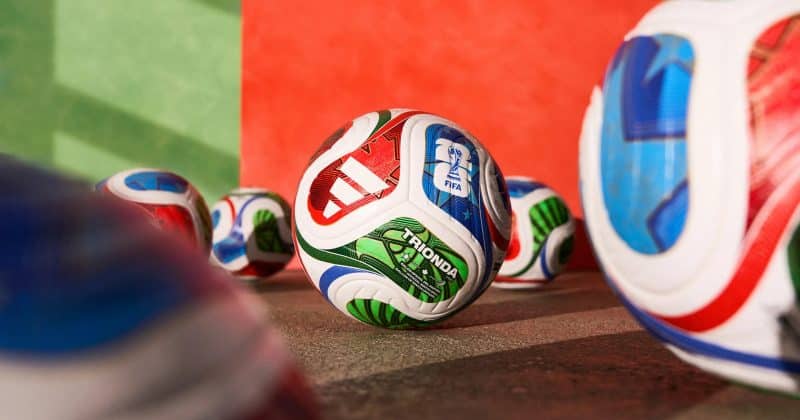
The ball that will define the 2026 FIFA World Cup is already rewriting the physics of the game. Adidas’s Trionda, built with just four panels, the fewest in World Cup history, reaches its drag crisis at roughly 27 mph (43 kph). That is meaningfully lower than the 31-40 mph range recorded by its predecessor, the 2022 Al Rihla.
In English: corner kicks and free kicks should fly more predictably. But booming clearances from the back line could lose some distance.
What the wind tunnel data actually shows
Aerodynamic testing reveals that the Trionda’s drag crisis threshold sits about 4-13 mph below the Al Rihla’s. Drag crisis is the speed at which airflow around a ball transitions from smooth to turbulent, causing a sudden drop in air resistance. When a ball hits that transition at a lower speed, it means the knuckling and wobbling that plague slower deliveries, like corner kicks and set pieces, get tamed earlier in the flight path.
The tradeoff is real, though. At higher velocities, the Trionda’s drag coefficient climbs. A defender walloping a clearance 60 yards upfield will feel the ball die in the air sooner than it would have in Qatar two tournaments ago. For attackers whipping in crosses and bending free kicks around walls, the physics tilt in their favor.