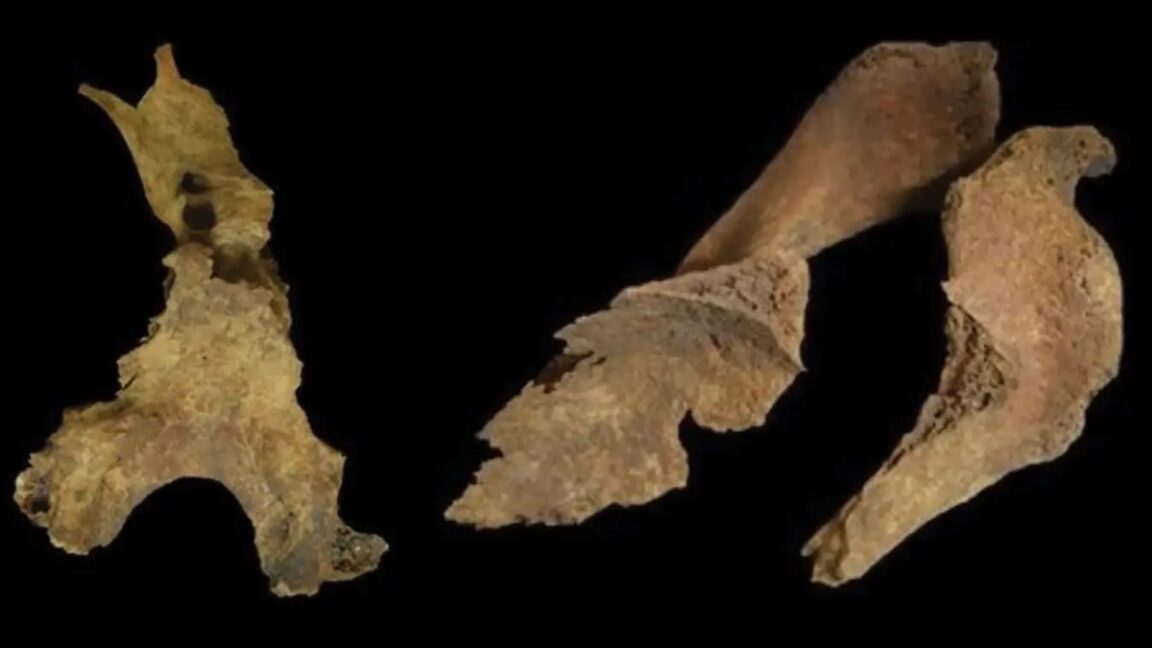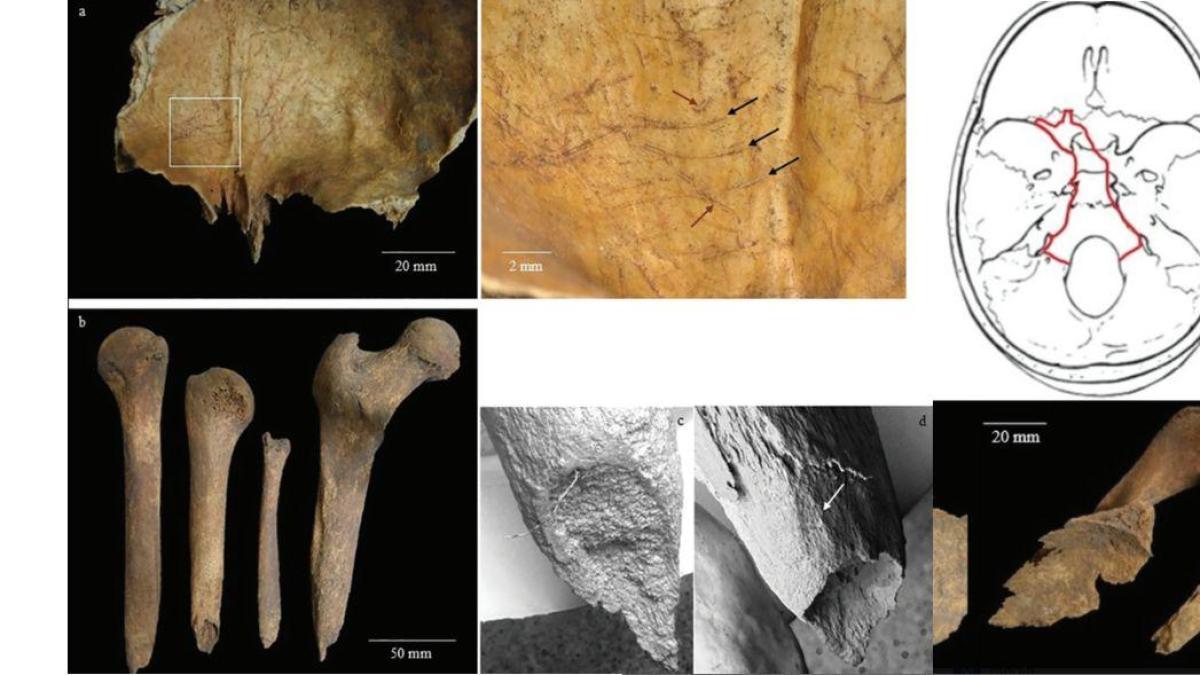
Fragments of the skull (left) and shoulder blades (right) of a woman buried at Loch Borralie, UKRebecca Ellis-Haken
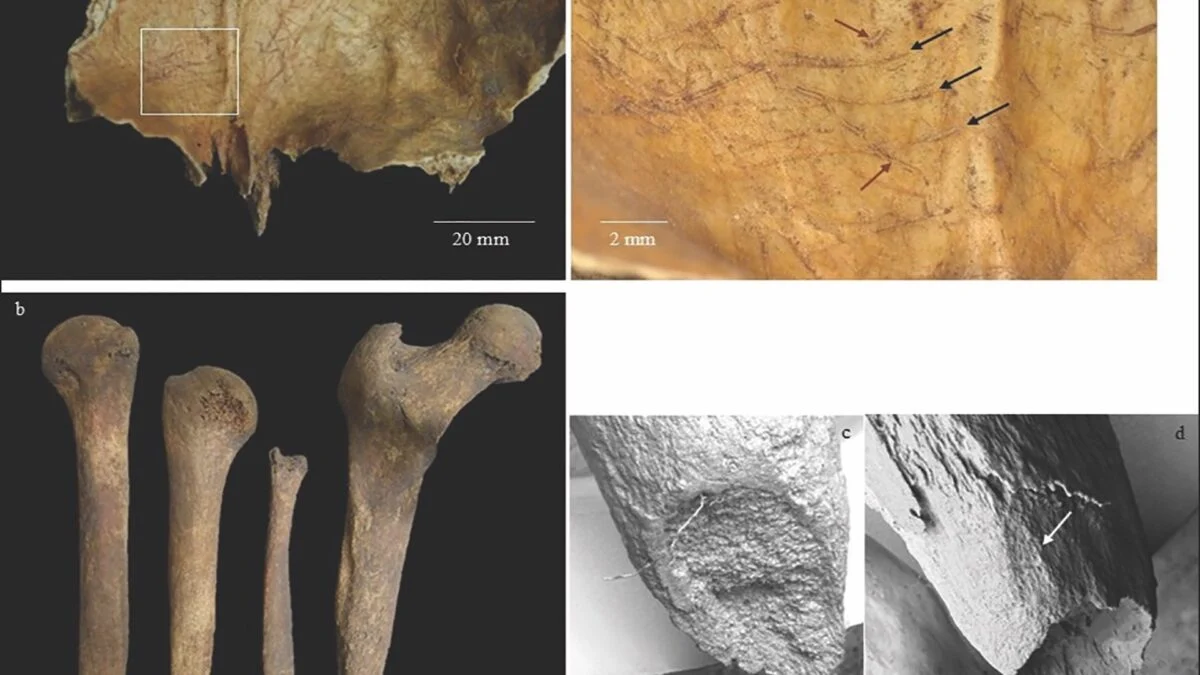
A woman interred in Scotland 2000 years ago has peculiar scrape marks inside her skull, which suggest that removing the brain after death may have been a funeral tradition in Iron Age Britain.
The funerary practices in Iron Age Britain – which ran from about 800 BC until the Roman invasion of Britain in AD 43 – and the Iron Age more generally are mysterious because human remains from that long ago rarely survive.
We do know that some people from this time tended to be buried alongside their maternal kin, rather than spouses. Excavations of bones at the Suddern Farm and Danebury Iron Age sites in southern England indicate that bodies were sometimes exhumed after burial, and in one case a body was left exposed until the flesh was gone before the skeleton was reburied.
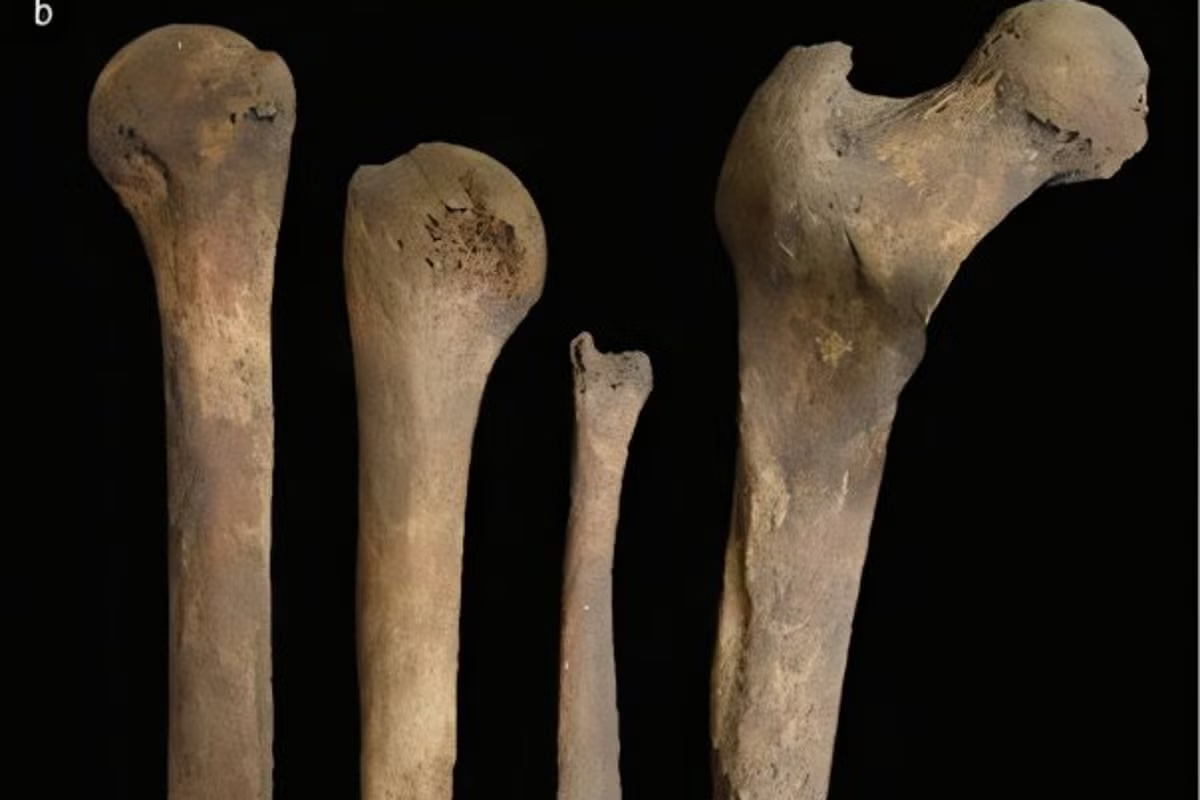
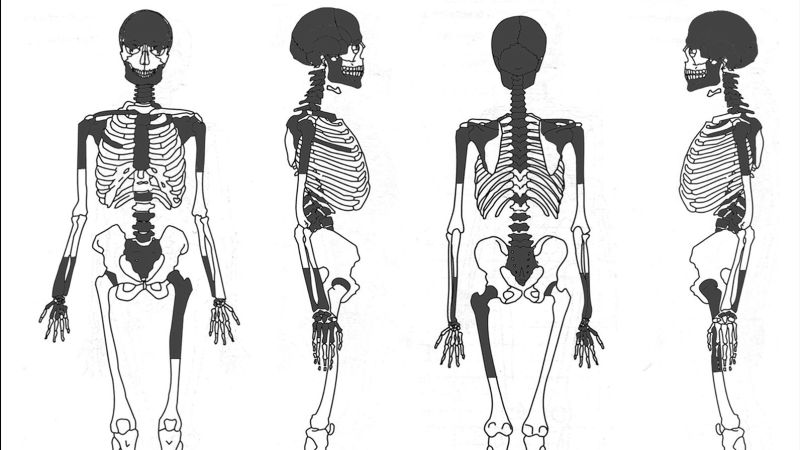
Laura Castells Navarro at the University of York, UK, and her colleagues have re-examined the remains of an adult woman and a teenage boy who were buried in a low stone cairn at Loch Borralie near the north coast of the Scottish mainland, originally excavated in 2000. Both died sometime between about 50 BC and AD 70.