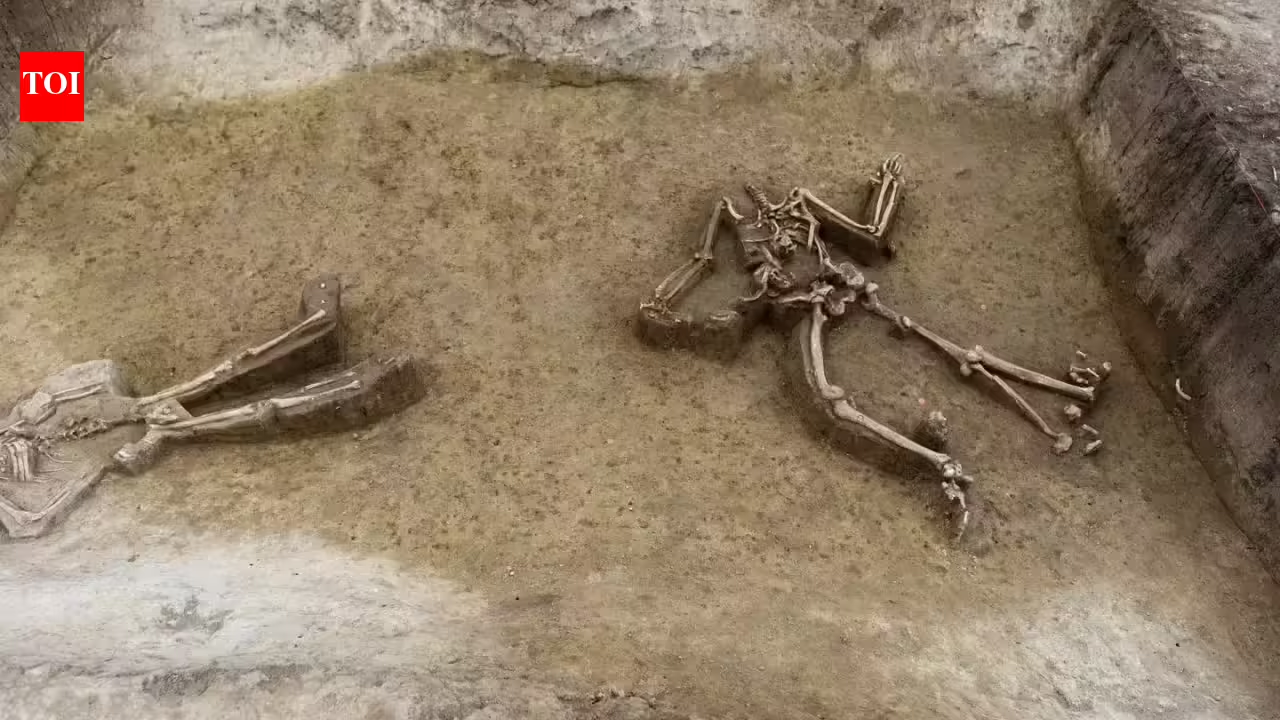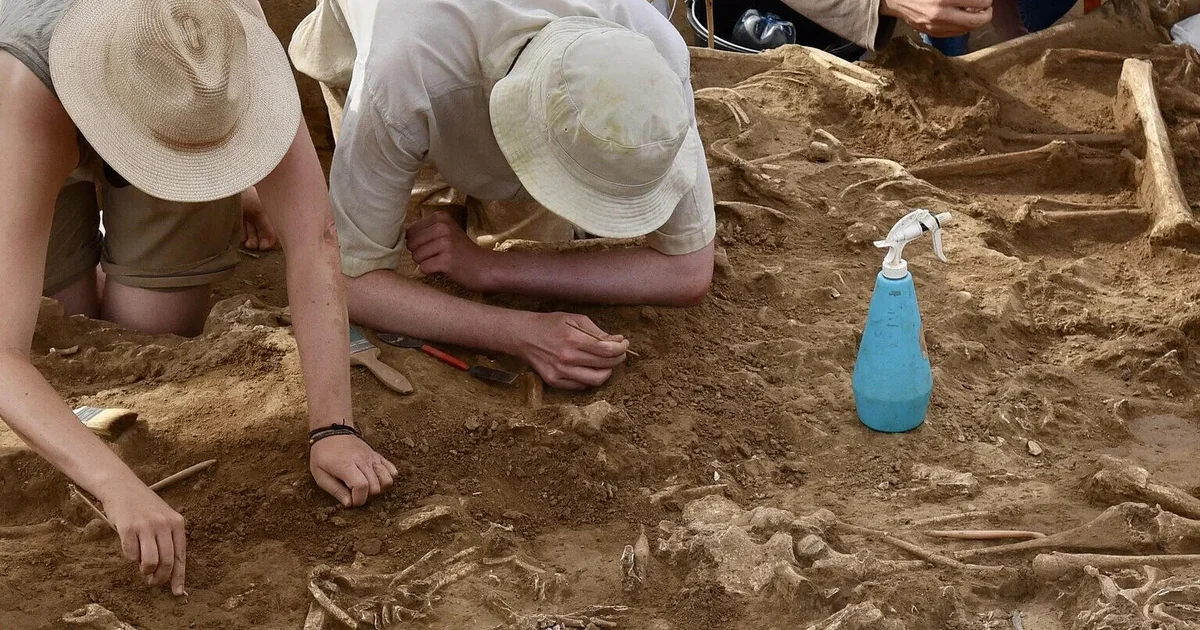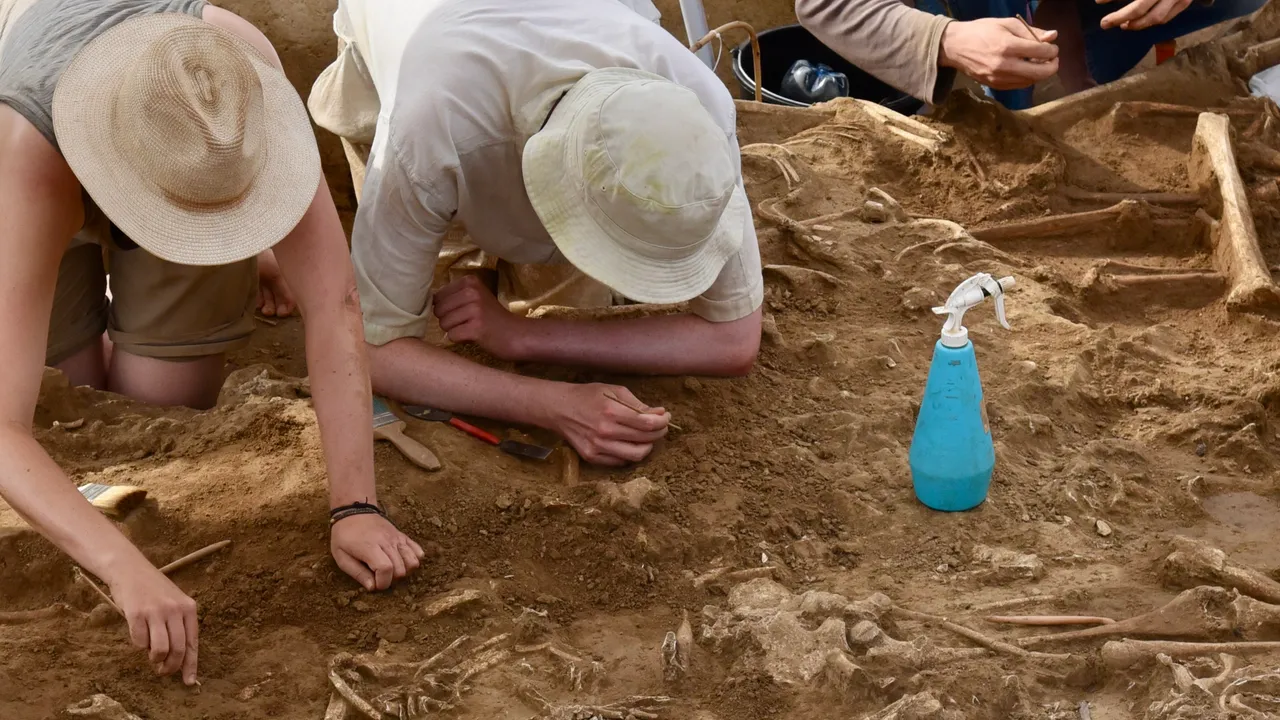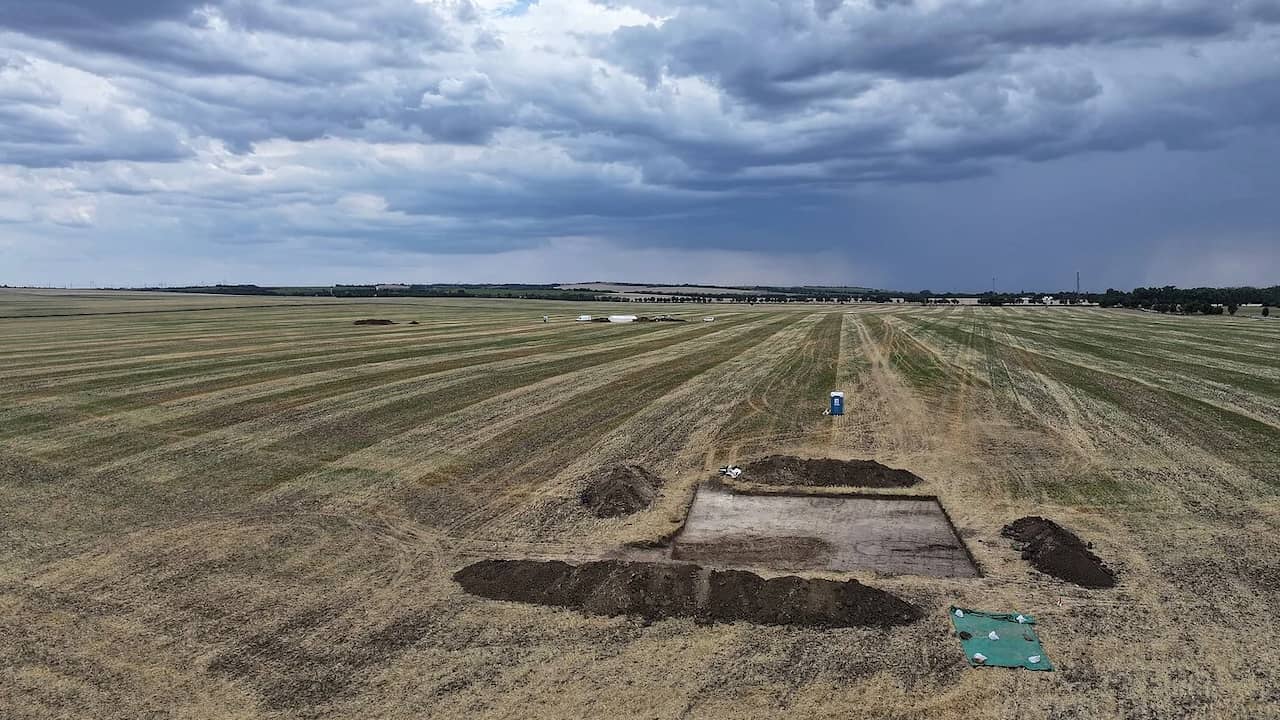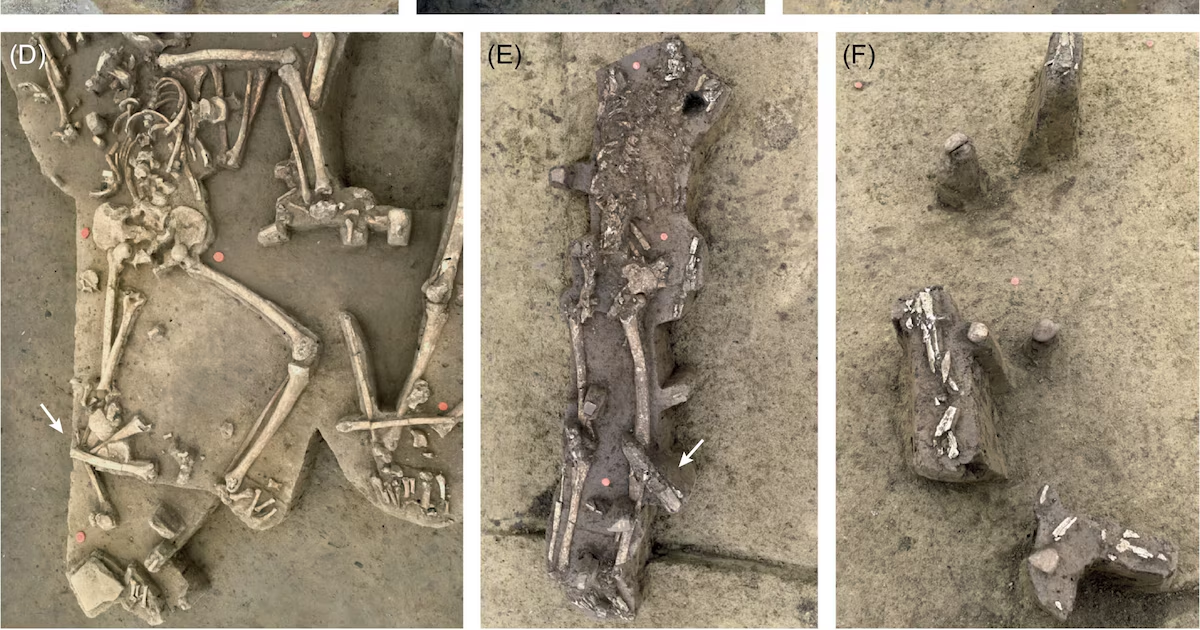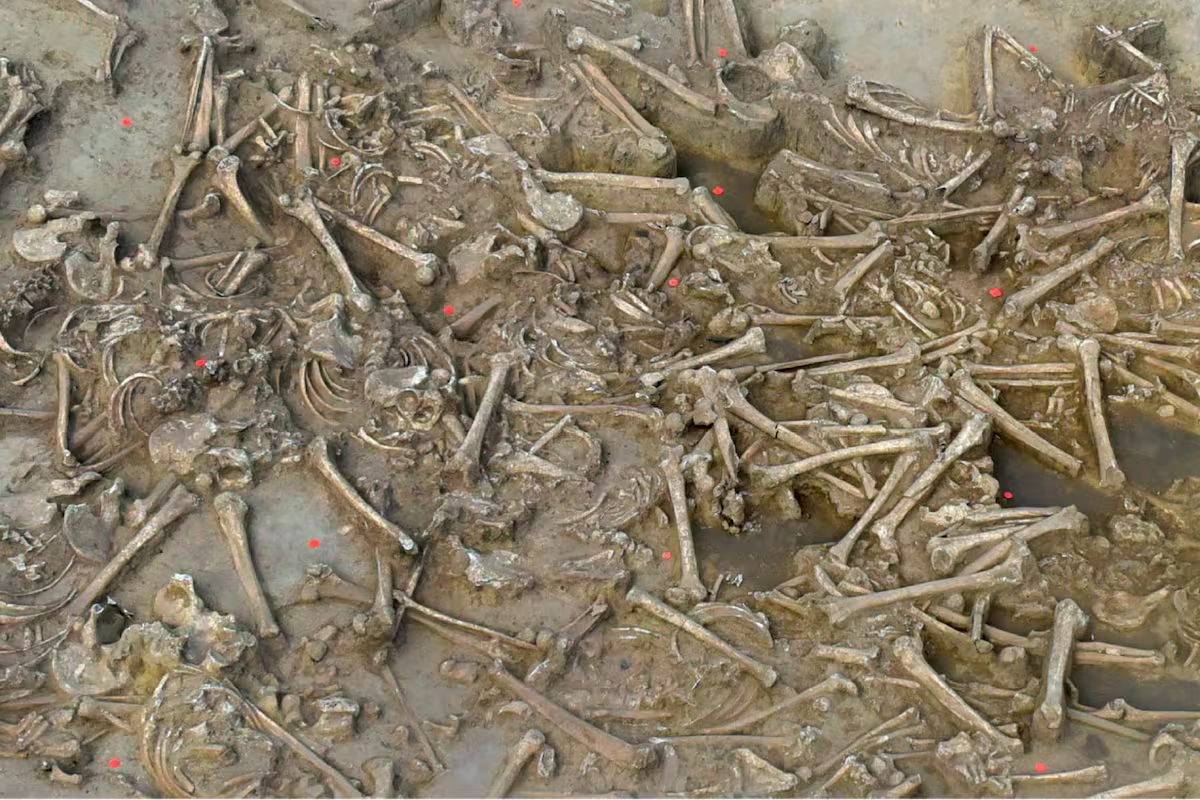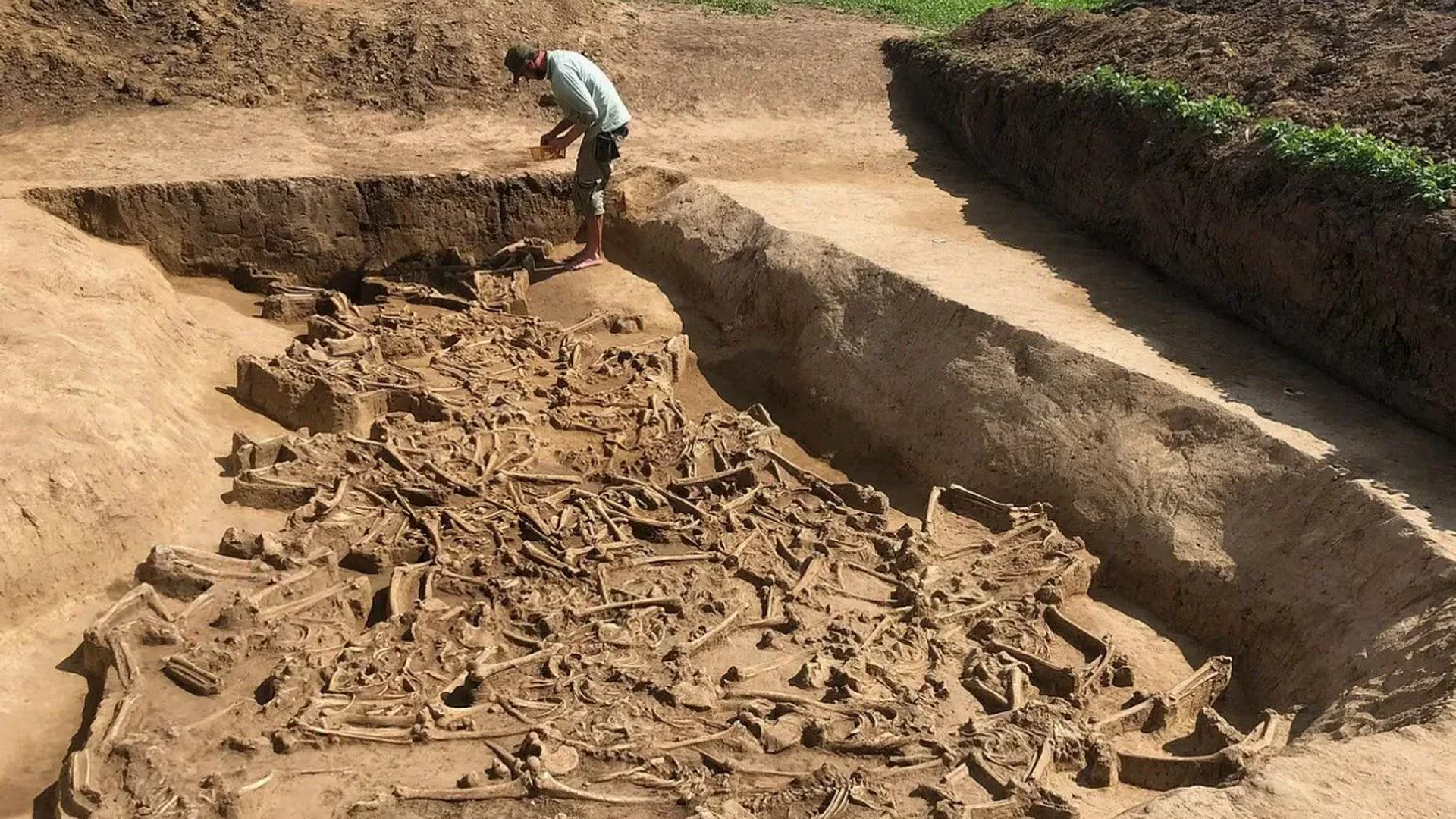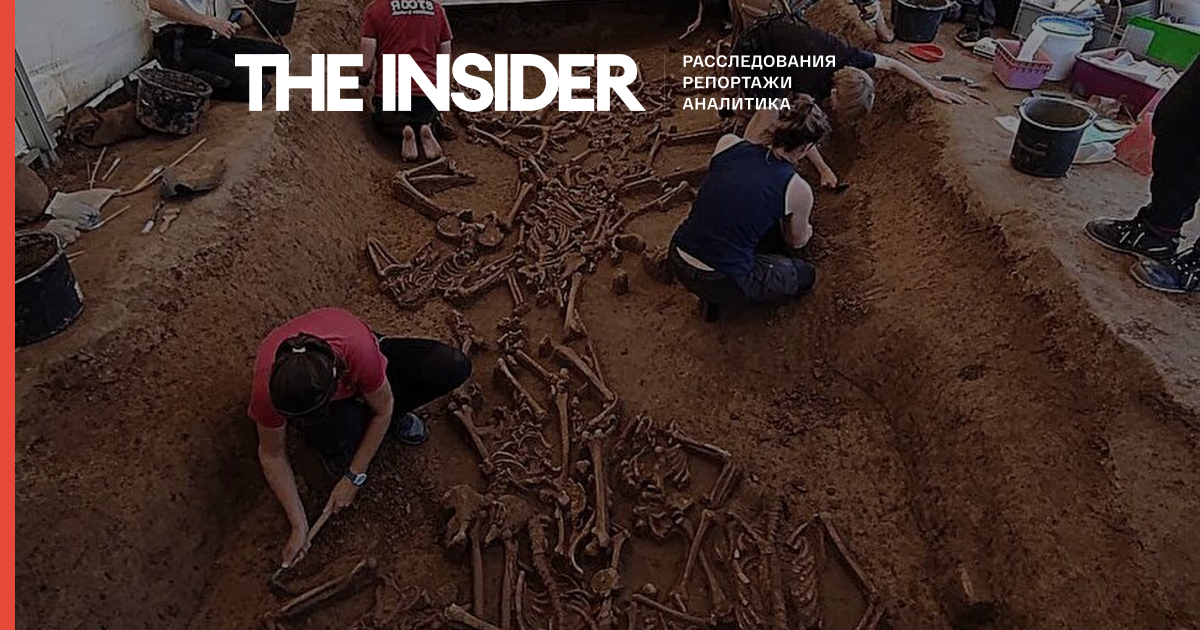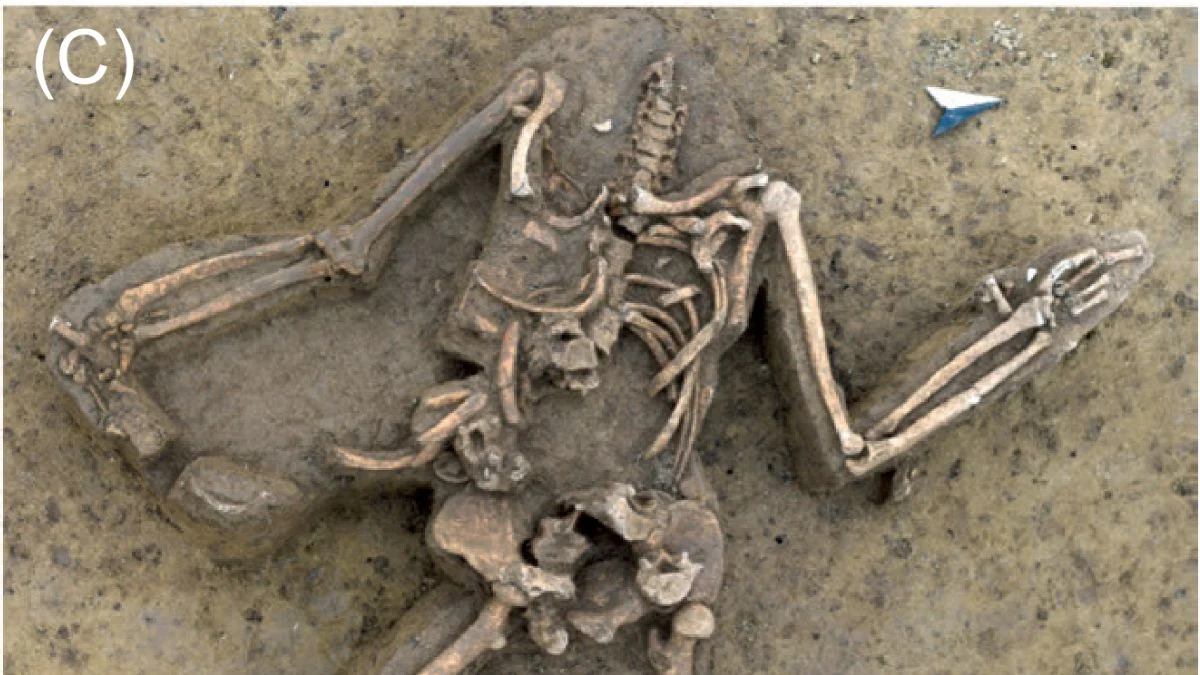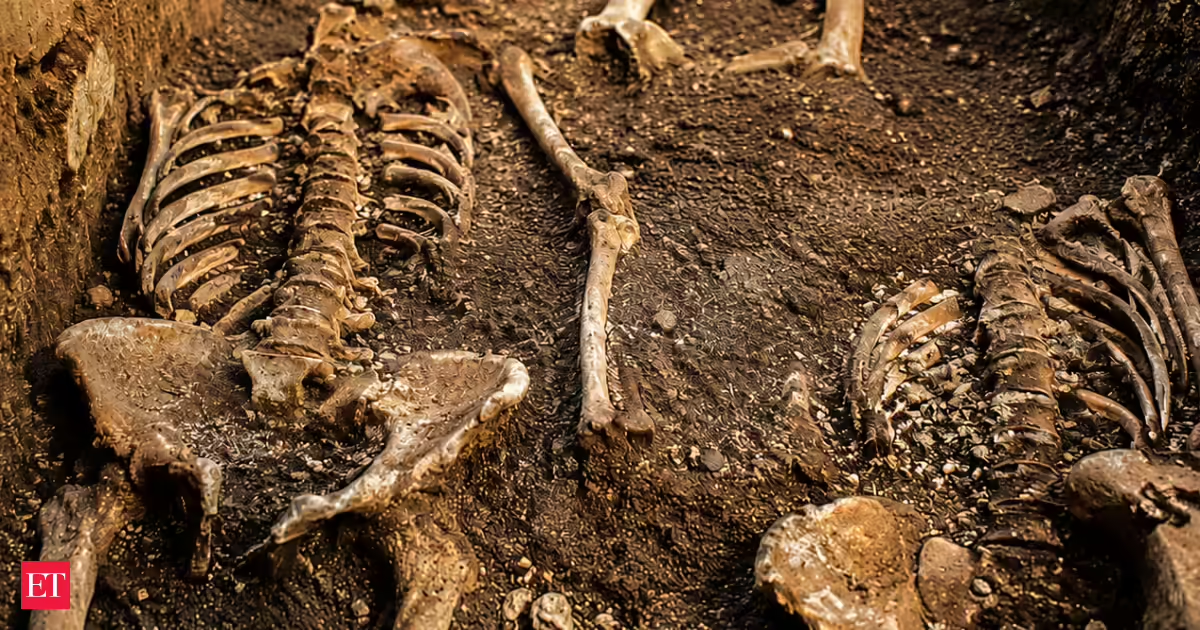
Suppose you are an archaeologist in a quiet corner of southwestern Slovakia and you start uncovering human skeletons. Dozens of them, stacked on each other, crammed into a ditch. And none of them have a head.That’s precisely what researchers at Kiel University and the Slovak Academy of Sciences have been gazing at since 2022, at a location called Vráble, one of the most important Neolithic villages ever discovered in Central Europe. The site was first investigated way back in 2012, but it’s the ditch excavations that have really upended our understanding of Stone Age life.According to a study published in the Proceedings of the Prehistoric Society by lead author Martin Furholt and his team at Kiel University, excavations unearthed at least 78 individuals deposited in and around the ditch, with 77 missing their skulls altogether. Four pairs of headless skeletons were discovered close to the ditch entrance, along with a mass burial of a minimum of 77 headless individuals. The only exception to the missing heads? A child, the only skeleton with its head still attached.The site is about 5250–4950 B.C., so these remains are more than 7,000 years old. And yet they ask questions that feel startlingly modern: what did these people believe about death? What does it mean to detach a person from their head? And who exactly were these ancient communities?This was not a massacre; this was something much more deliberateThe first thing that might come to your mind is a brutal killing. A war. A sacrifice. A dark ritual gone wrong. But the evidence, the researchers say, suggests something quite different.Biological anthropologist Katharina Fuchs, co-author of the study, studied the cut marks on the skeletons’ upper neck vertebrae. The skulls were not hacked off in a frenzy. They had been removed carefully, with sharp tools, in what appears to be a skillful, deliberate process almost certainly after the people were already dead. In other words, this looks like post-mortem decapitation, not execution.Fieldwork at Vráble, Slovakia, where a 7,000-year-old mystery is slowly emerging from the earth. Image Credits: Katharina Fuchs“First analyses suggest, above all, that violent decapitations were not conducted here, but rather skillful removal of the skulls,” Fuchs said in a statement.The lower jaws were also missing, indicating that keeping the head and face as a complete unit mattered deeply to these people. Many of the neck vertebrae of the individuals were found against the ditch wall, indicating that the bodies were placed there carefully after the skulls had been removed. Some were buried in pairs. Others were found in clusters. There is something rather ceremonial about the whole scene, rather than gory.“The deposition of bodies and body parts may have been part of more complex, meaningful and recurring practices,” said Nils Müller-Scheeßel, co-author and archaeologist at Kiel University.The missing heads are the real mysteryThe chilling part of this discovery is that not a single skull from any of these individuals has been found at the site.The heads did not disappear. They were clearly taken somewhere, kept, displayed, or used in ways archaeologists have not yet been able to trace. The heads are now “archaeologically invisible,” as the researchers themselves put it. That invisibility, they say, also makes it difficult to tell whether these individuals died violently or by other means altogether.This practice is not without precedent, but the scale at Vráble is extraordinary. The human head was hugely symbolic throughout the Neolithic world. In ancient Jericho, in today’s Palestinian West Bank, and at other Near Eastern sites, the living removed skulls from dead ancestors, covered them with plaster to recreate faces, painted them, and displayed them in their communities.The mass burial at Vráble, Slovakia: Archaeological drawings mapping the position of each headless skeleton in the ditch.Image credit: T. Kühl, K. FurholtThe plastered skulls of Jericho have long been studied in connection with ancestor worship, the notion that keeping a person's skull around was a means of keeping him or her close, as a source of guidance, protection, or community identity. A similar tradition has been recorded at Çatalhöyük in southern Turkey. In these cultures, the head was not simply a part of the body; it was the person.Further context comes from parallel finds elsewhere in Neolithic Europe. Researchers say 11 people’s bones, dating back 5,600 years, found in a cave in Spain showed signs of being part of a ritual act in which a family was massacred and possibly eaten. And in a Neolithic village in Italy 7,400 years ago, archaeologists found a collection of 15 human skulls that appear to have been handled repeatedly, possibly for an ancestor ritual. The concept of the human head as sacred, preserved, or symbolically powerful appears to have been widespread in ancient Europe and the Near East.A Stone Age neighborhood with something to proveVráble is particularly interesting for its peculiar social geography. The settlement included three distinct neighborhoods, and more than 300 houses were built. They were from the Linear Pottery culture (LBK), one of the earliest farming communities in Europe, recognized for their line-decorated pottery, which was found throughout central Europe.The EBSCO Research overview of the Linear Pottery culture states the LBK was among the first agricultural societies in Europe, developing in the Danube River region about 5600 BCE. These were not wandering nomads; they built longhouses, farmed the land, and organized themselves into structured communities with clear social identities.One of Vráble’s three neighborhoods was enclosed by a protective double ditch, about 0.8 miles long. The entrances to that ditch faced away from the other two neighborhoods, a telling architectural choice that researchers say hints at tension, competition or distrust between people who lived in the same village.Burying bodies in the entrance area of the ditch may have been a way of claiming and defining that space, marking the space as belonging to a particular group and its ancestors. The dead, in other words, may have been boundary markers and guardians of the neighborhood’s identity.The headless dead of Vráble: bones that have rewritten what we know about Stone Age burial rituals. Image Credits: Katharina Fuchs, Agnes Heitmann, Nils Müller-Scheeßel, Till KühlWhy this story matters beyond the headlinesIt would be easy to label this as “weird ancient history” and just keep scrolling. But there is something really moving in what is being revealed here.These people, farmers in a small village in Slovakia more than 7,000 years ago, had complex beliefs about death, identity and community. They cared enough for their dead to do careful, deliberate ritual. They buried people in pairs. They kept the heads. They built walls, literal and perhaps social, between themselves and their neighbors.That's not so different from us.The human remains are undergoing further analysis, and the research team intends to continue excavating the full length of the ditch. The skulls are still out there somewhere waiting to be found.“Vráble is an exceptional excavation site,” said lead author Martin Furholt. “It provides us with the keys for the discussion of fundamental questions: how were death and the body understood in the Neolithic, and what role did the associated practices play in the social fabric of early farming societies?”We don’t have all the answers yet, but the questions themselves are extraordinary.
77 headless skeletons found in a 7,000-year-old ditch in Slovakia, and the only skull left belonged to a child
Archaeologists discover 77 headless skeletons in a 7,000-year-old ditch in Slovakia, revealing complex rituals and social practices of early farming communities. What happened to the missing heads?
1,195 words~5 min read