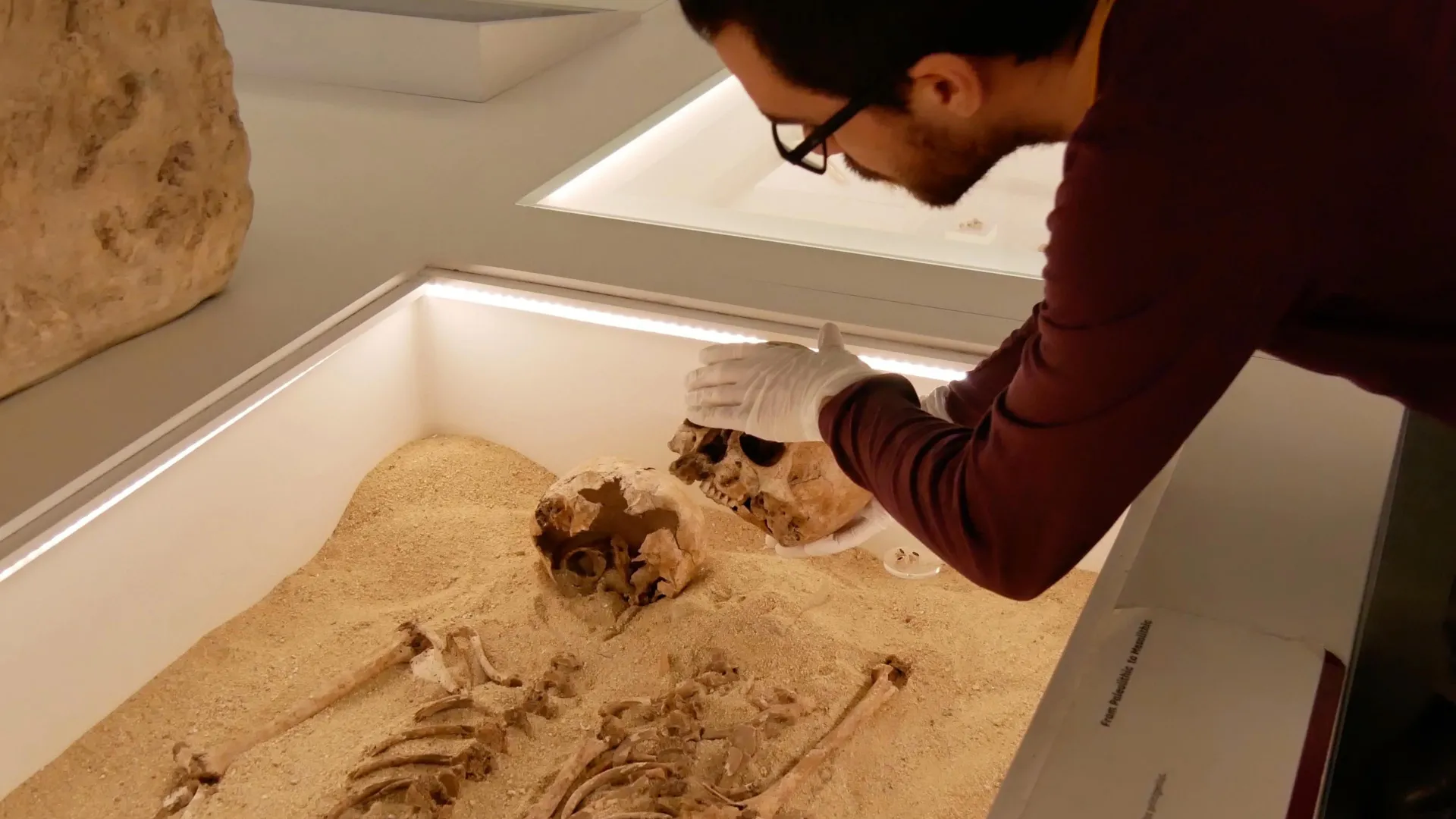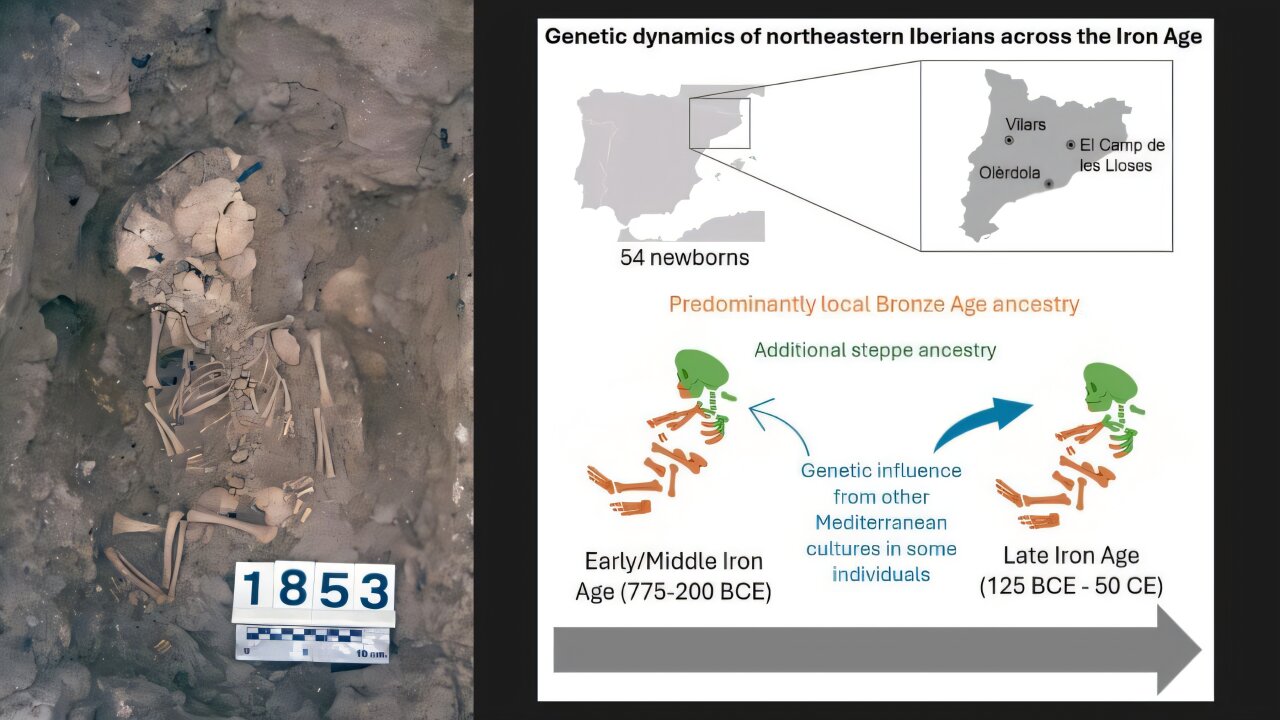
Left: Remains of one of the newborns from Els Vilars (Arbeca, Lleida) analyzed in the study. Credit: ARQHISTEC-GIP, UdL. Right: General graph of the study, from iScience (2026). DOI: 10.1016/j.isci.2026.116186
A study led by a UAB research team of Biological Anthropology has analyzed the genome of 54 newborns with the aim of tracking the genetic history of their culture since it developed in the Early Iron Age until the start of the Roman period, some 2,700 to 2,100 years ago.
Despite being in contact with other Mediterranean cultures, the genetic identity of the Iberian people from the northeast of the Iberian Peninsula existing in the Iron Age remained largely stable throughout six centuries. Emerging from local Bronze Age populations, they evolved gradually without any major migratory movements bringing substantial changes to their DNA. It was not until the arrival of the Romans that they integrated new genetic influences that shaped a more diverse population, in parallel with the political and social transformations that took place.
This is the conclusion reached in a study led by researchers from the Universitat Autònoma de Barcelona (UAB). Published in the journal iScience, the study has obtained the most complete and precise image to date of the genetic history and evolution of the Iberian peoples inhabiting the northeast of the Iberian Peninsula from the beginning of the Iron Age until the Roman conquest, between 2,700 and 2,100 years ago.