An international team led by the University of Vienna and Liège University Hospital Centre has uncovered genetic changes linked to a rare inherited growth disorder in two people who lived more than 12,000 years ago. By combining ancient DNA testing with modern clinical genetics, the researchers diagnosed the condition in two individuals buried together in southern Italy. Their findings, published in the New England Journal of Medicine, demonstrate that paleogenomics can now trace ancient population history and pinpoint rare genetic diseases in prehistoric humans.
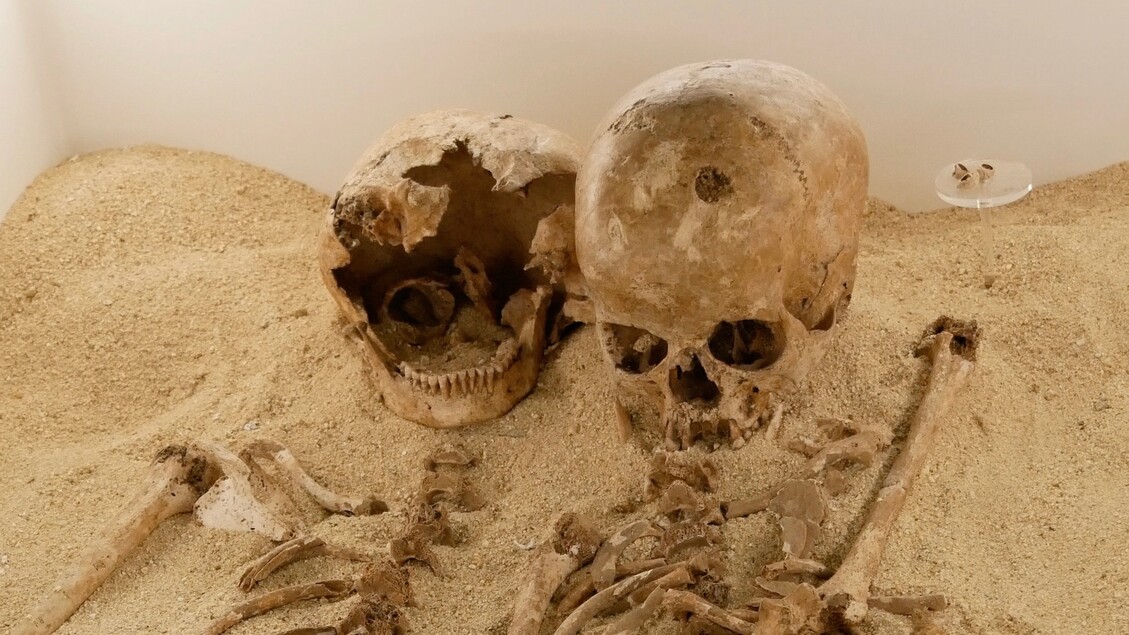
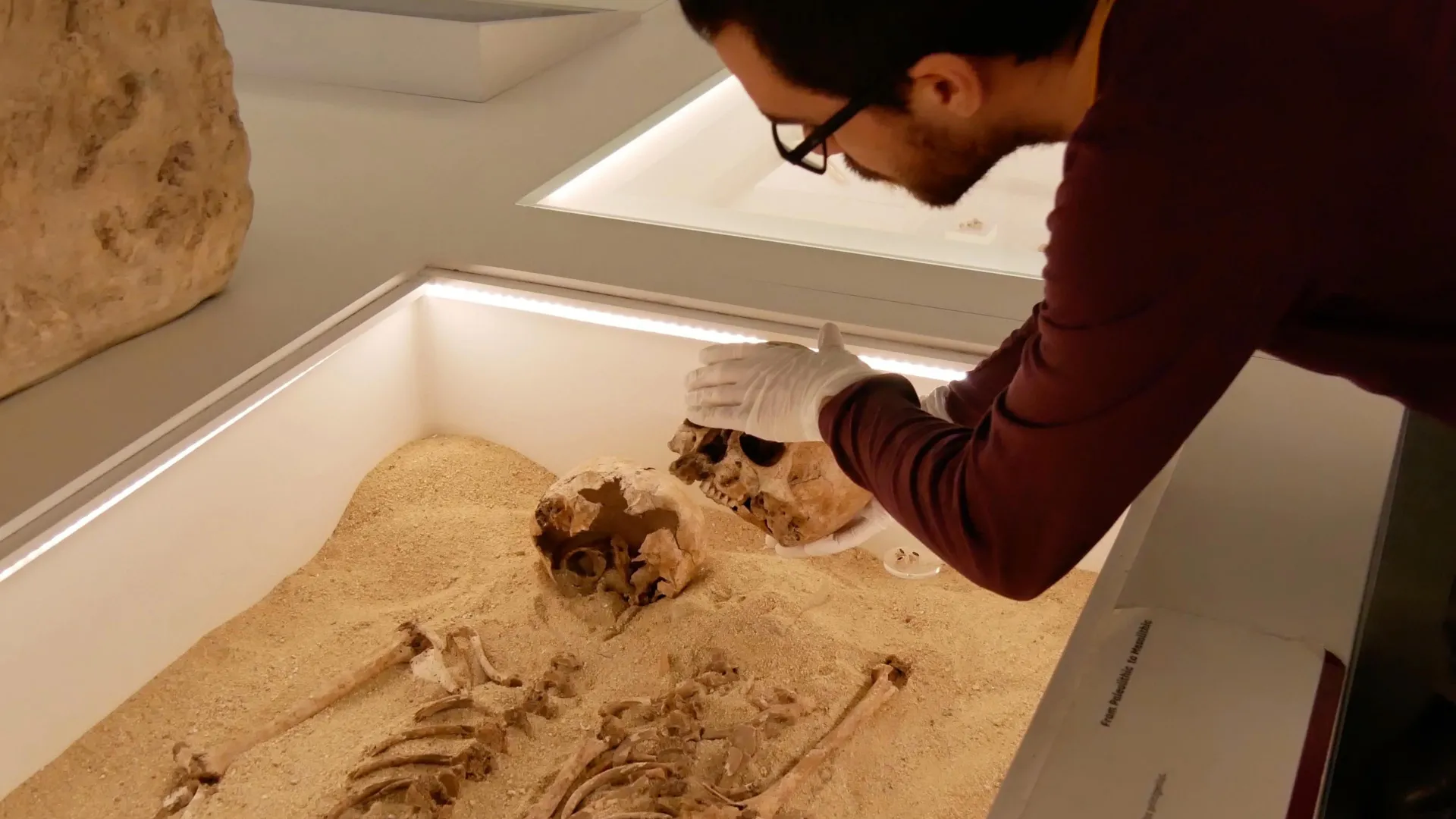
The work builds on a fresh investigation of a famous Upper Paleolithic burial discovered in 1963 at Grotta del Romito in southern Italy. For decades, the site intrigued scientists because of unusual skeletal traits and the way the two individuals were laid to rest. Researchers long questioned how the pair were related and whether a medical condition explained their short stature.
Ice Age Double Burial Raises New Questions
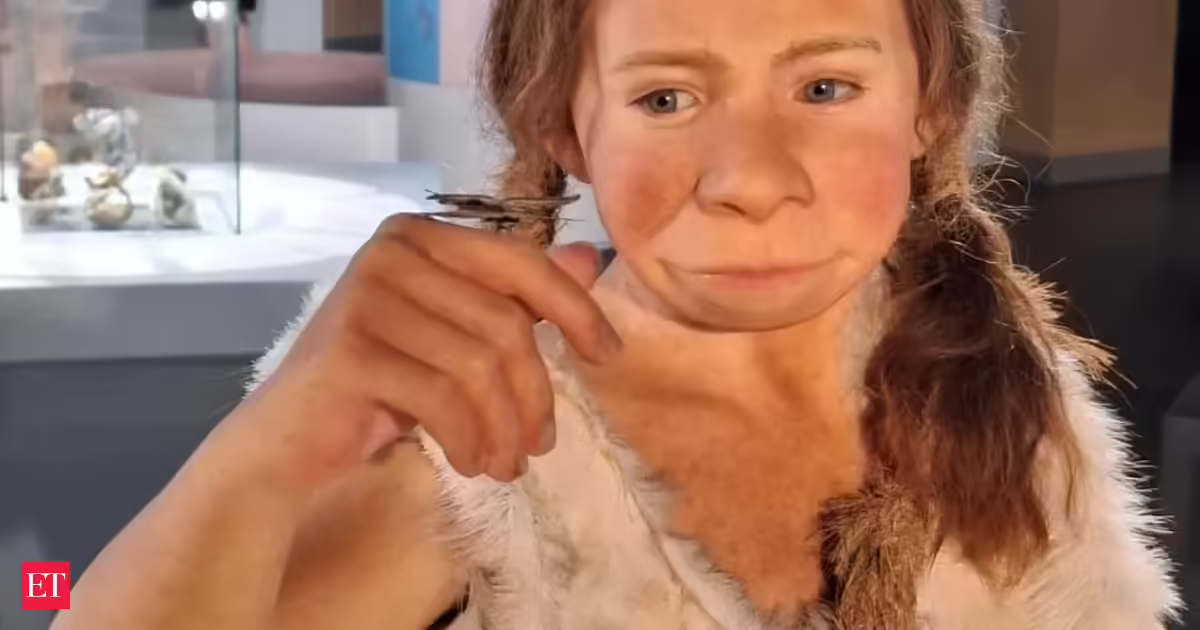
The two individuals were buried in an embrace. "Romito 2," a young person with notably shortened limbs who was once believed to be male, rested in the arms of "Romito 1," thought to be an adult female. There were no signs of injury. Romito 2 stood about 110 cm (3'7") tall, a height consistent with a rare skeletal disorder called acromesomelic dysplasia, although bones alone could not confirm that diagnosis. Romito 1 was also shorter than average for that time period at roughly 145 cm (4'9"). Over the years, experts debated their sex, their relationship, and whether the same condition might explain both of their statures.