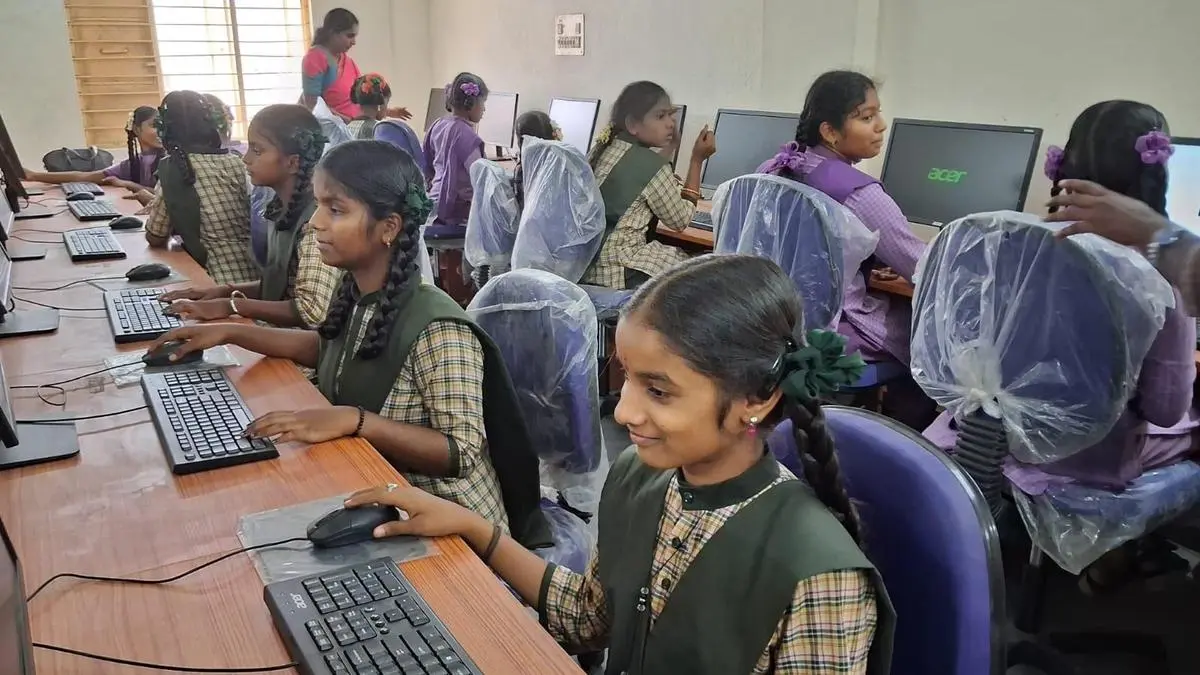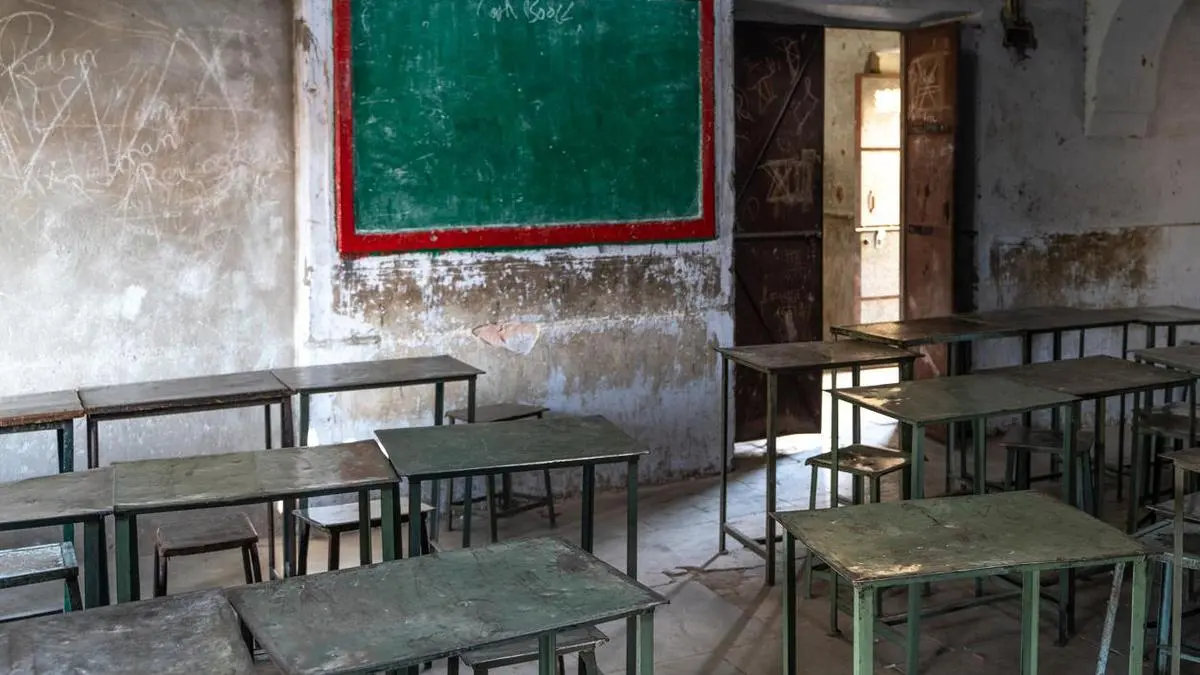
Many government schools are in bad condition
| Photo Credit:
Aleksey Gavrikov
India cannot achieve its 2047 goals without shifting to a new economic model, as it did more than 30 years ago in 1991. However, a new economic model will not be enough. We must recognise that several non-economic factors, called meta-economic factors, affect the functioning and outcomes of any economic model.Improving our meta-economic factors is essential to speeding up India’s economic progress. This truth is often relegated to the background, as governments and analysts tend to focus more on economic policies, which seem more amenable to reform and change. To avoid this problem, here we focus only on meta-economic factors, not economic policies.First, we need clear allocations of responsibilities. Consider agriculture. Under the Constitution, it is a State subject, not in the Union list. Yet, right from Independence, the Union government has had an agriculture minister. In the last 25 years, the Union government has launched more than 20 schemes aimed at agriculture.This Union government encroachment reduces the responsibilities of the State governments. And it also makes major agriculture policy reforms difficult. This lack of clarity and responsibility was brought out clearly when the Union government enacted three controversial farm bills in 2020. Strong resistance from some UP, Punjab, and Haryana farmers forced the Centre to repeal the laws. The Chief Ministers were not in the picture.This confusion about roles is one of the major factors that have held down Indian agriculture, leading to low incomes, low growth rates, and too many people. The time has come for the accountability and responsibility for agriculture to increasingly shift from the Union to the State governments.Improve governanceSecond, India needs improved governance. Even sound policies fail to have the needed impact because the implementation is flawed. Or, the policies don’t even percolate down to the target beneficiaries. In my talks with young people who have worked in the field, I hear repeatedly that too many people don’t even know of some policies designed for them. They are just on paper. And, when they are implemented, Union and State policies often don’t work because they don’t take into account India’s diversity. Even a single district may have several distinct economic zones, each with its own opportunities and constraints, which uniform policies cannot tackle.India’s large cities suffer from serious problems such as air pollution, water shortages, potholed roads, uncollected garbage, and noise pollution — all of which constrain productivity. One of the reasons for these failures is that the metropolitan authorities don’t have the necessary authority and funds to do a good job. And, where the Union government could be helpful, as the air pollution in the NCR is a multi-State issue, it plays no role.In the villages, Panchayati Raj institutions are Constitutional entities. You would think that more than 30 years after they were created, they would have become impactful institutions. Not so. While they have successfully adopted digitalisation, their overall impact remains limited. While their performance varies significantly across States, there are no indications that these institutions are, or will soon be, key players in bringing about rapid economic progress. They need clearer accountability and resources.Education systemThird, India must greatly improve its entire education system — in fact, shake it up totally. Poorly educated young people tend not to be future high-productivity workers. India does produce many world-class students, but this is a tiny, non-representative elite.India’s government schools are awful. Low-income parents have voted with their hard-earned money to move their children to private schools. In 1991, about 80 per cent of children were in government schools. Now that incomes have risen, this share has shrunk to about 50 per cent. Parents sacrifice their own comforts to pay their children’s school fees. They can afford only low-fee private schools. The quality of their education is correspondingly low, but still better than that of the average government school. A country with poorly educated students cannot grow rapidly today, as rapid technological change affects most aspects of production.Those who make it to college find that the focus is on rote learning, though some new entities, with high fees, are different. Infosys’ NR Narayana Murthy famously said that weaknesses in the education system mean that most young Indians lack employable skills. The implication is that they will be future low-productivity workers.Most government schools and colleges are operated by State governments, with the Union government mainly running elite institutions. The Chief Ministers, particularly of lagging States, must devote resources and energy to improve their schools and colleges to increase the skills and productivity of the average student.In conclusion, India’s Union and State governments need to build up their design and implementation capacities quickly. This is a daunting challenge — it will not happen quickly. On the other hand, non-profit entities can build their capacity quickly by tapping networks of senior and young people who are keen to move India forward. Further, there is now much more money available in India than even 30 years ago, making it easier for them to secure Indian funds. The agendas of these entities can range from research, as at the famous Indian Institute of Science, founded in 1909, to promoting health/education, and better agricultural practices. Let them do what governments find difficult to get done.The writer is an economist with extensive practical public policy experiencePublished on June 9, 2026