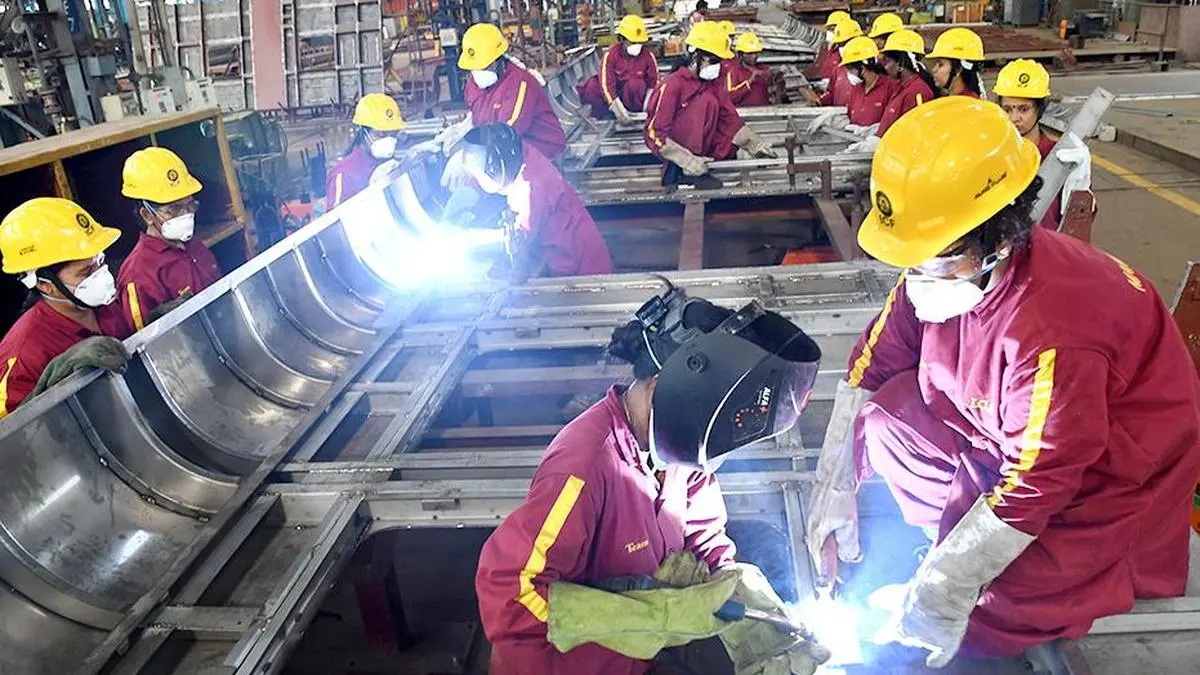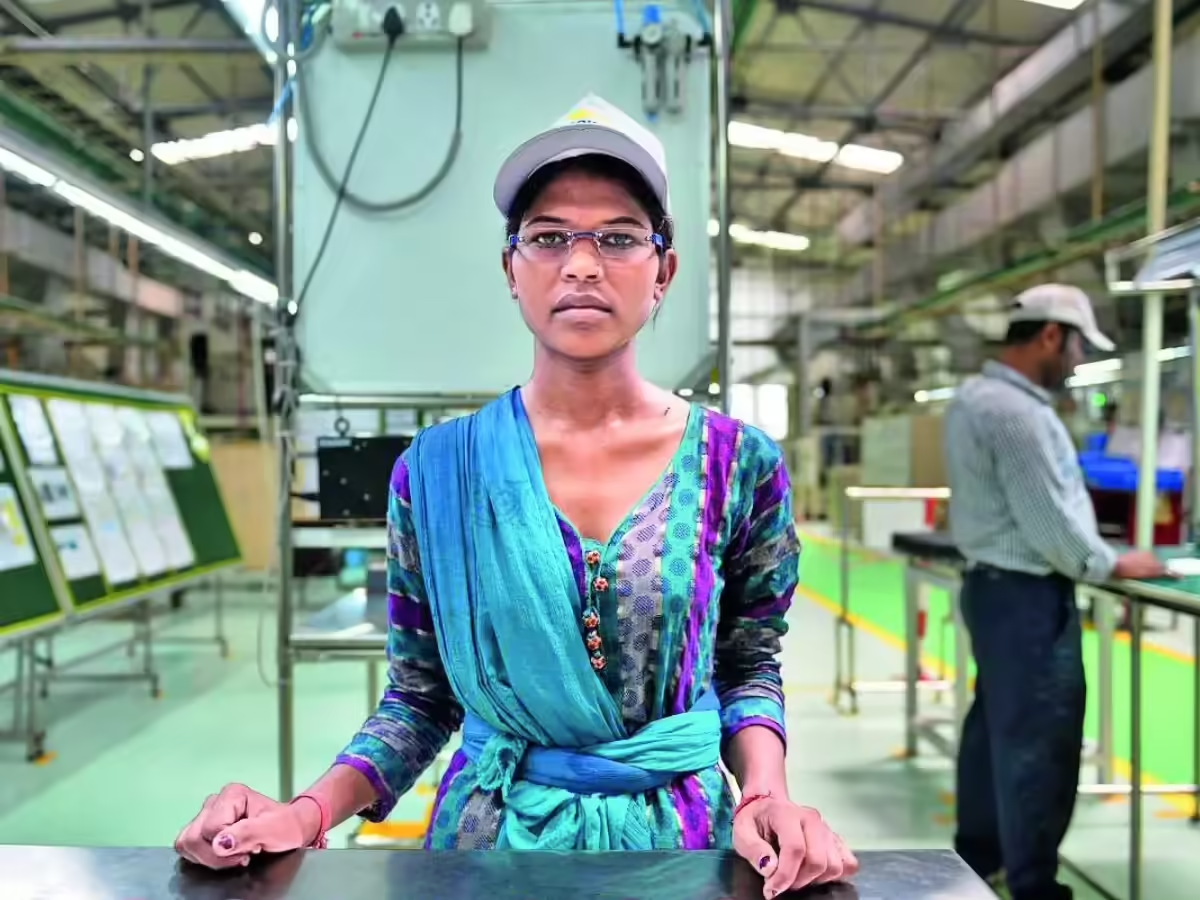
New York: Economists are pessimistic about how India's low and declining fertility rate, at 1.9, according to Sample Registration System (SRS) 2024 report released last month, will impact future economic growth. Many Asian and European countries with sharply falling fertility rates have implemented a range of schemes, giving financial incentives to families to have more children.Alas, money cannot buy certain things. Causes of falling fertility go far beyond rising cost of raising children. Such schemes have failed to deliver more babies everywhere. India is unlikely to be an exception. That will, of course, not stop politicians from implementing similar schemes. Already, N Chandrababu Naidu has announced a population care programme with financial and maternity leave incentives to families if they have 3, or even better, 4, children. Other states will likely announce similar schemes.Solution to the problem lies elsewhere. India has a large, untapped reservoir of women who have traditionally remained outside the workforce as full-time homemakers, caregivers for children and the aged. Our gender norms have prevented us from fully realising this huge demographic dividend. It's time to create new norms where there is a family and societal expectation that every woman should join the workforce, and every man should contribute to household chores.This may sound utopian. Yet, several countries, with gender norms like India's, have made such transitions over short periods. Japan, one of the first countries to experience the spectre of falling fertility, responded by raising women's work participation from 57% in 1990 to 77% in 2025. South Korea, which has experienced the sharpest decline in fertility globally, responded by raising women's work participation from 49% to 64% over the same period.India's labour force participation among working-age women, 35-40%, is among the lowest in the world. So, we have a long way to go to reach the global average. A steady increase in this rate can meet India's rising workforce needs for decades.New fertility estimates, based on SRS 2024 report, dramatically change population projections for India. In 2024, UNDP, based on the 2011 census, projected that India's population would peak at 1.7 bn in the early 2060s. New projections with the latest fertility data suggest that it'll peak at 1.6 bn, two decades earlier, by around the mid-2040s, and then decline, most likely at a faster pace than the pace at which it rose.In short, with the new numbers, India has lost 100 mn future Indians, youthful consumers and workers who were going to propel India's economic growth and make it 'viksit'. The demographic dividend we were so keenly awaiting has suddenly vanished.Shockingly, India's demographic transition has quickened to such a pace that as many as 8 states have fertility rates of 1.5 or lower - similar to Scandinavian countries. While still a lower-middle-income country, India's fast demographic transition matches that of many rich countries. Alas, we are going to face the worries of the rich world without their riches.SRS 2024 data refute the widely-held narrative that fertility trends divide India into 2 distinctly different regions or 'sub-nations' - southern states with low fertility, and northern states with high fertility. In reality, except for 5 states in the Hindi belt, fertility is below replacement rate across India. Indeed, the three lowest-fertility states are Delhi, West Bengal and Tamil Nadu.Lowest-fertility states/regions are spread across the country: Delhi (1.2), Jundefined West Bengal (1.3), Odisha (1.7) and Assam (2.0) in the east; Maharashtra (1.5) and Gujarat (1.8) in the west; and Tamil Nadu (1.3), Kerala (1.4), Andhra Pradesh (1.5), and Karnataka (1.5) in the south.Fertility rates have fallen in all states for which SRS has released data. So, it's most likely that the outcome of delimitation won't change much if GoI uses population projections based on SRS 2024 instead of 2011 census. Yet, it makes sense to use the most recent data.Hopefully, short-term transition to the new reality won't be too disruptive. Companies planning their future investments for a younger consumer profile will likely shift to the new scenario without much loss. Local governments will increasingly have to pay greater attention to needs of ageing populations.In the long run, however, increasing women's workforce participation is the only route for India to become a developed nation. And to save the country from an otherwise stark fate.The writer is professor of social policy, Columbia University, US(Disclaimer: The opinions expressed in this column are that of the writer. The facts and opinions expressed here do not reflect the views of www.economictimes.com.)
More working women, not more babies, key to growth - The Economic Times
India faces a demographic shift with falling fertility rates. Economists are concerned about future economic growth. Instead of financial incentives for more children, the focus must be on increasing women's workforce participation. This will meet workforce needs and help India become a developed nation. Local governments will need to address the needs of an aging population.
738 words~3 min read