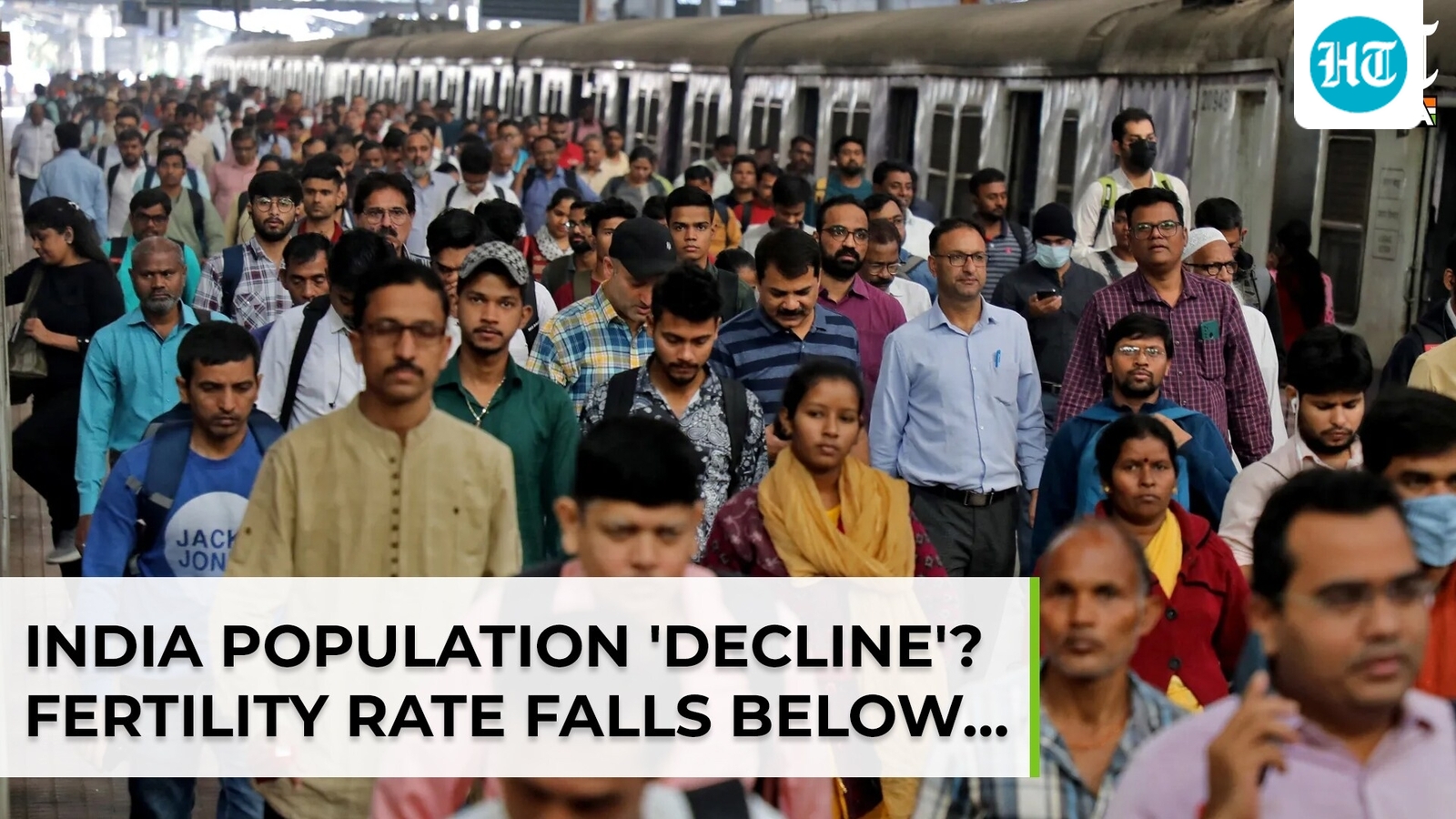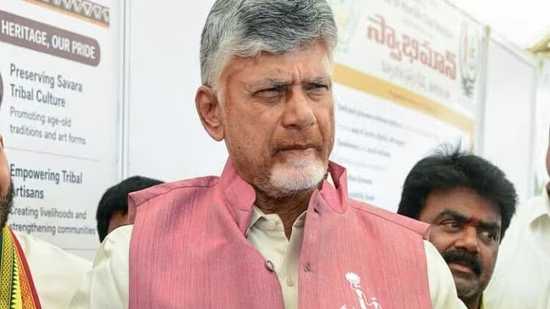
For decades, Indian policymakers have encouraged population control, with the familiar slogan of ‘Hum Do, Humare Do’ (We two, our two). However, the recent drop in India’s Total Fertility Rate (TFR) — the average number of children a woman would have in her lifetime — has now dropped to 1.9, below the replacement rate of 2.1, with some southern States seeing their TFR drop to 1.3. Last month, Andhra Pradesh Chief Minister Chandrababu Naidu announced cash incentives of ₹30,000 and ₹40,000 to women having their third and fourth child respectively, in a bid to reverse that trend. Several other southern States have indicated that they also see the benefits of boosting population growth, though not through a cash payout. Should India incentivise bigger families? Aparajita Chattopadhyay and Neelanjan Sircar discuss the question in a conversation moderated by Priscilla Jebaraj.
Why are policymakers considering a change in the approach to population control?Aparajita Chattopadhyay: After a long struggle with family planning since independence, our fertility has started declining. There are State-level variations, but overall fertility now is 1.9. It is fine, and India can grow in this way for maybe 40 to 50 years. But reversal of fertility trends cannot be a policy driven thing. It is deeply rooted socio-culturally and is an individualistic choice. You cannot tell a group of women to increase fertility because I am giving you money. It has never happened in that way, even in European or other Asian countries.