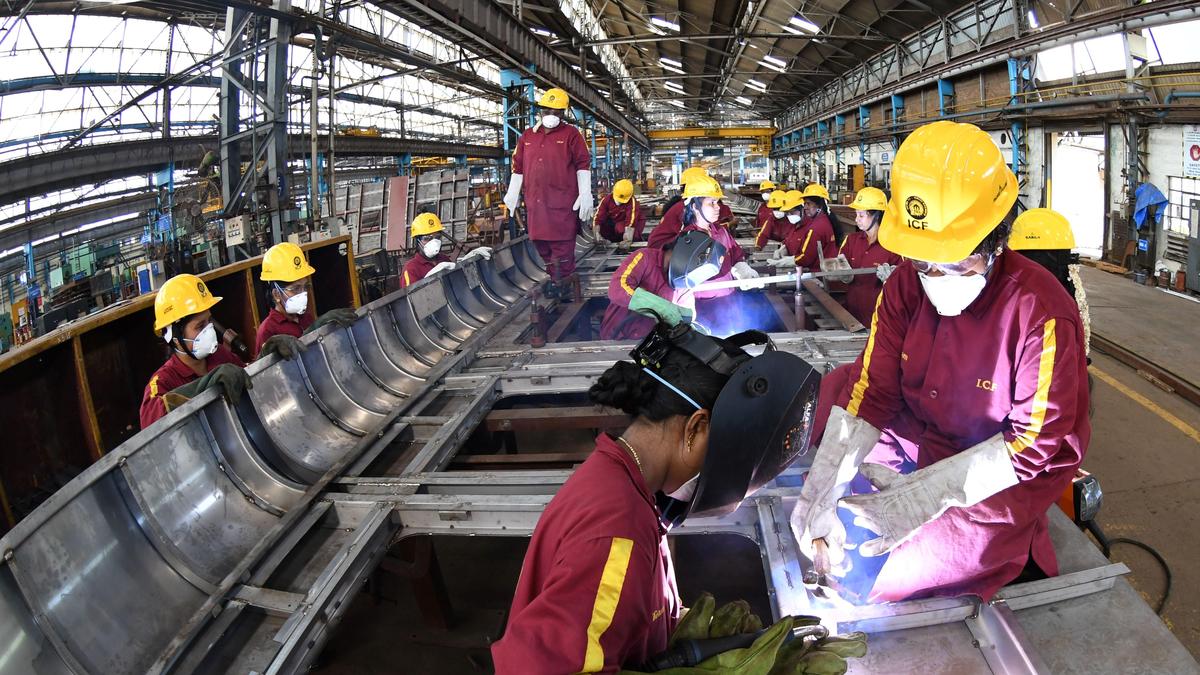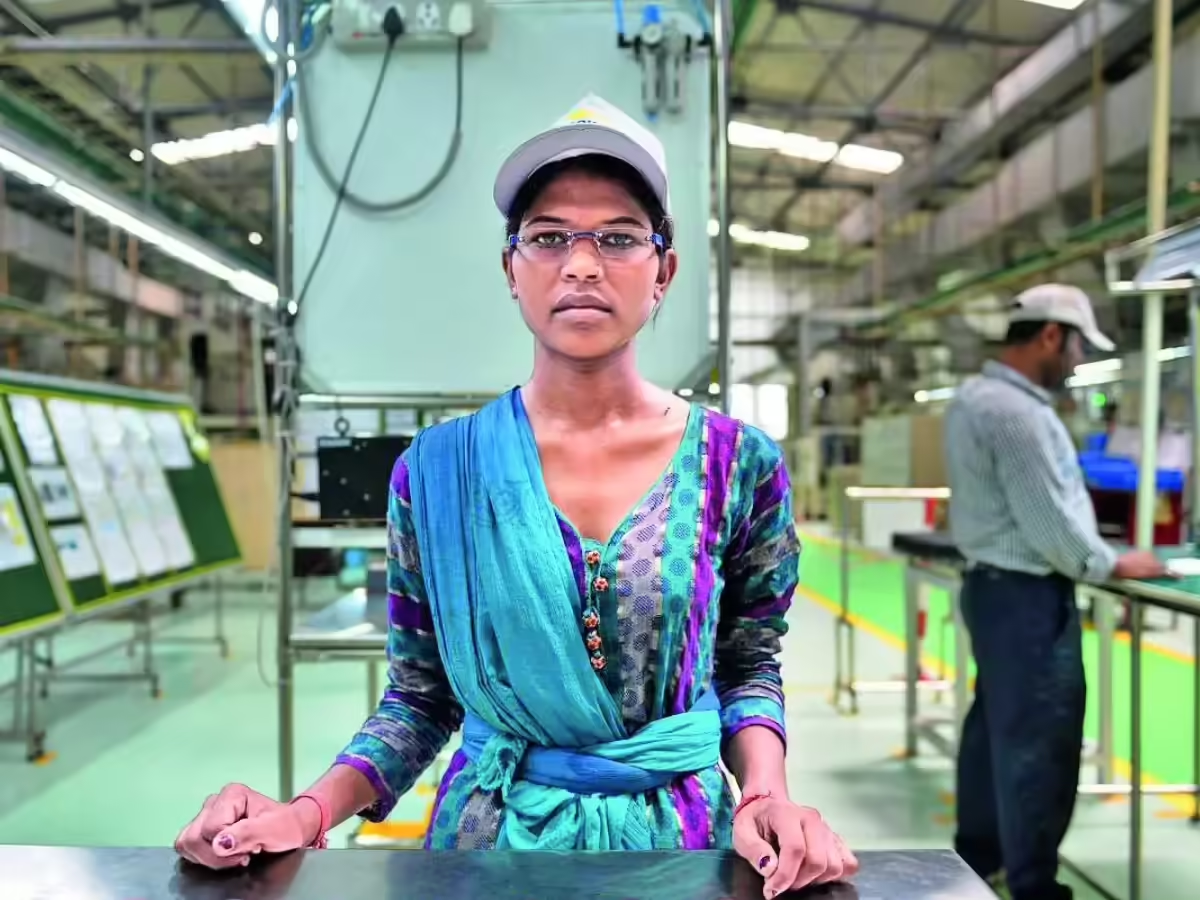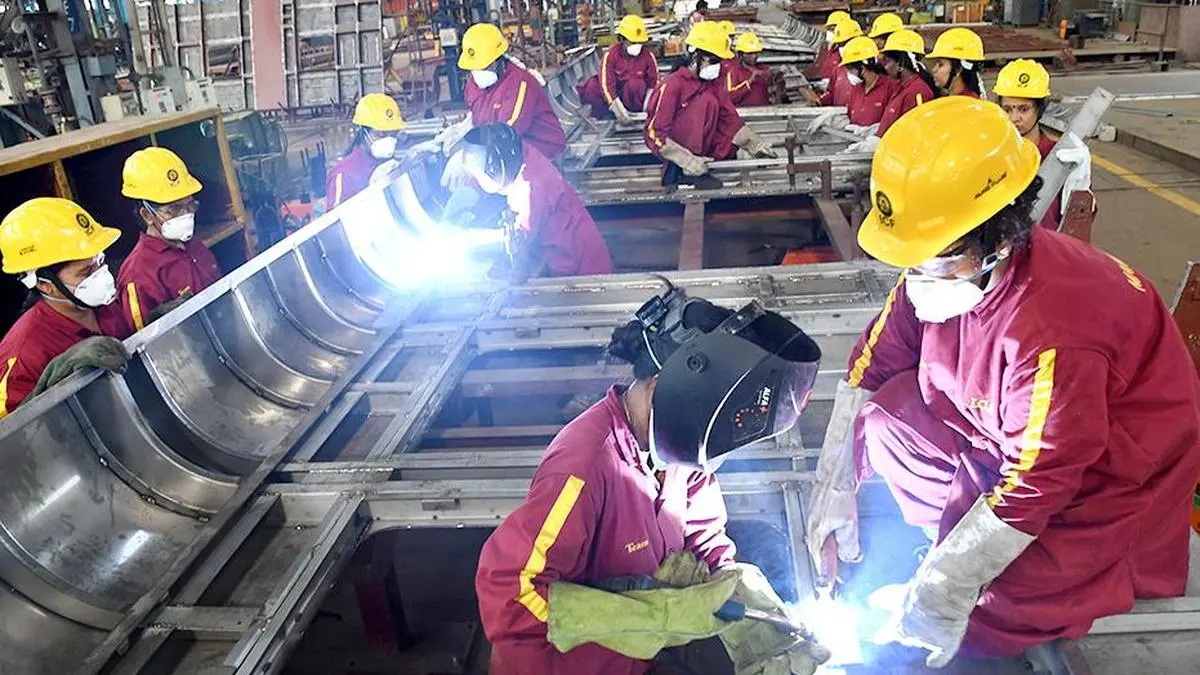
India’s economy has demonstrated remarkable resilience, maintaining strong growth despite global economic uncertainties.According to the IMF’s World Economic Outlook (April 2026), India’s GDP is projected to grow by 6.5 per cent in 2026-27. National Statistics Office of MoS&PI data also show that India’s economy recorded a CAGR of 8.56 per cent between 2021 and 2025, reflecting a robust post-pandemic recovery and sustained economic momentum.While these macroeconomic indicators are encouraging, a critical question remains: Is economic growth translating into adequate employment opportunities? The challenge is particularly significant for women and educated youth, who continue to face barriers in accessing quality jobs.The Periodic Labour Force Survey 2025 report unambiguously reveals both encouraging signs and a reminder that significant work remains.Women’s workThe Female Labour Force Participation Rate (LFPR) increased to 30.7 per cent in 2025 from 25.4 per cent in 2022; similarly, the Worker Population Ratio (WPR) rose to 29.8 per cent in 2025 from 24.6 per cent in 2022. It clearly reveals that more women are either working or actively seeking work than earlier.Despite this progress, women’s participation is considerably higher in rural areas (34.6 per cent) than in urban areas (22.2 per cent), indicating that urban women’s contribution to the labour market remains limited. The challenge is even clearer among young people, with urban female unemployment (15-29 years) at 18.9 per cent, significantly higher than the 11.8 per cent for urban males.In rural areas, nearly 70.7 per cent of employed women are self-employed, and only 9.3 per cent are in regular salaried jobs, mainly in agriculture, family enterprises and home-based activities.While self-employment supports livelihood, it is often associated with lower productivity, income insecurity and limited career growth. Overall, higher participation does not automatically translate into quality employment.India has made great progress in education, especially for girls and young women. Notably, the Female Gross Enrolment Ratio (GER) has improved at the higher secondary level of education, rising to 60.9 per cent in 2024-25 from 54.6 per cent in 2020-21, which surpassed the Male GER of 56.2 per cent, that means once a female student clears class 10, she is statistically more likely to pursue higher education than her male peers.Similarly, at the higher education level, the Female GER increased to 30.2 per cent (provisional) 2022-23 from 27.9 per cent in 2020-21.These statistics clearly signal that more girls are entering higher education than ever before, and the challenge has therefore moved to ensuring meaningful economic returns from education. Despite steadily improving educational attainment, urban female labour force participation remains low, and youth unemployment among women remains elevated, pointing to a growing gap between education and employment.Recognising this challenge, the Union Budget 2026-27 announced the Education-to-Employment-and-Enterprise (EEE) Committee under NITI Aayog, even before the PLFS report was published. The committee held its first meeting on May 22, focusing on strengthening linkages between EEE and assessing the impact of emerging technologies, including AI, on future jobs.The initiative highlights that expanding educational opportunities is only the first step, and its benefits depend on successful transitions into productive employment, with the growing importance of aligning women’s skills with labour market needs.Enabling participationYet employment opportunities alone may not fully explain the gap between educational attainment and workforce participation, particularly for women. More women are educated, but workforce participation remains low. It is worth considering what other factors might be holding them back, including caregiving responsibilities, workplace flexibility, safety, transportation, etc.Unpaid caregiving work is particularly significant, as it directly affects women’s ability to enter, remain in and progress within the labour market. Across the world, women continue to bear more caregiving responsibilities.According to the ILO, women perform more than three-quarters of all unpaid care work, and around 708 million women globally are outside the labour force due to unpaid caregiving responsibilities. This challenge is becoming even more important in urban India.The Time Use Survey 2024 also reported that females spent 289 minutes on unpaid domestic and 137 minutes on caregiving activities for household members. Today, many families live in nuclear households, often far from their extended family. As a result, working parents, especially mothers, must shoulder much of the care burden. As long as unpaid care work remains heavily feminised, advances in employment and productivity will remain uneven and fragile.Countries such as Sweden, Denmark and Japan have responded to this challenge by investing in the “care economy”, which includes caregiving responsibilities of children and the elderly.While India’s demographic and fiscal circumstances differ significantly, their experience shows that affordable and accessible care services can support female workforce participation.The challenge is not only about creating employment opportunities but also about ensuring women can access them. Converting educational gains into economic gains, investing in the care economy is one of the smartest investments India can make.Growth with inclusionIndia’s economic outlook remains strong. However, the next phase of India’s growth will be shaped not only by the pace of economic expansion, but also by how widely its opportunities are shared. While growth, investment and structural reforms provide a solid foundation, converting educational gains into productive employment and enabling women to participate fully in the workforce are important goals.Investing in the care economy is not merely a social welfare measure; it is an economic strategy that can unlock human capital, increase productivity and advance India’s vision of inclusive and women-led development.Chandrasekar is Joint Director in MoSΠ Prasad is Head of Education & Training, ILO’s Research & Statistics Department. Views expressed are personalPublished on July 11, 2026
India’s growth story needs more women at work
To fully tap women’s work potential the government must invest in the care economy
902 words~4 min read