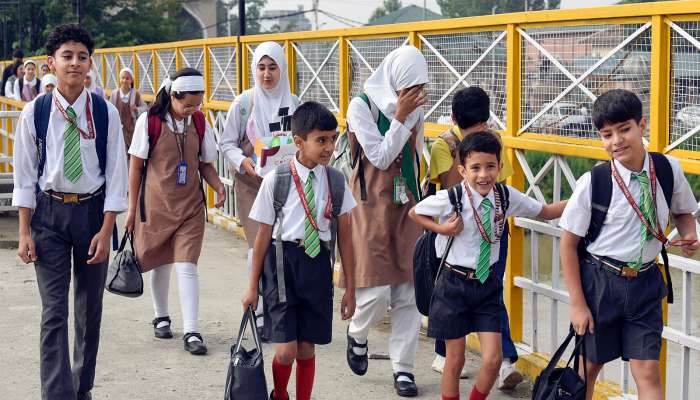
India is coming into a new era where leadership is not solely about political power, academic excellence or economic clout. The India of today and near future has its own set of problems--educational inequality, rural development, unemployment, competition in the global market, social justice, technological change, which call for a new yet another model of leadership. This model will have to be functional and integrate education, governance, and diplomacy in a meaningful and practical manner.EducationThese were the three sectors that operated more or less independently for decades. While education was still for examinations and degrees, administration and policy implementation were more central to the governance, and diplomacy was still confined to international affairs and to trade negotiations.This demographic dividend can be India's greatest asset if education is beyond the limits of rote memorisation and exams. While coaching UPSC and State PSC candidates from rural and semi urban backgrounds for the past few years, I have seen that education can only be transformative when it creates awareness, confidence and civic sense. A student aspiring to crack the civil services exam isn't learning how to get a job, he or she is learning how to comprehend governance, public policy, economics, international relations and social realities.Unfortunately, the availability of such quality education is not equal. Based on multiple educational surveys, there are still significant learning outcomes, access to digital and career guidance gaps between urban and rural learners. This inequality is not only reflected in employment opportunities but also in governance and policy making.One of the major issues in policy development is the lack of linkage between administrative systems and grassroots realities. Policies may be good in theory but fail to work well in practise due to a lack of understanding of local social and economic circumstances.My work in rural districts, especially in child marriage prevention, girls' education, digital literacy, and citizen awareness, has always demonstrated that with the community's active participation, governance is possible. Real policy development doesn't take place exclusively in the offices and conference rooms. It demands ongoing interaction with the citizens, educators, local governments, NGOs and grassroots activists.Schemes that have a weak intent to improve education, nutrition or rural welfare, for example, may not be a failure due to lack of intent, but because the beneficiaries are unaware of their rights and opportunities because of communication gaps. Hence, policy literacy is of significant importance in India.Good governance today is not only related to administration, it is related to communication, participation and building trust.Meanwhile, diplomacy is changing. There is a growing link between international relations and education, innovation, culture, technology and social development today. The evaluation of the capabilities of countries does not only focus on military or economic power, but also on human development indicators, educational systems, gender integration and democratic participation.Skills development, sustainability, education reform and youth opportunities are a growing part of trade issues. The future leaders should be able to speak at the village level Governance and international co-operation on an equal footing.Leaders of tomorrow are those who can navigate effortlessly between classrooms, policy and decision-making environments and the global arena. A teacher in a governance arena can influence socially conscious students. Rural development, gender inclusion, digital inclusion, adaptation to the climate crisis and job creation can't be addressed by individual departments or institutions working independently.The support of education for the girl child in rural India is not just a matter of education. It also demands governance reforms, awareness creation in the society, support to public health systems, support to the economy and engagement from the community. Likewise, reforms in the Indian education system and developing skills are needed to boost India's competitiveness in the global arena.The upcoming generation of Indian leaders, therefore, needs to be both intellectually sound and socially conscious and aware of the world.There are many ways that mentorship programmes, public policy fellowships, grassroots internships, digital learning platforms and civic engagement can help to reduce the disconnect between learning and governance. The participation of young people in public conversation is a necessary component to a stronger democracy.India gets a voice from students from villages, tribal communities, and marginalised groups in the policy making process and internationally, which is at times missing in the conversation of the elites.India is at a crossroads and the future of leadership needs to be redefined. The dichotomy of education, governance and diplomacy is being called into question. Leaders of modern India need to be able to grasp public policy and communicate with the common man and at the same time be confident with the world.The three are not only intellectually linked, but also a necessity for national progress. The education should produce an informed citizen, the governance should be rooted in social realities and diplomacy should be based on India's developmental aspirations.(The views expressed are personal)This article is authored by Ashok Thombre, legal advisor, Focus Academy.
Connecting education, governance and diplomacy - A new model of leadership for India
This article is authored by Ashok Thombre, legal advisor, Focus Academy.
TL;DRAI
India needs leaders integrating education, governance, and diplomacy to bridge inequality and align policy with grassroots realities. This affects India's tech talent competitiveness, requiring leaders with policy literacy and civic awareness embedded into education and development pipelines.
808 words~4 min read