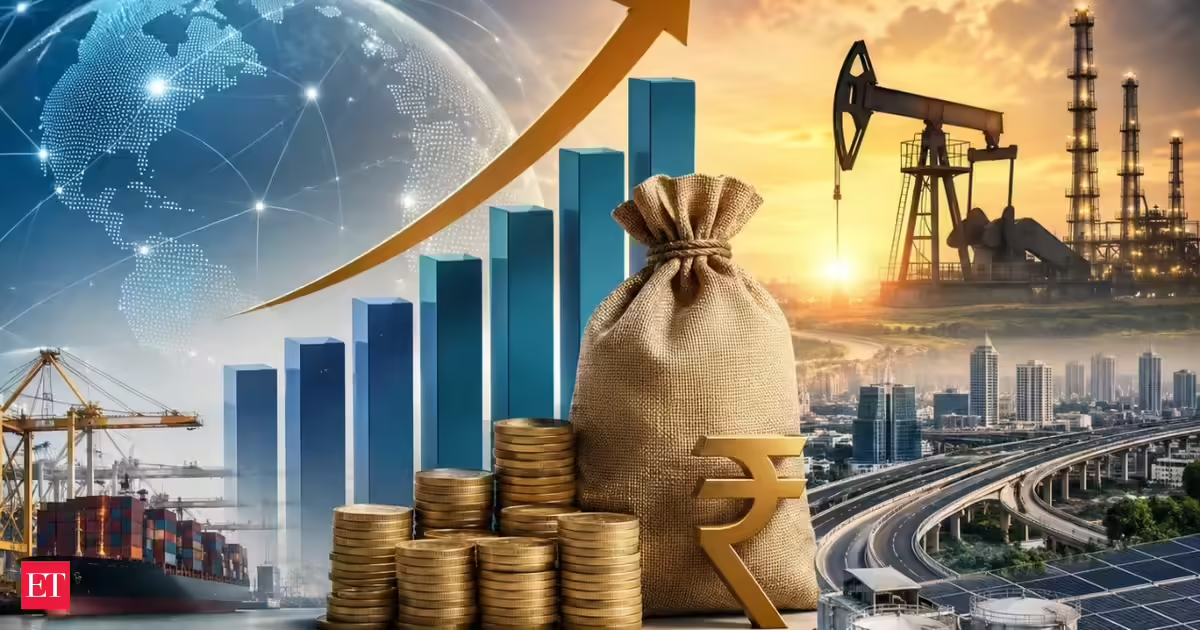
India’s economic rise is one of the defining stories of the twenty-first century. From becoming a global technology hub to emerging as a major destination for investment and innovation, the country has demonstrated remarkable resilience and growth. Yet sustaining this momentum requires more than entrepreneurial energy and capital inflows. It demands strong institutions, effective governance, disciplined risk management, and leaders capable of navigating increasingly complex financial environments. As the Indian economy grows in scale and sophistication, the quality of its leadership in finance and corporate governance will become as important as the quantity of investment it attracts.Economy (Illustration: Abhimanyu Sinha)Modern economies are built on trust. Investors, businesses, consumers, and regulators all rely on confidence in the systems that govern financial activity. This trust does not emerge automatically. It is created through transparent decision-making, robust oversight, ethical leadership, and effective management of risk. In a rapidly expanding economy such as India’s, these factors become even more critical because growth inevitably brings greater complexity and higher stakes.Over the past two decades, India’s financial sector has undergone a profound transformation. Capital markets have expanded, insurance penetration has increased, asset management has grown significantly, and digital financial services have reached millions of citizens. Alongside these developments, the nature of financial leadership has evolved. Organisations no longer require leaders who merely oversee operations. They increasingly seek professionals who understand investment strategy, governance frameworks, regulatory requirements, and risk management in equal measure.For example, recognised by the World Development Corporation’s Directors’ Institute through its Global Community for Board Directors, I bring over four decades of experience spanning investment management, risk governance, and financial leadership across India and Europe. A CFA Charterholder, FRM and PRM certified professional, I also hold a PhD in Business Administration and have completed executive training in corporate governance from Harvard Business School. Throughout my career, I have managed large-scale portfolios, including a ₹1,000-crore fixed-income portfolio in India and contributed to risk oversight of a €430-billion portfolio in Europe. My leadership has spanned banking, insurance, asset management, investor protection, professional education, and institution-building initiatives.Risk management, once viewed as a specialised technical function, has emerged as a strategic necessity. Financial institutions today operate in a world shaped by market volatility, geopolitical uncertainty, technological disruption, cybersecurity threats, and changing regulatory expectations. The ability to identify, assess, and manage these risks can determine whether an organisation thrives or struggles. Strong risk governance enables institutions to pursue growth opportunities while protecting stakeholders from avoidable losses.This shift is particularly relevant for India as it seeks to attract greater global investment. International investors increasingly evaluate not only financial performance but also governance standards, board effectiveness, compliance systems, and risk controls. Countries and companies that demonstrate strong governance are often perceived as more reliable investment destinations. As a result, governance has become a competitive advantage rather than merely a regulatory requirement.The role of corporate boards has, therefore, gained renewed importance. Independent directors today are expected to contribute far more than ceremonial oversight. They must challenge assumptions, provide strategic guidance, monitor risk, and ensure accountability. Boards are increasingly seeking members with deep technical expertise and practical experience rather than relying solely on reputation or seniority. This reflects a broader recognition that effective governance requires knowledge, judgement, and active engagement.Equally important is the growing emphasis on professional excellence and continuous learning. The financial world evolves rapidly, driven by technological advancements, new financial instruments, changing regulations, and shifting market dynamics. Professionals who invest in education, certifications, research, and skill development are better equipped to navigate these changes. In an economy aspiring to global leadership, cultivating highly skilled financial professionals is not a luxury but a necessity.Institution-building is another critical pillar of sustainable economic growth. Successful organisations are not defined solely by their short-term performance. They are distinguished by their ability to create systems, processes, and cultures that endure. Leaders who build strong institutions leave a lasting impact because they strengthen organisational resilience and create value that extends beyond individual achievements. As India continues to expand its financial ecosystem, the importance of institution builders will only increase.Global exposure also plays a valuable role in shaping the future of Indian finance. Professionals who have worked across international markets bring insights into best practices, regulatory approaches, and emerging trends. Their experience can help Indian institutions compete more effectively on the global stage while maintaining high standards of governance and accountability. The exchange of knowledge between global and domestic markets strengthens both innovation and resilience.At the same time, growth must remain aligned with investor protection and ethical responsibility. Financial success that comes at the expense of transparency or trust ultimately undermines long-term prosperity. Sustainable development requires balancing performance with accountability, ensuring that the interests of investors, customers, employees, and society remain protected.India stands at a pivotal moment in its economic journey. The nation possesses immense entrepreneurial talent, a growing consumer market, expanding digital infrastructure, and increasing global influence. Yet real economic leadership will depend not only on innovation and investment but also on the strength of its institutions and the quality of its governance. By fostering leaders who combine technical expertise, strategic vision, risk awareness, and ethical responsibility, India can build a financial ecosystem capable of supporting long-term growth and global competitiveness.As the economy advances towards its next phase of development, the message is clear: sustainable prosperity is built not merely through capital and ambition, but through rigour, governance, and responsible leadership. These qualities will define the institutions that shape India’s future and determine its success in an increasingly interconnected world.(The views expressed are personal)This article is authored by Nirakar Pradhan, independent director, Abakkus Investment Managers.
Strong governance and risk leadership matter for India’s economic future
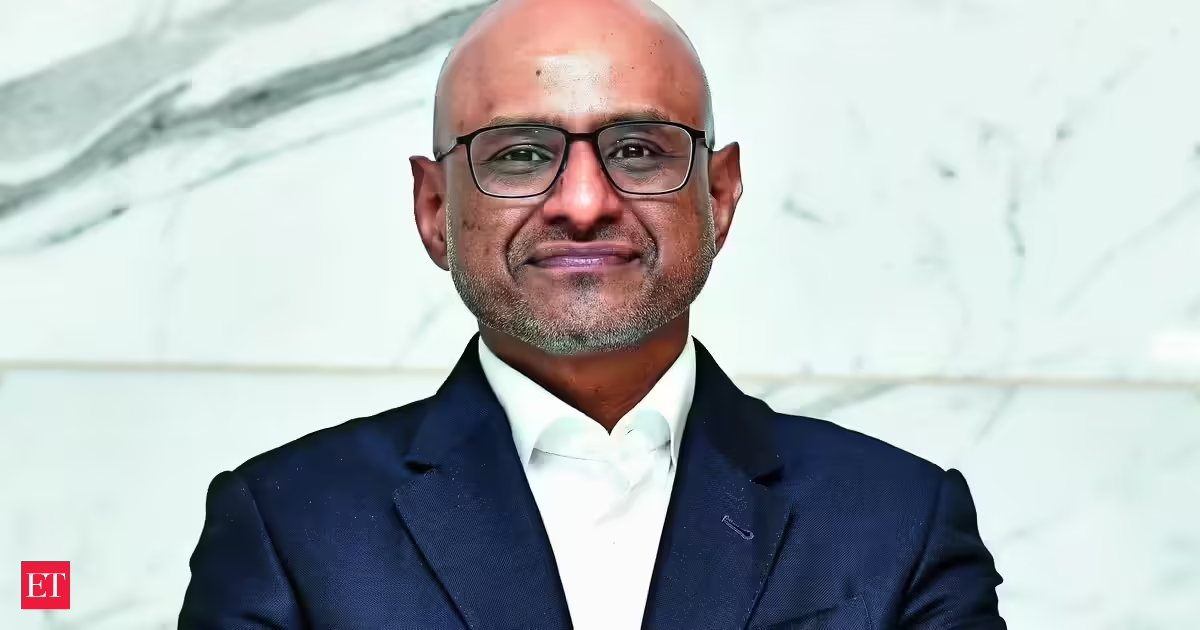
This article is authored by Nirakar Pradhan, independent director, Abakkus Investment Managers.
928 words~4 min read