A forest can appear intact from above while losing part of its animal community below the canopy. Satellite images and carbon accounting can miss these changes, making bioacoustics a useful way to detect whether a forest’s living rhythms remain intact.The Soundscape Baselines Project, described by Zuzana Buřivalová and colleagues, is building acoustic reference points for intact forests before those baselines disappear. Its pilot sites span Brunei, Ecuador, Gabon, Germany, Peru, and the United States, using continuous recordings managed with local teams.Acoustic monitoring can reveal changes that averages and visual measures obscure. In Gabon, logged forests could appear similar to baseline forests in coarse daily measures, but the timing and shape of dawn and dusk choruses showed important differences.Bioacoustics has both promise and limits. Tools such as acoustic indices and BirdNET can expand conservation monitoring, but they require careful calibration, local knowledge, and transparent treatment of uncertainty if they are to support credible claims about biodiversity protection or recovery.
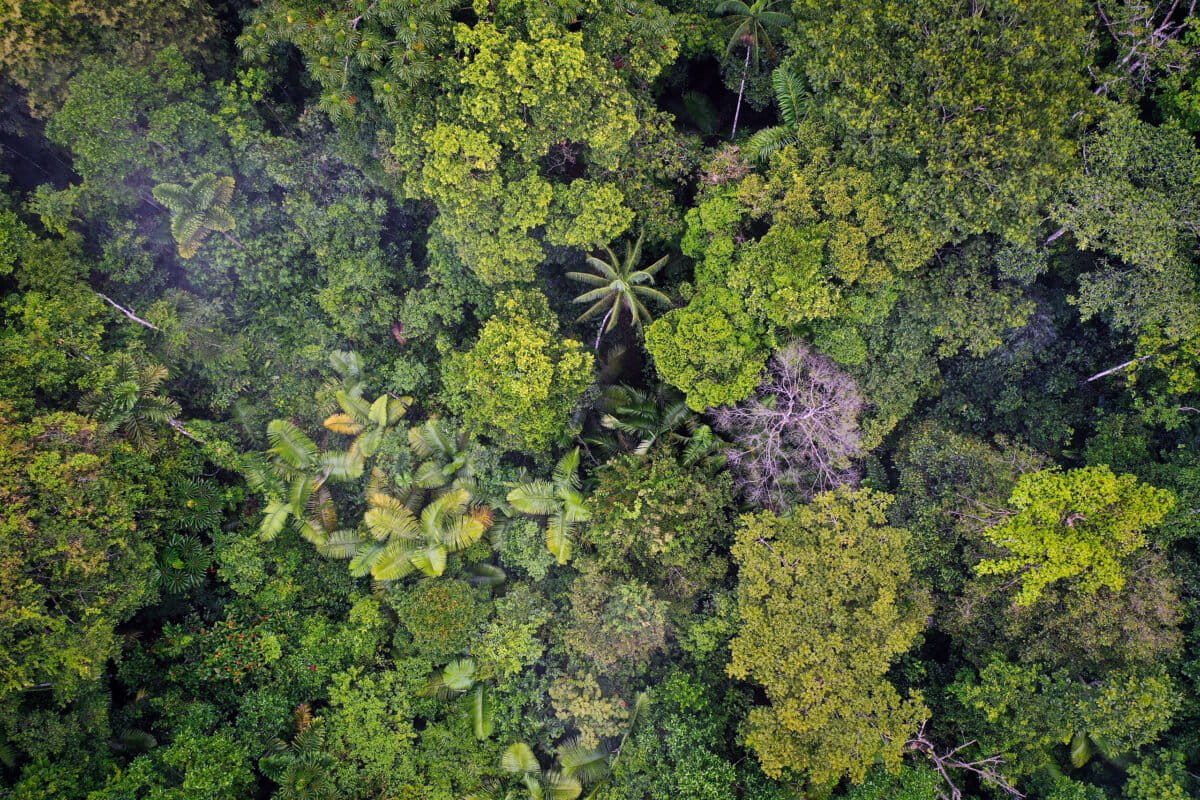
From above, an intact forest can look reassuringly complete. A satellite image may show an unbroken canopy, a block of green still standing amid plantations, roads or logged land. For many conservation programs, that view has become the starting point for measurement. If the canopy remains, the forest is often treated as if much of its ecological value remains as well.