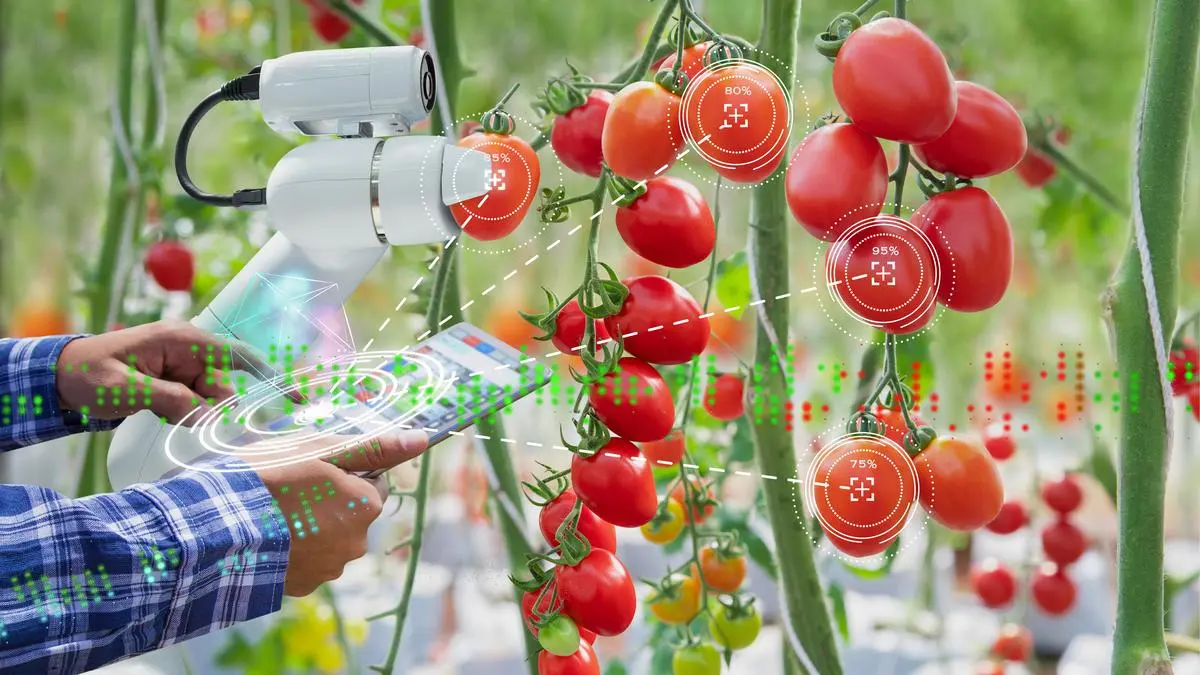
Artificial intelligence (AI) is fundamentally reshaping the contours of life as we know it. In agriculture, the world market for AI is expected to reach almost US$47 billion by 2034. AI enables higher farm yields with fewer inputs, an outcome that matters deeply in an era of climate uncertainty and resource scarcity.
In Canada, agricultural policymakers and industry leaders are gradually waking up to the promise of AI. However, as Canada’s new AI for All strategy recognizes, technology alone will not deliver the much-desired transformation while there is an “adoption gap.”
Canada lags behind other G7 countries in system-wide transformation of the agricultural sector. The problem is not a lack of sophisticated tools. It is a lack of systems that help farmers understand, integrate and trust these technologies.
I led my research team at Brock University in a two-year study of agricultural automation and robotics in Ontario. We found that while many technologies were technically sound and commercially available, adoption was constrained by broader structural factors. Our findings apply to AI-enabled agricultural technologies Canada-wide.
The promise for farmers