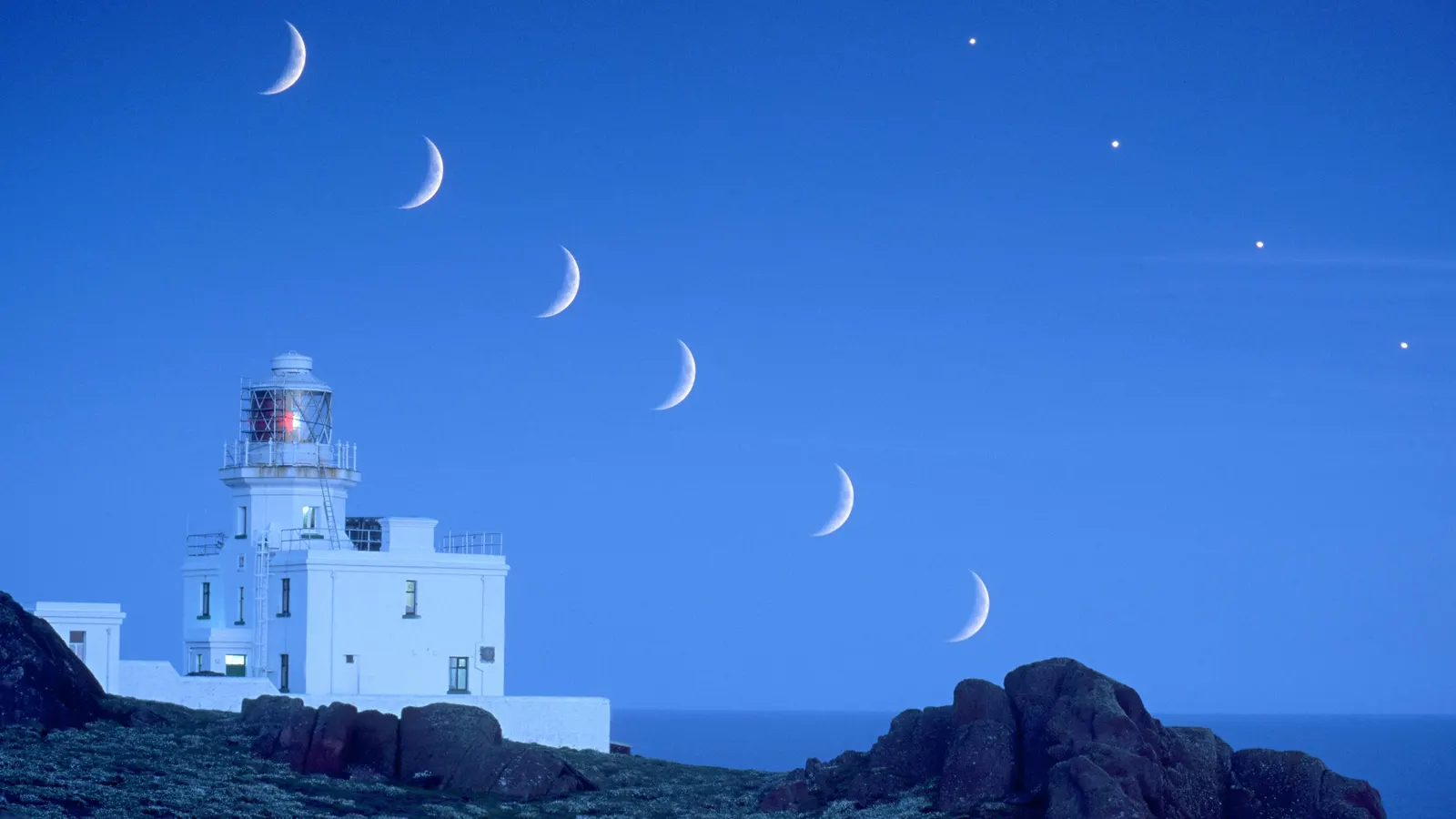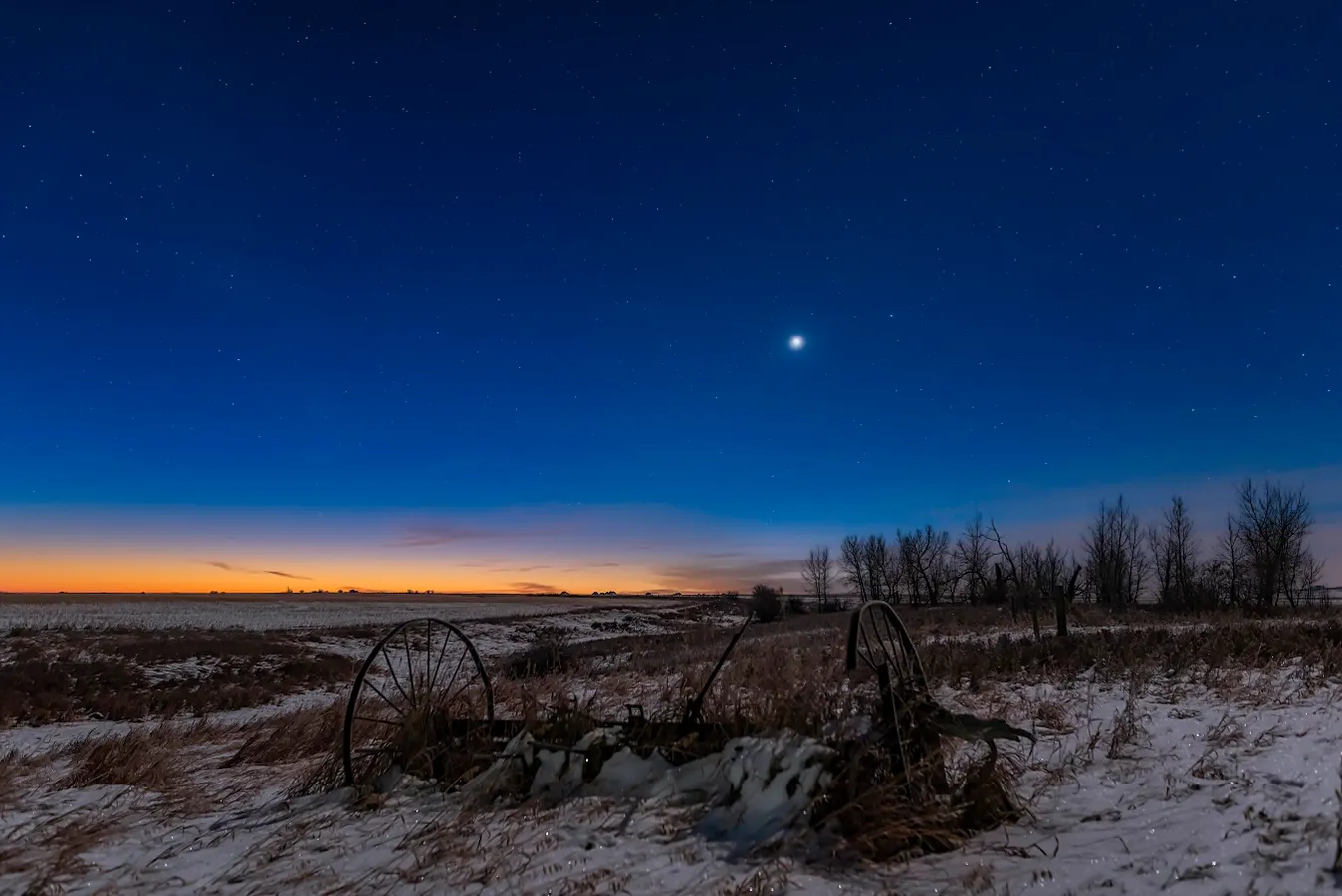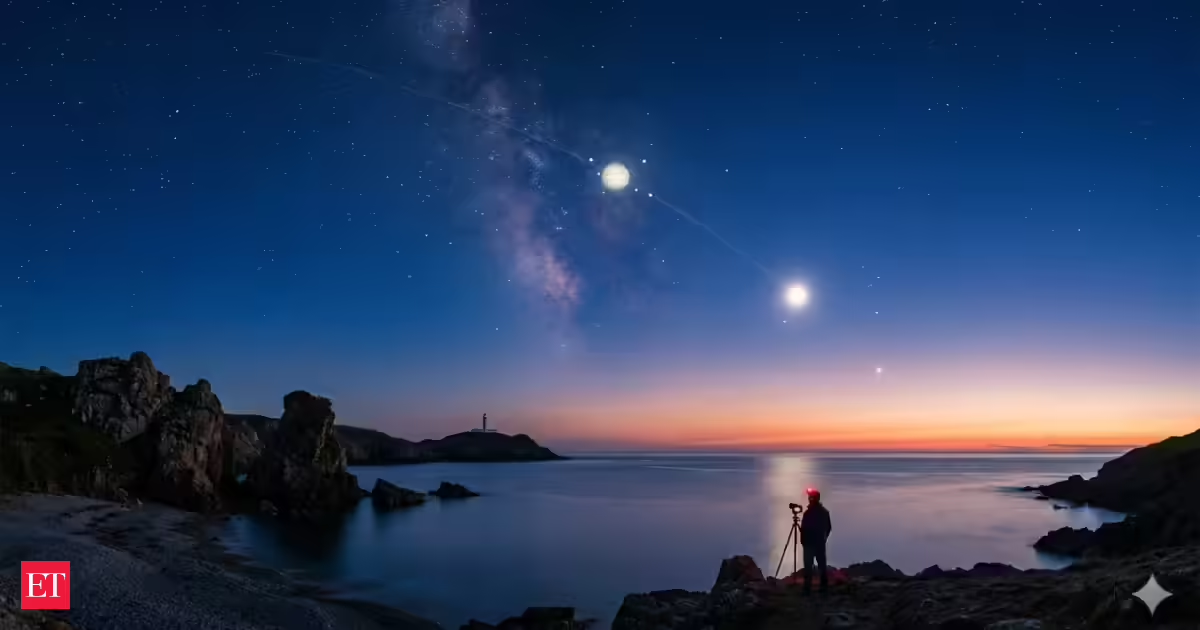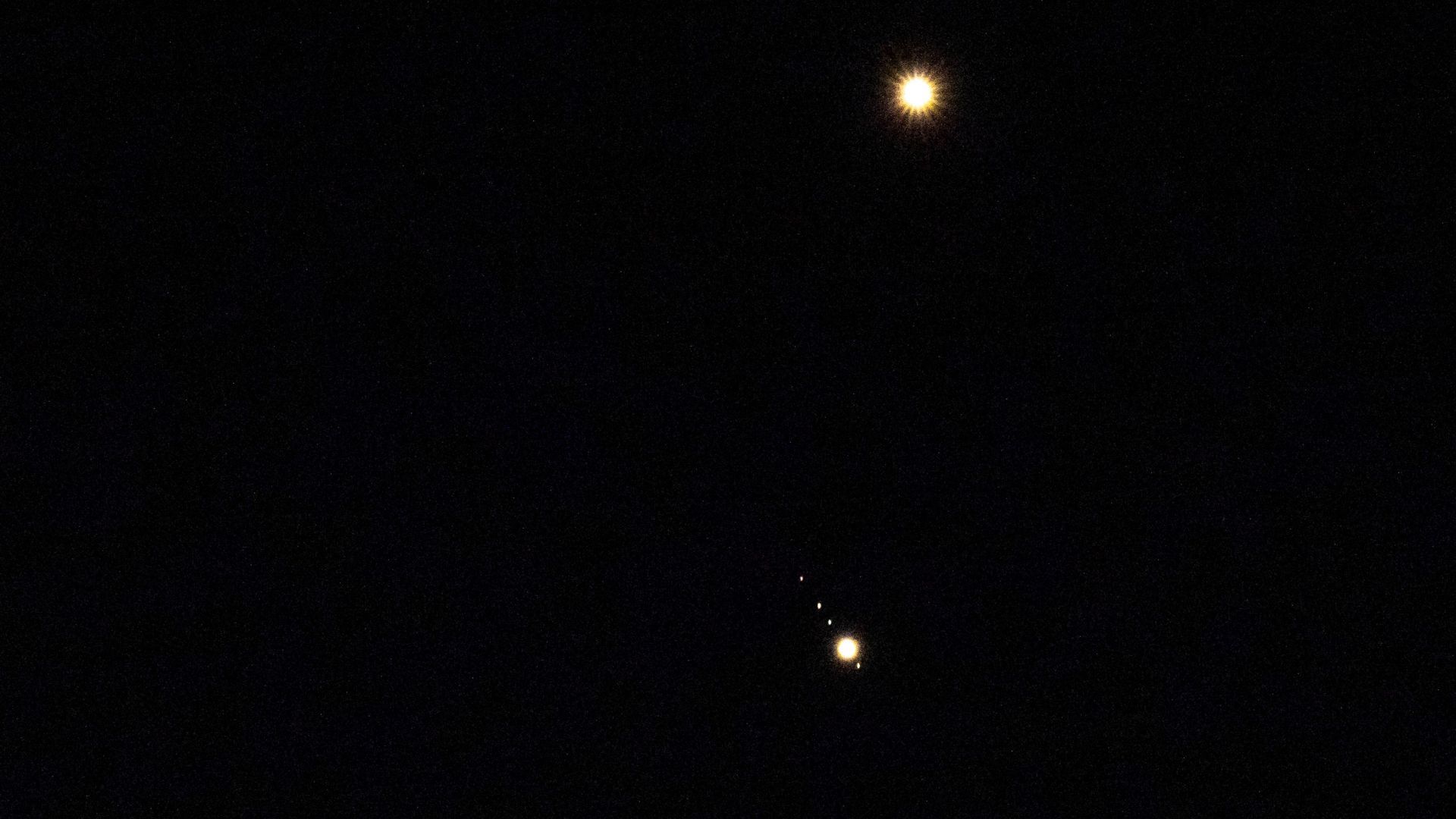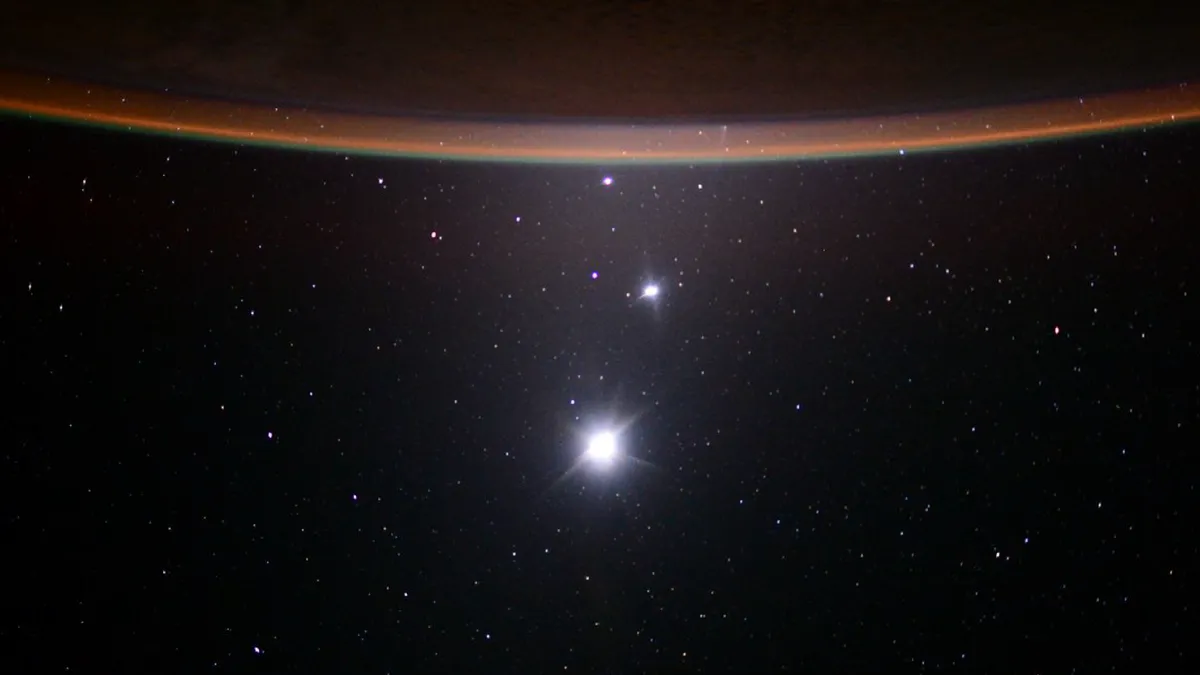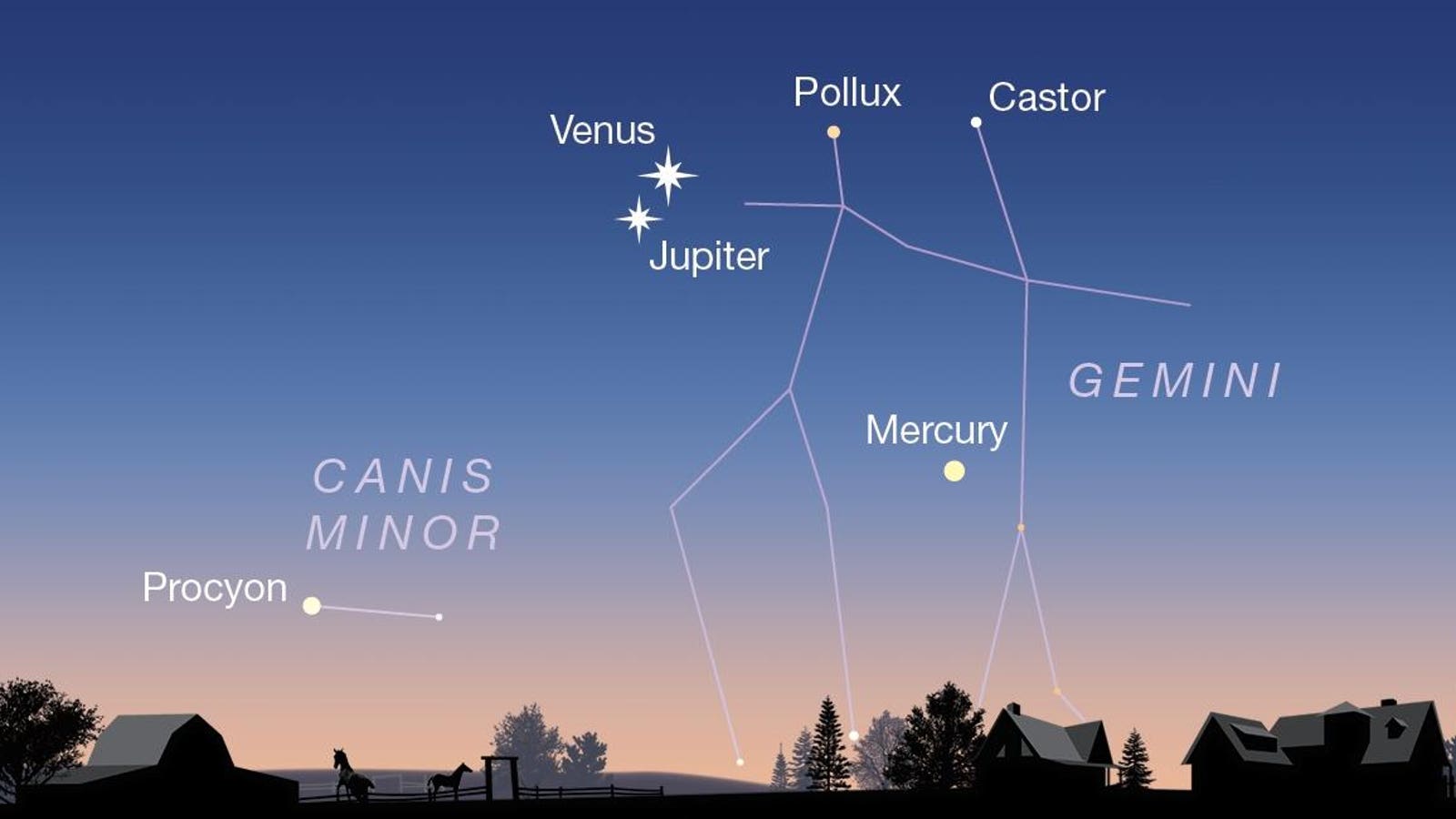
Here comes the defining week of June for skywatchers. Venus and Jupiter come together in one of the most striking naked-eye events of the year, forming a brilliant pairing low in the twilight sky, with Mercury close by. At the same time, the moon wanes toward its new phase, making this week one of dark skies. Soon, a waxing moon and the coming summer solstice will make stargazing in the Northern Hemisphere difficult. Here’s everything you need to know about stargazing and the night sky from June 8-14, 2026.
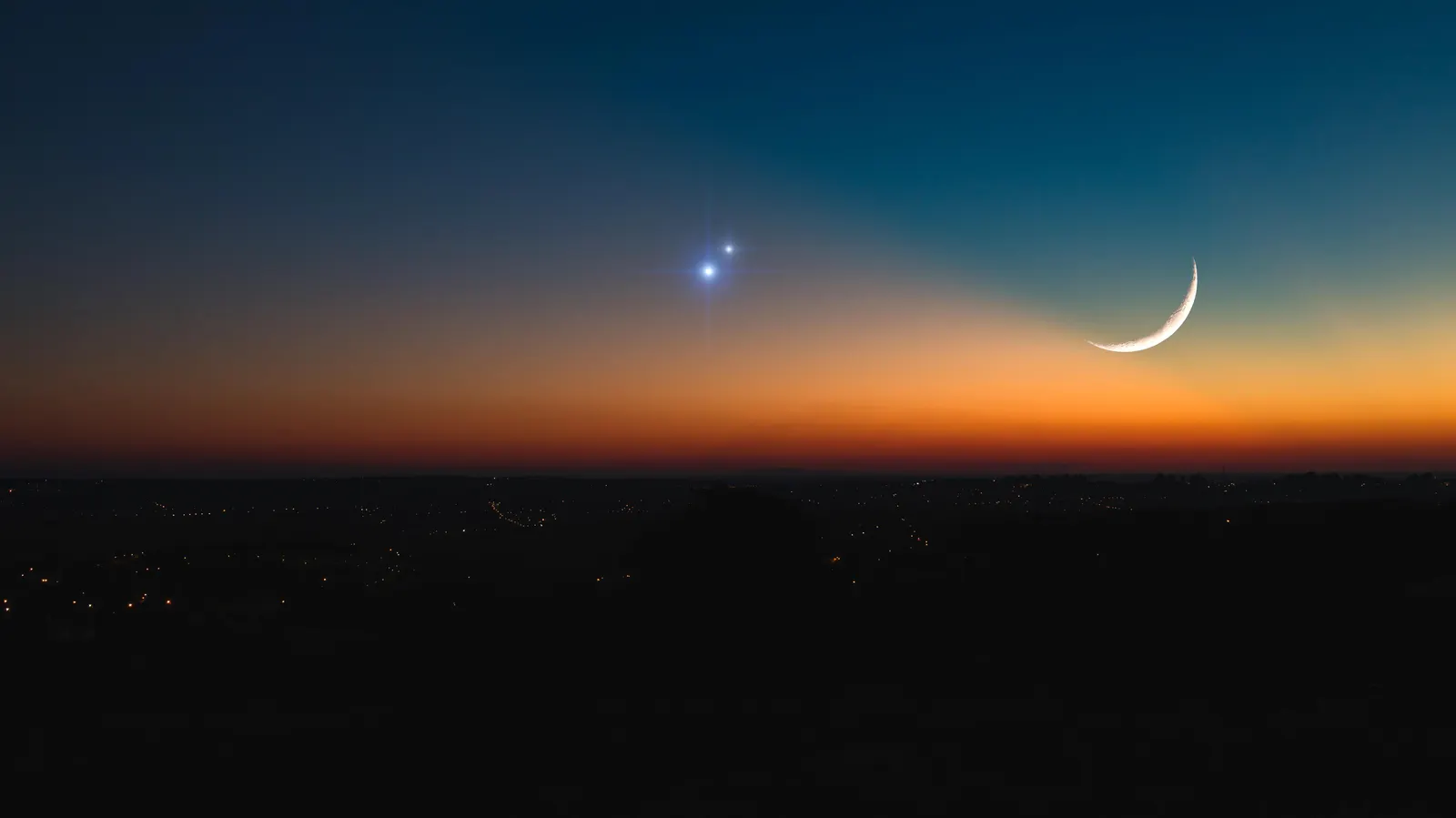
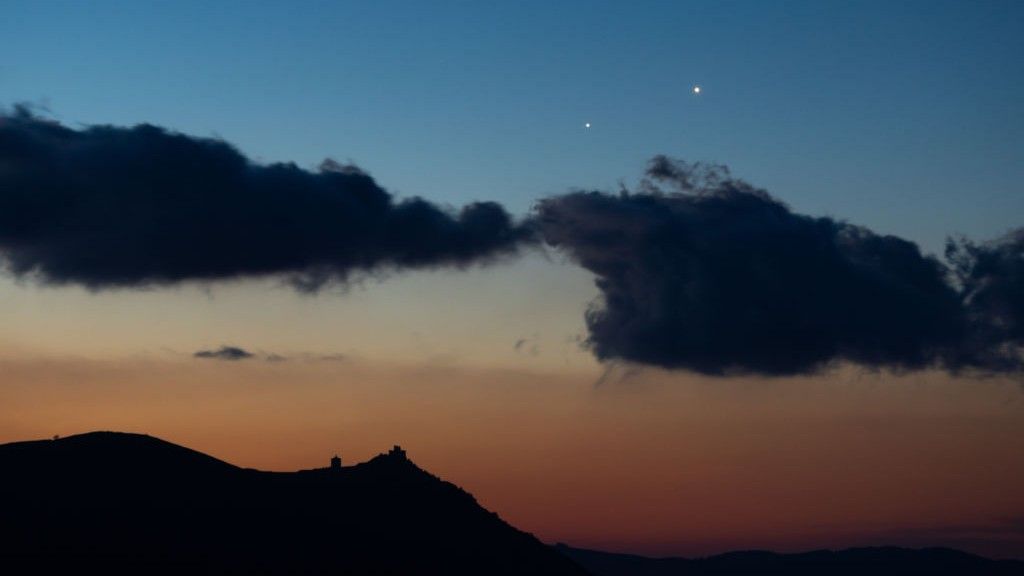
Look for the planetary duo in the western sky about 45 minutes after sunset.
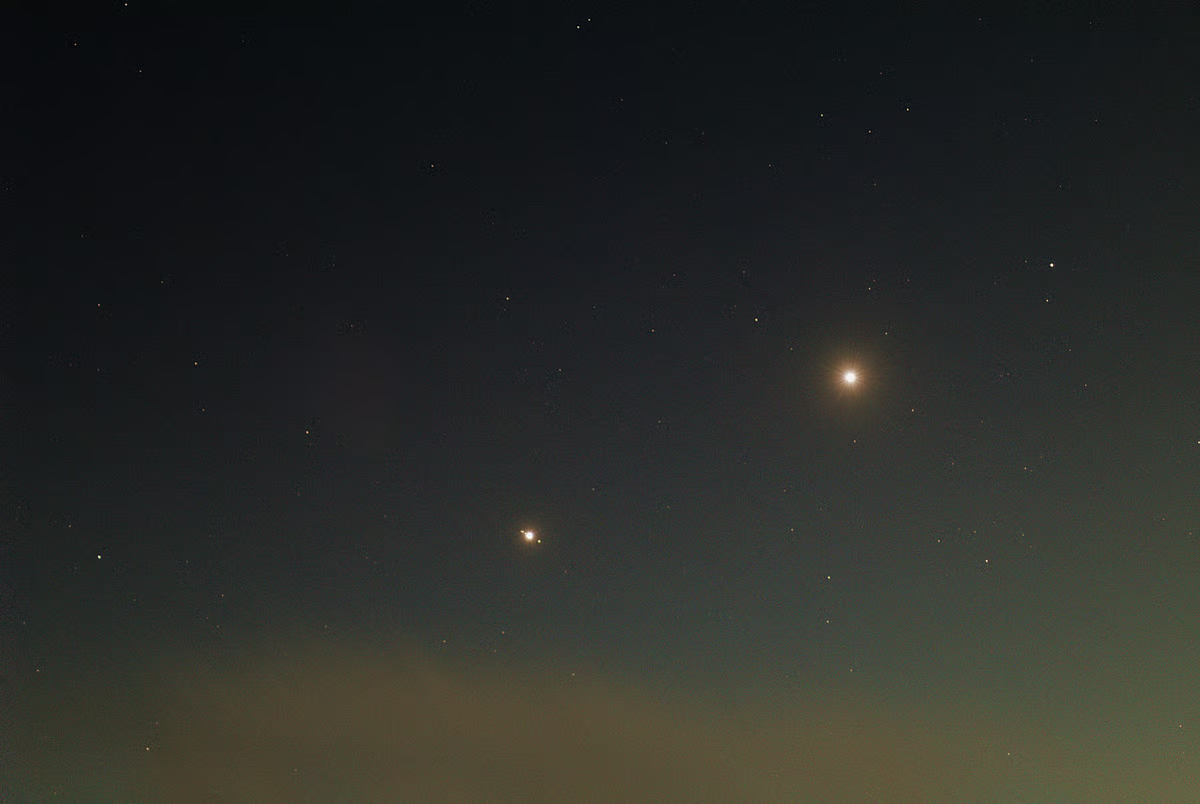
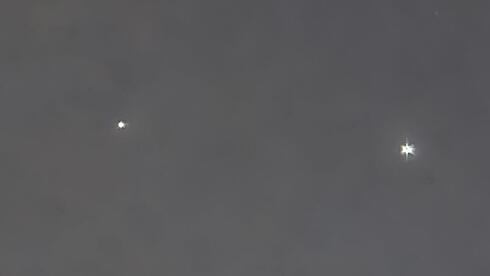
Tuesday, June 9Venus and Jupiter reach conjunction, appearing just over a degree apart after sunset. Venus shines seven times brighter, with Jupiter just beside it — a rare and beautiful sight with the naked eye. Both will be in the same field of view in binoculars.
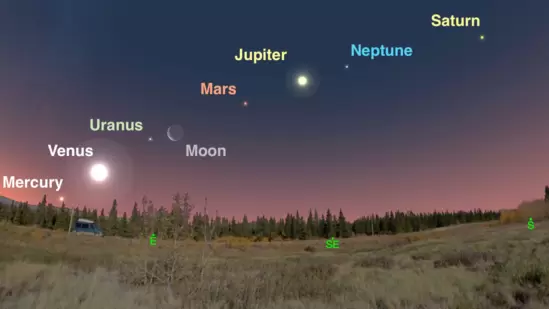
Wednesday, June 10Before sunrise, a 32%-lit waning thin crescent moon appears low in the east just above the planet Saturn. After sunset, Mercury will be a as high in the post-sunset sky as it gets, making it a great time to see a trio of planets together.
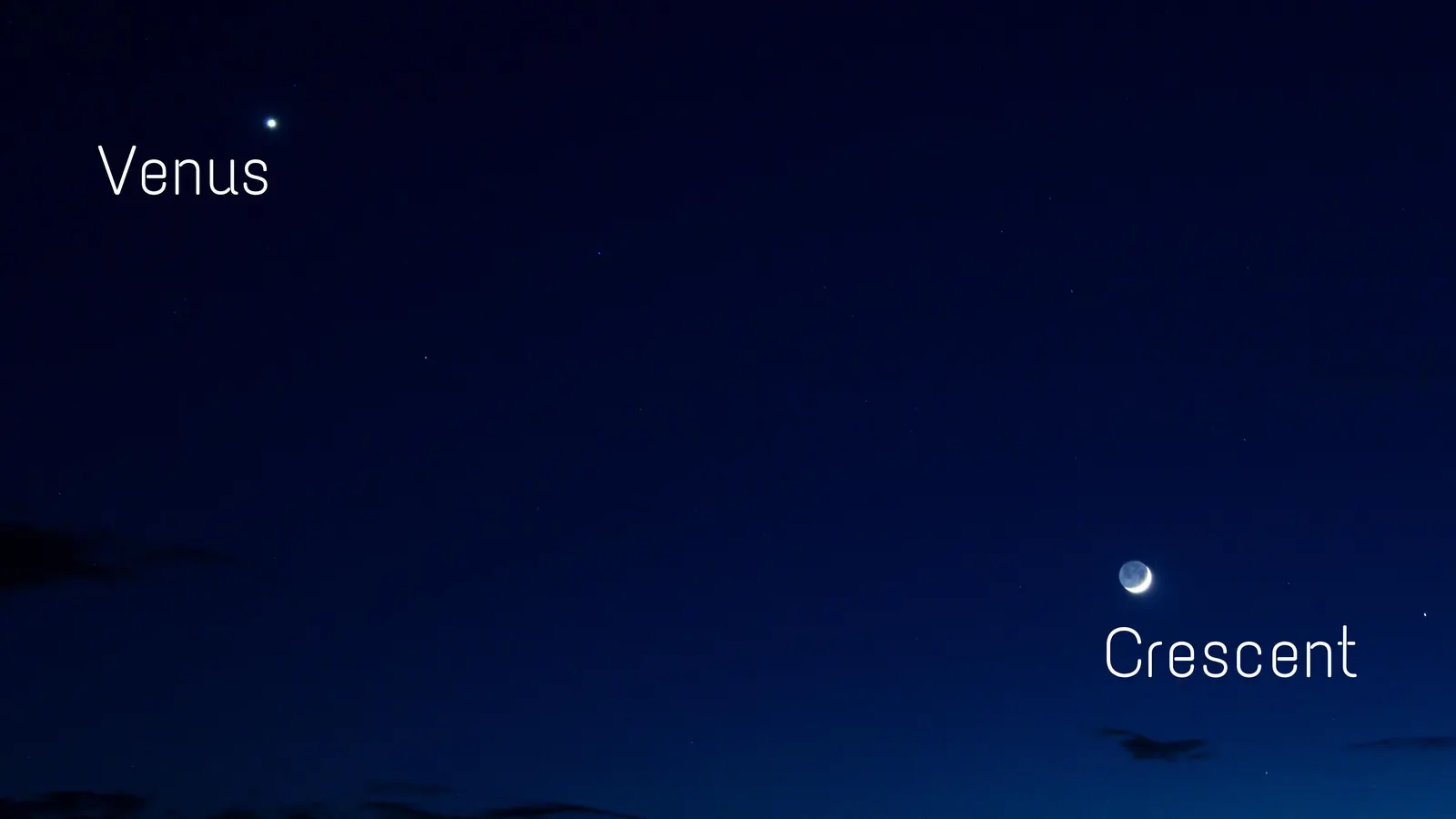
Saturday, June 13Before sunrise, a 5%-lit waning thin crescent moon appears low in the east-northeast between the Pleiades open cluster and the planet Mars.