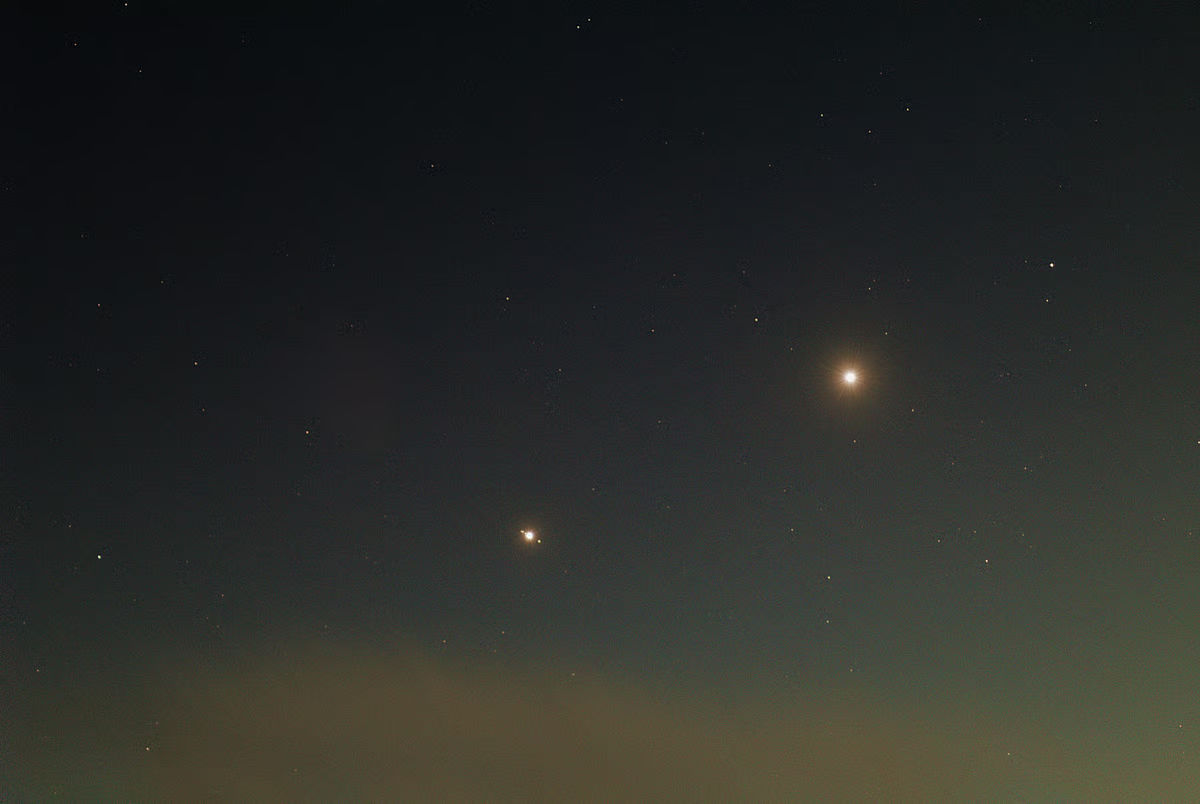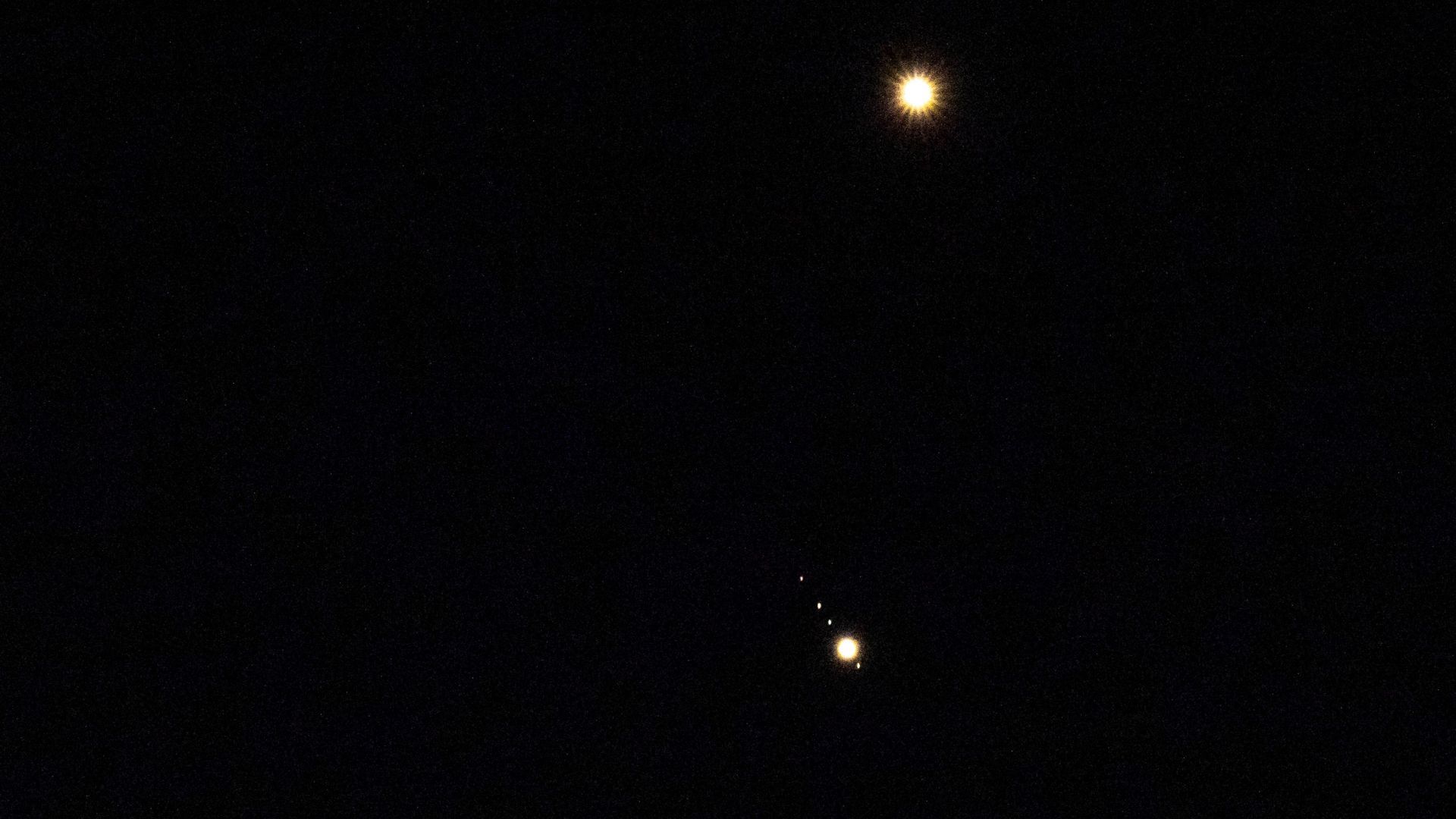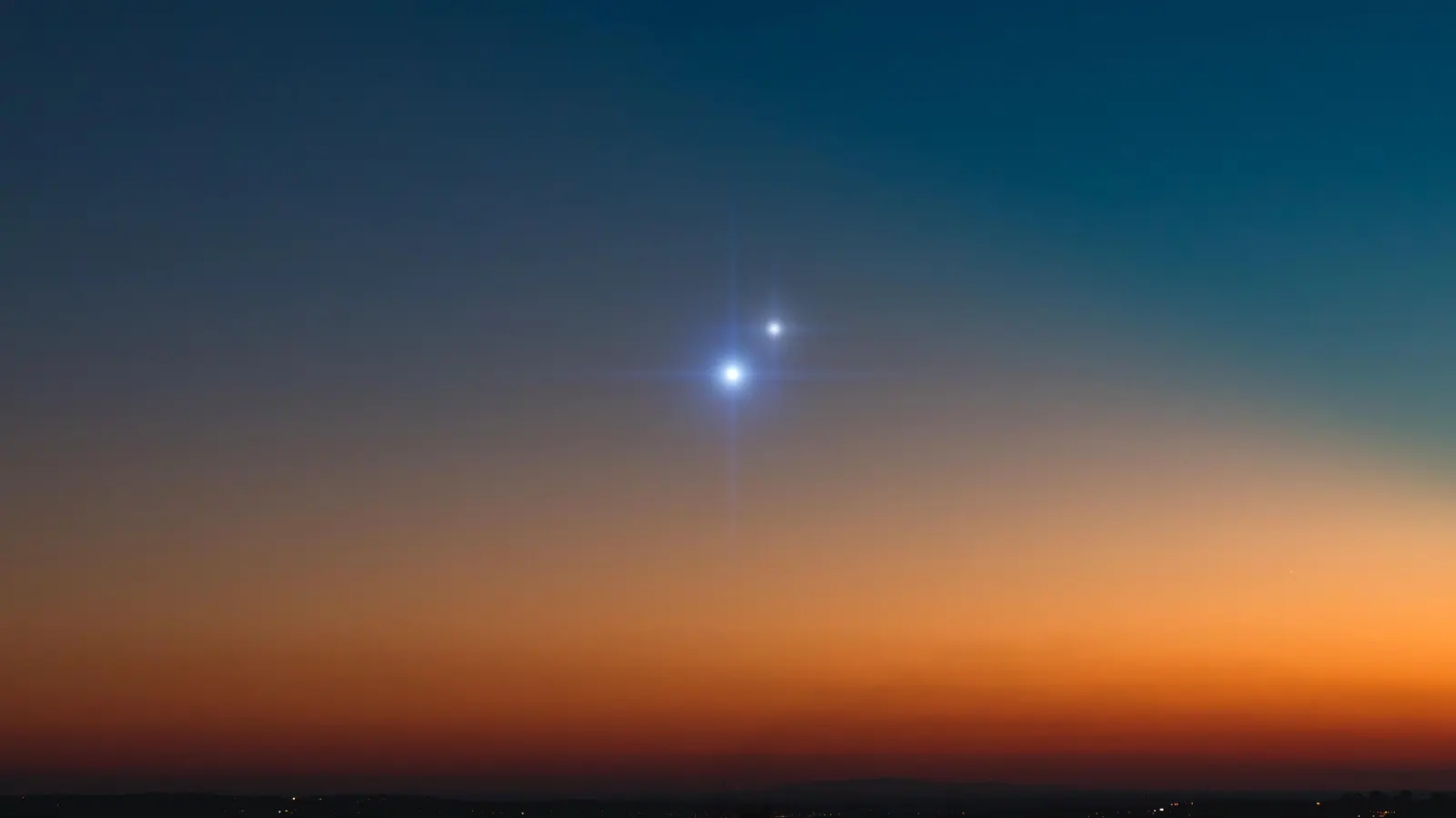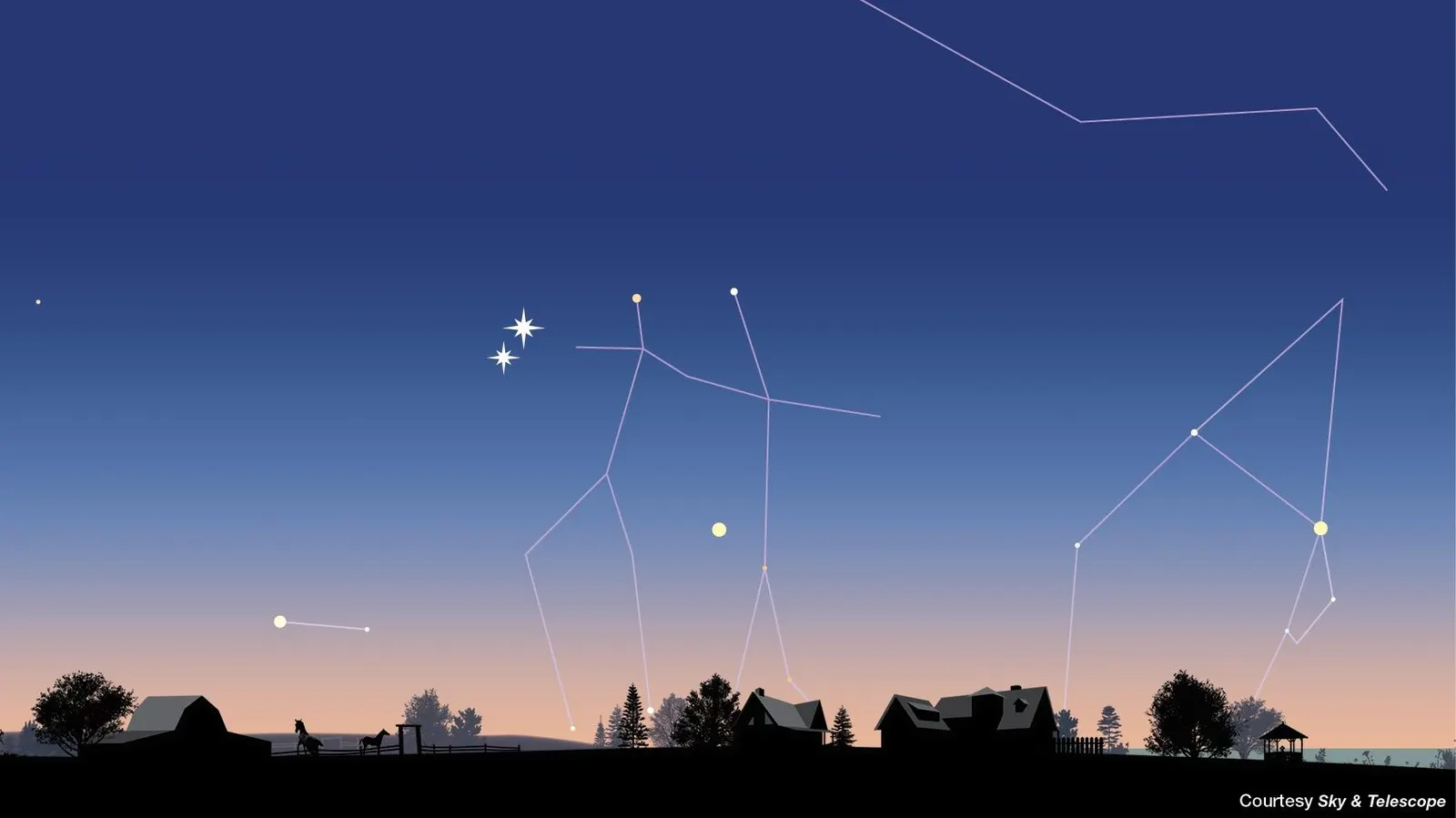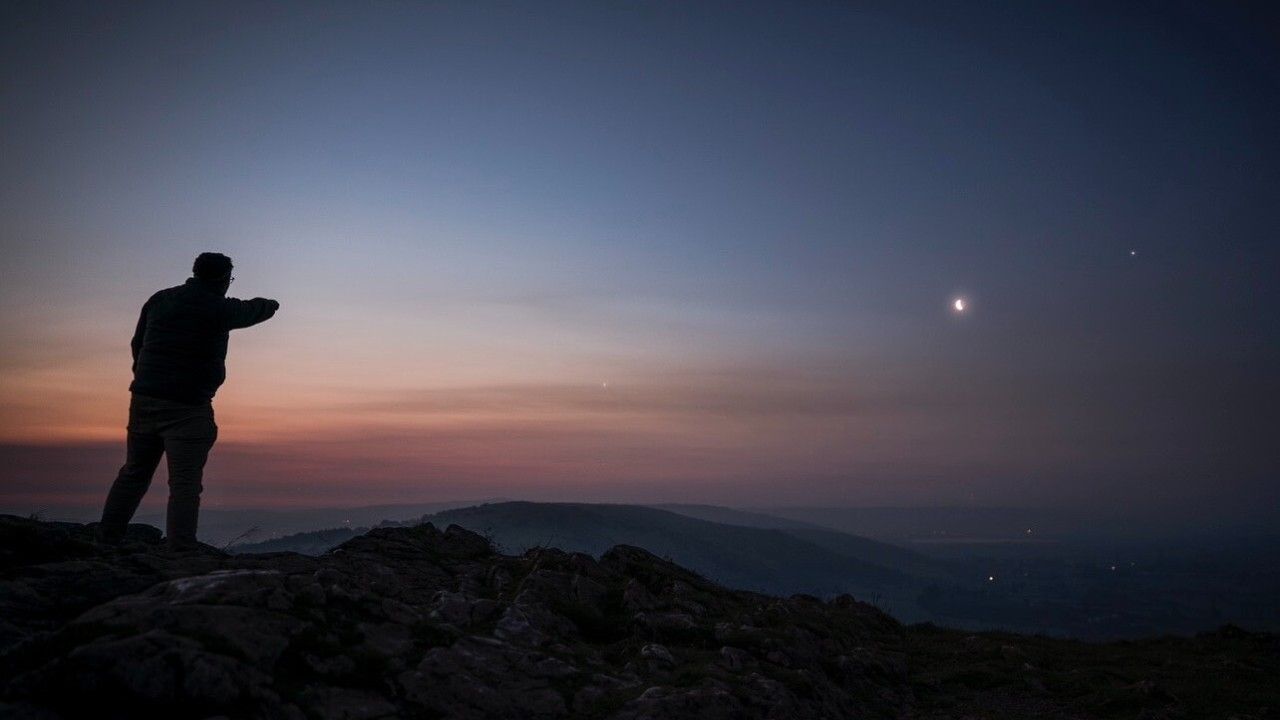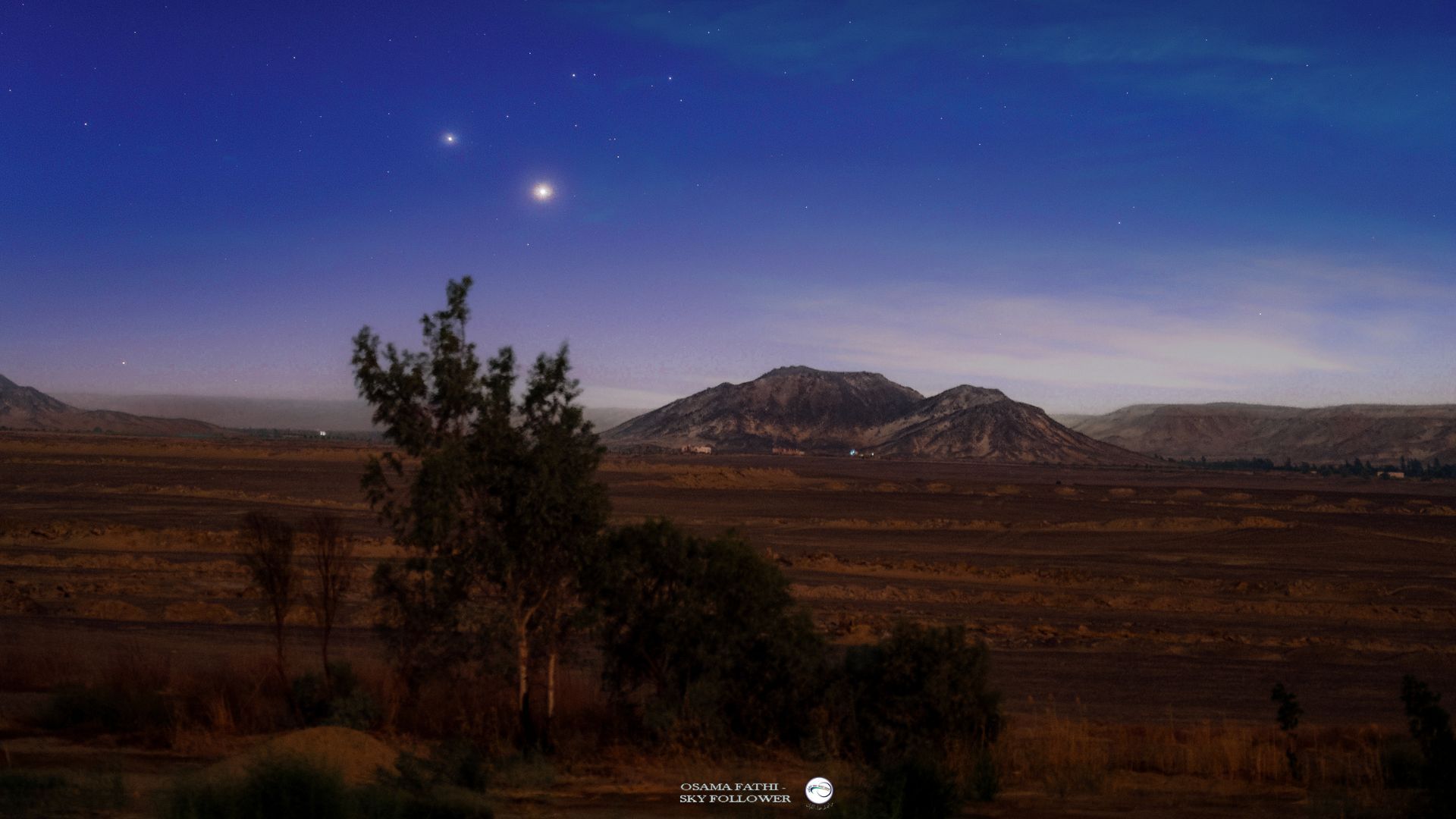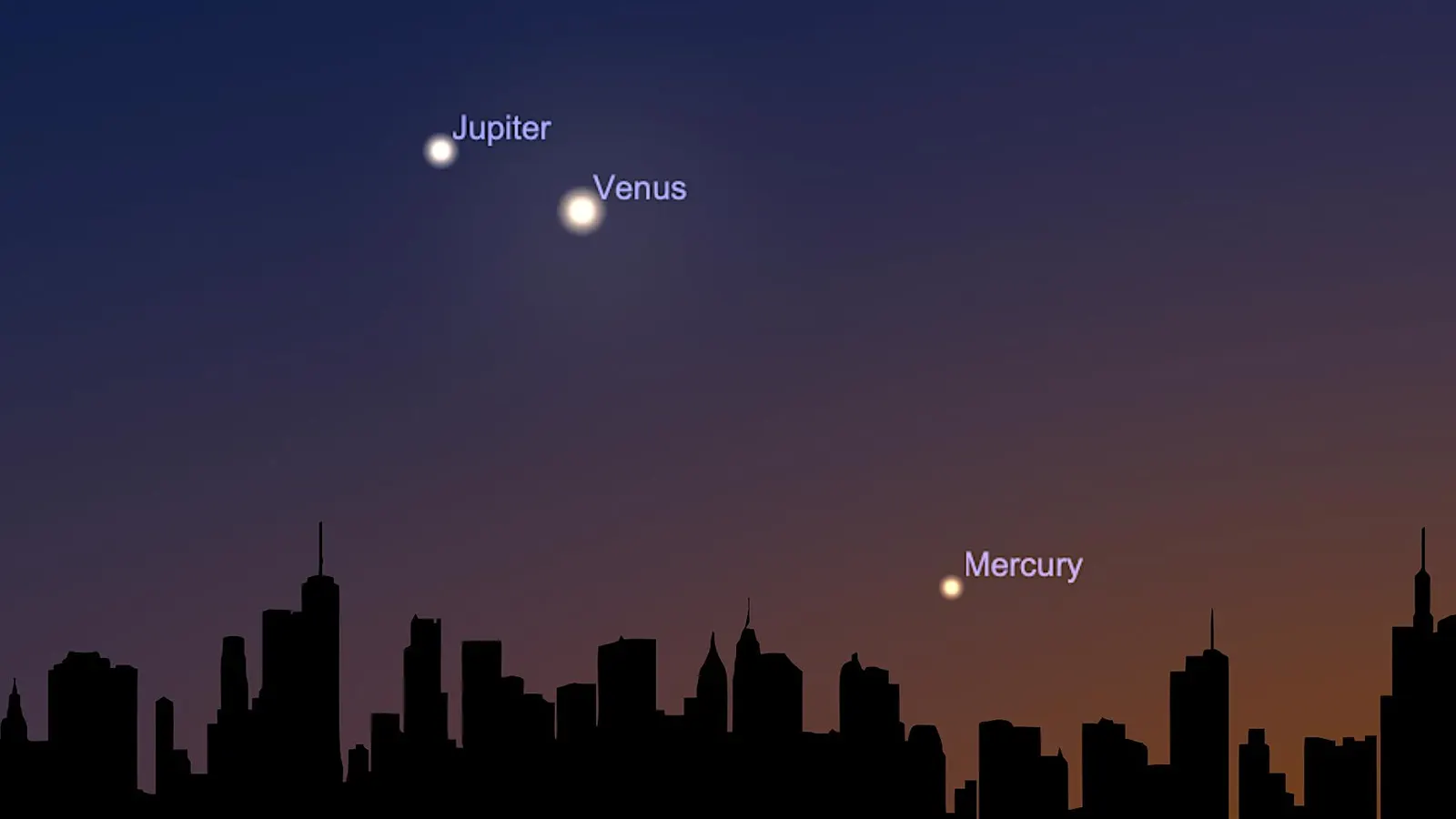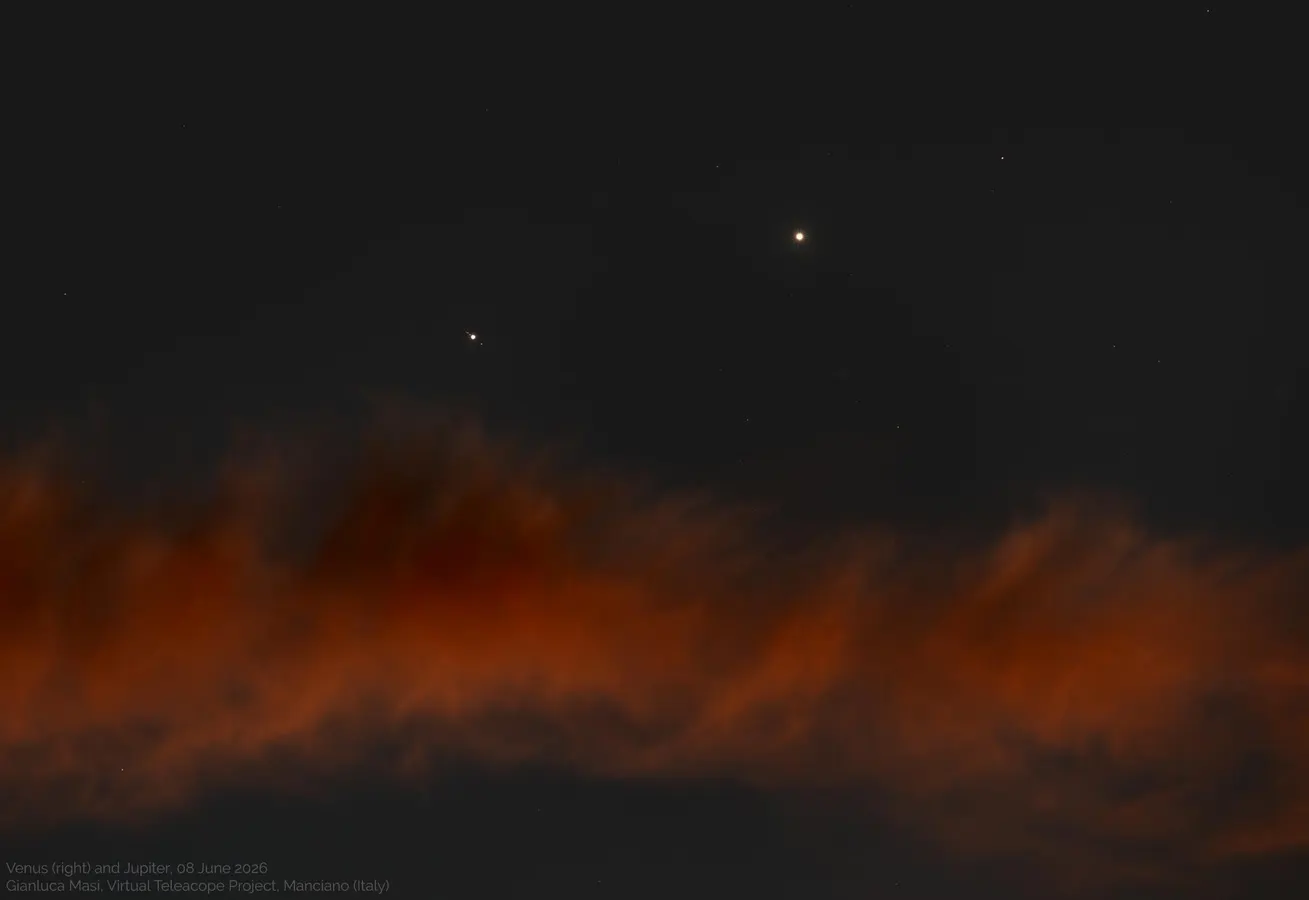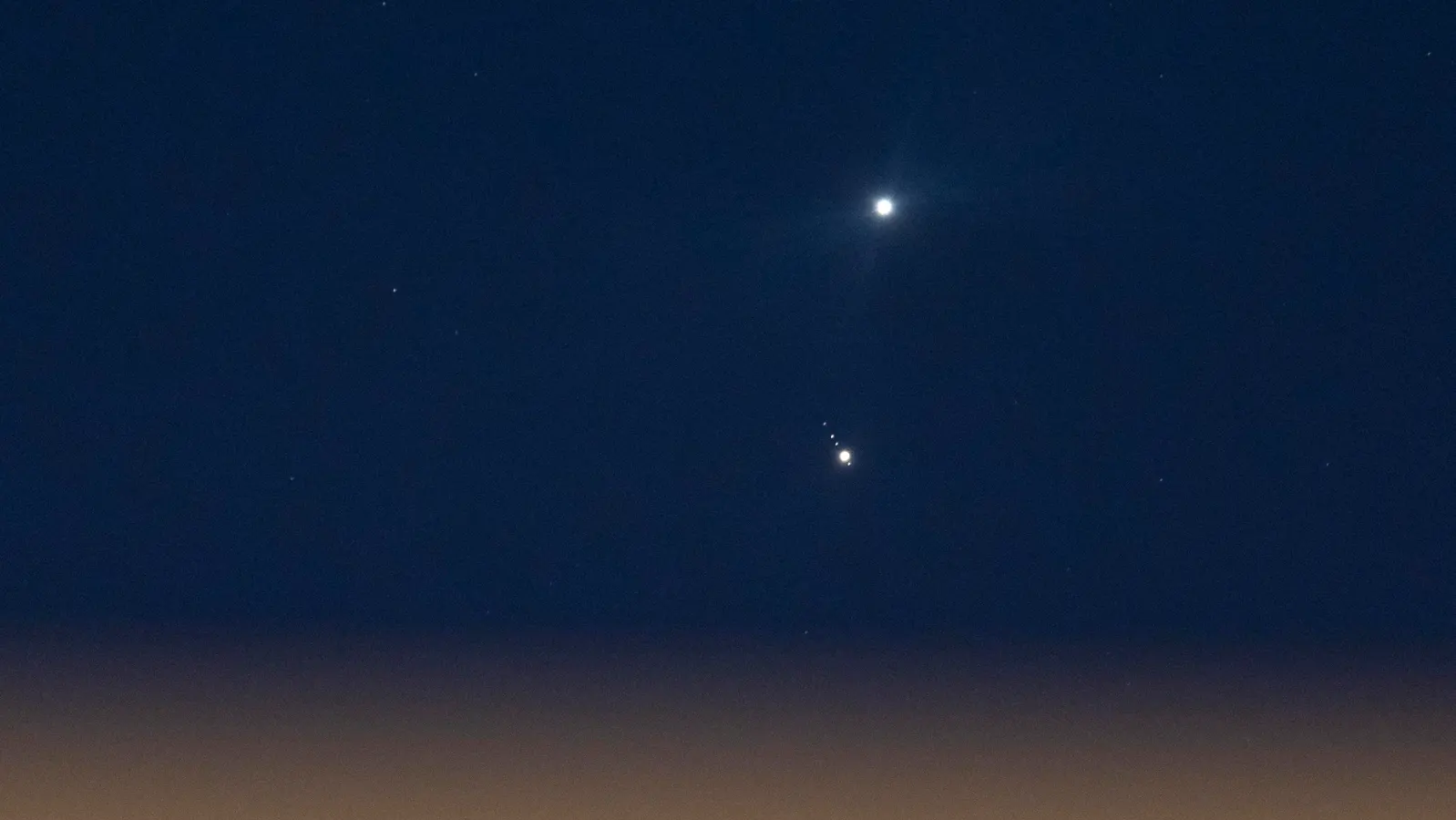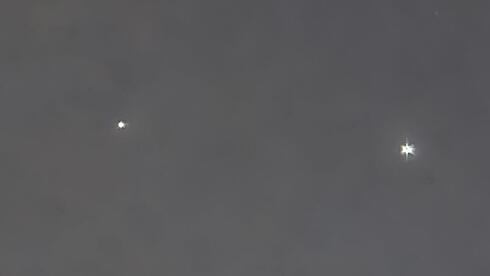
Just after sunset, Venus and Jupiter will shine above the western horizon, with their closest encounter Tuesday and a crescent moon joining next weekDr. Igal Patel|A celestial show is expected in the evening sky this week: Venus and Jupiter will appear close together above the western horizon, creating an impressive sight that will peak shortly after sunset Tuesday. Later, the crescent moon will join the display, and under good viewing conditions Mercury also may be visible.Venus, which is closer to us, appears to move faster across the sky and is therefore moving eastward relative to Jupiter. The closest approach between the two will occur just after sunset Tuesday, when Venus passes about 1.5 degrees north of Jupiter — a distance equal to nearly three times the apparent diameter of the full moon. In the following days, Venus will continue moving eastward and away from Jupiter.2 View gallery Jupiter and Venus in Sunday's night sky (Photo: Yogev Israeli)Exactly one week later, on June 16, the new crescent moon will join the scene, positioned directly between Venus and Jupiter. Sharp-eyed observers may also spot Mercury, which will appear below Jupiter, toward the setting sun.Venus is now visible in the evening sky. Because of its position between Earth and the sun, it can be seen only shortly after sunset or before sunrise, but never late at night. Anyone who points a small telescope at it will be able to see that it appears as a half circle, similar to the moon in the first week of the Hebrew month. This is because it is near the edge of its orbit around the sun, so we see only its illuminated side.Jupiter, by contrast, offers an even more impressive display. With a small, good-quality telescope, observers can clearly see its two cloud bands, as well as its four large moons, which are also visible through binoculars. Although Jupiter is more than 10 times larger than Venus in diameter, it appears less bright to the eye because it is much farther from us.2 View gallery Venus on the left, Jupiter on the right : The two planets will get even closer this week(Photo: Yogev Israeli)Conjunctions between Venus and Jupiter are always a spectacular celestial event, though there have been even closer displays in the past. An especially rare conjunction in the year 0 C.E., according to the calendar used today, was so close that the two planets appeared to the naked eye as a single star, this writer has posited. According to that hypothesis, it may have been the “Star of Bethlehem” seen in the western sky that heralded the birth of Jesus.In those years, several other especially close planetary conjunctions occurred, including another meeting between Venus and Jupiter a year later. However, the conjunction that occurred in the summer of 0 C.E. is considered the closest, and it is possible that the unusual sequence of celestial events contributed to the creation of the legend of the Star of Bethlehem.Dr. Igal Patel, director of Cosmos Telescopes, is author of an encyclopedia of constellations.
Rare planetary pairing: Venus and Jupiter meet after sunset
Just after sunset, Venus and Jupiter will shine above the western horizon, with their closest encounter Tuesday and a crescent moon joining next week
507 words~2 min read