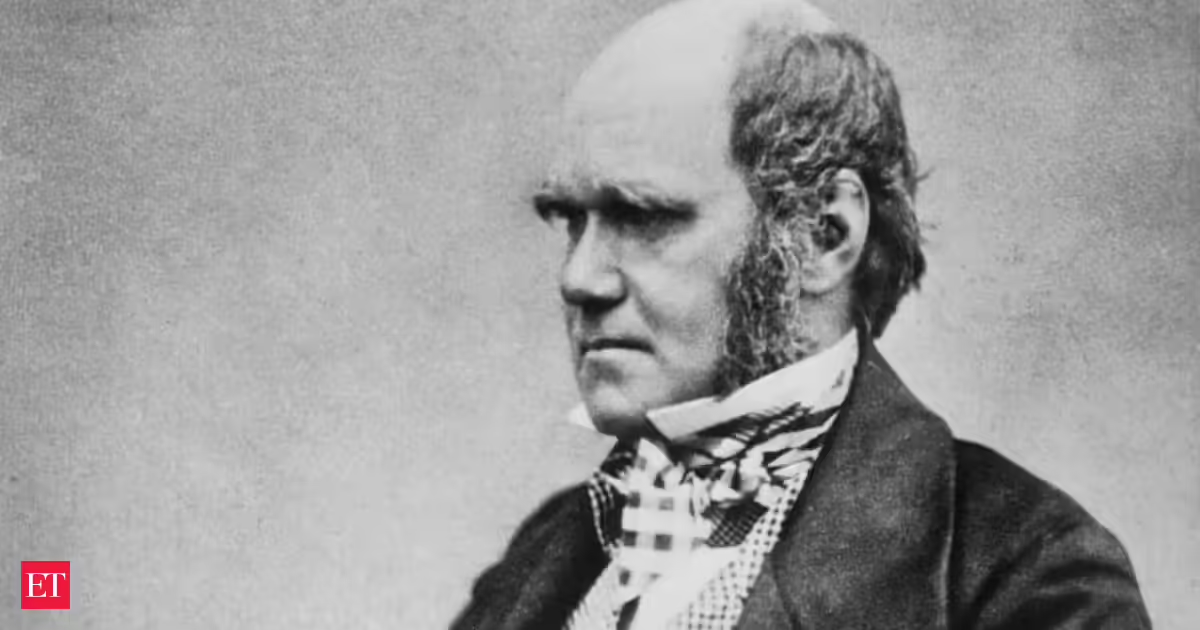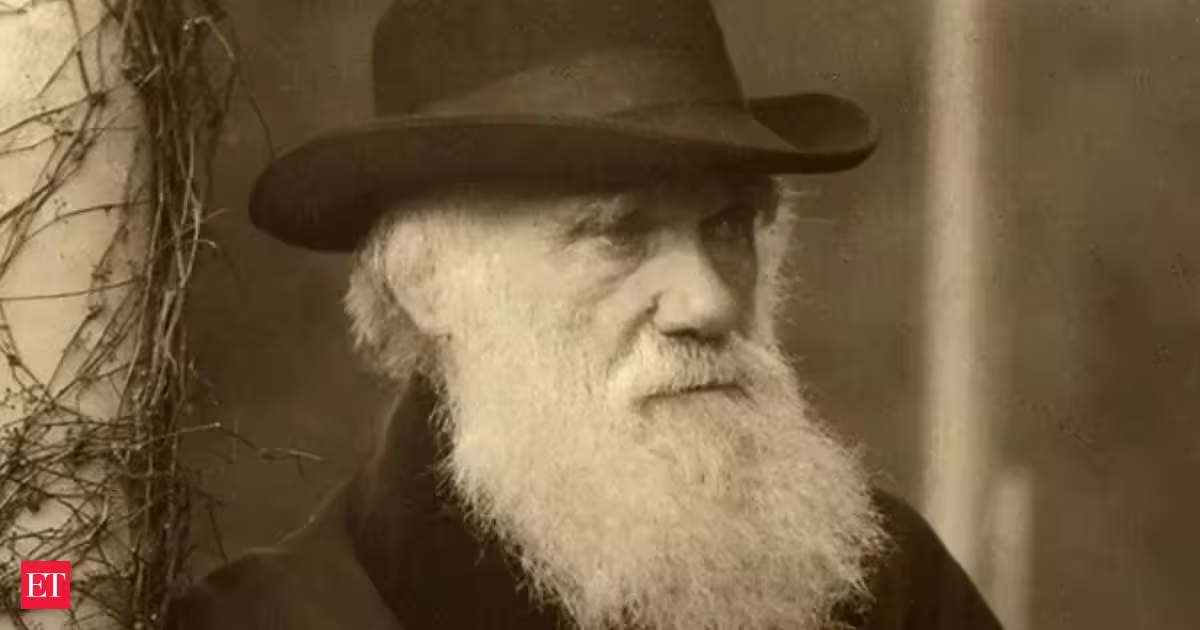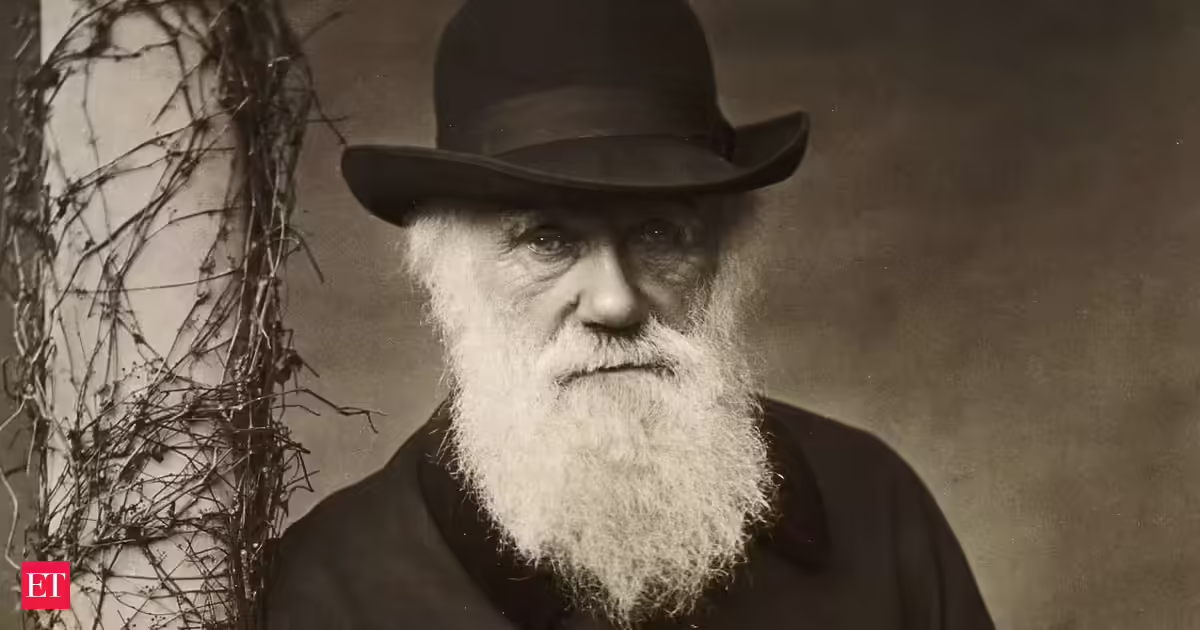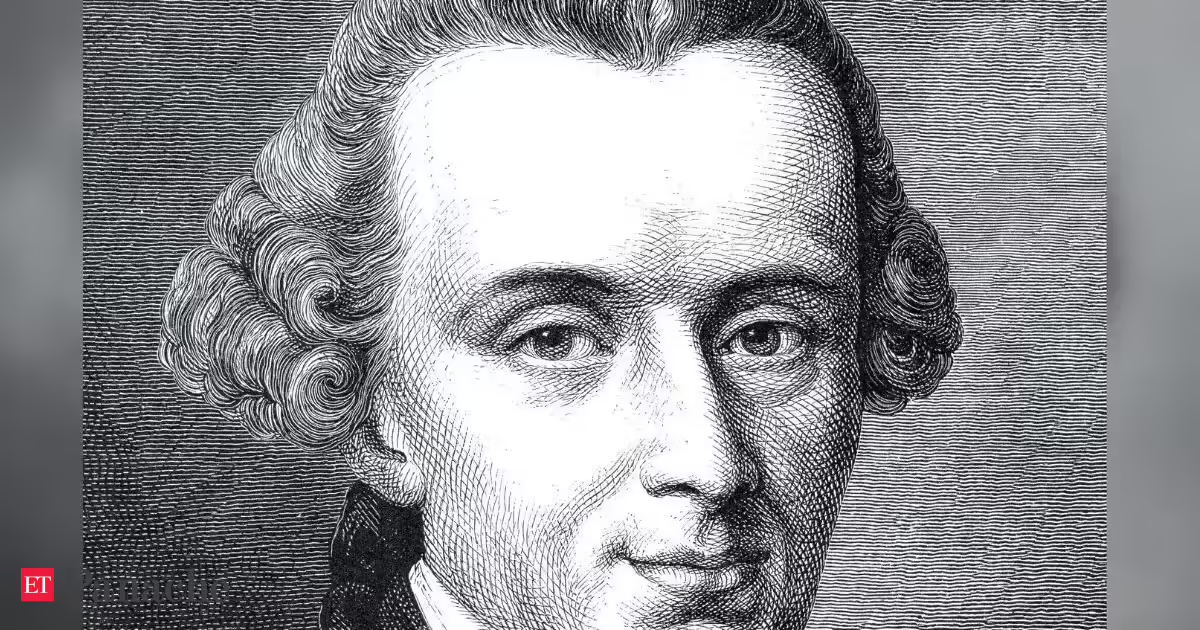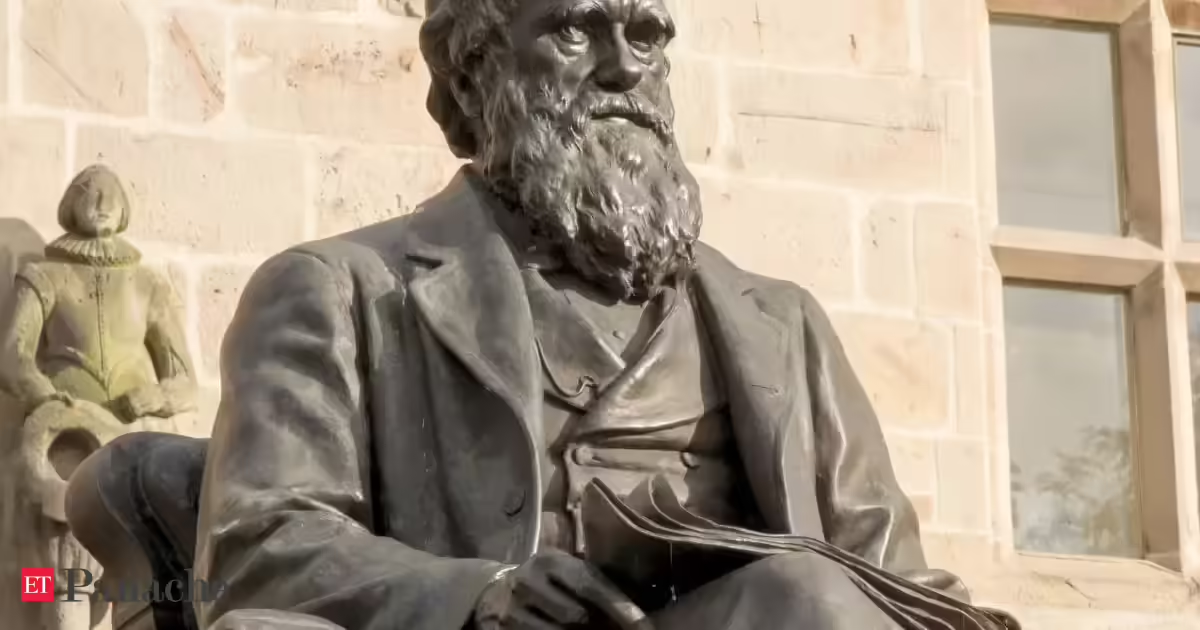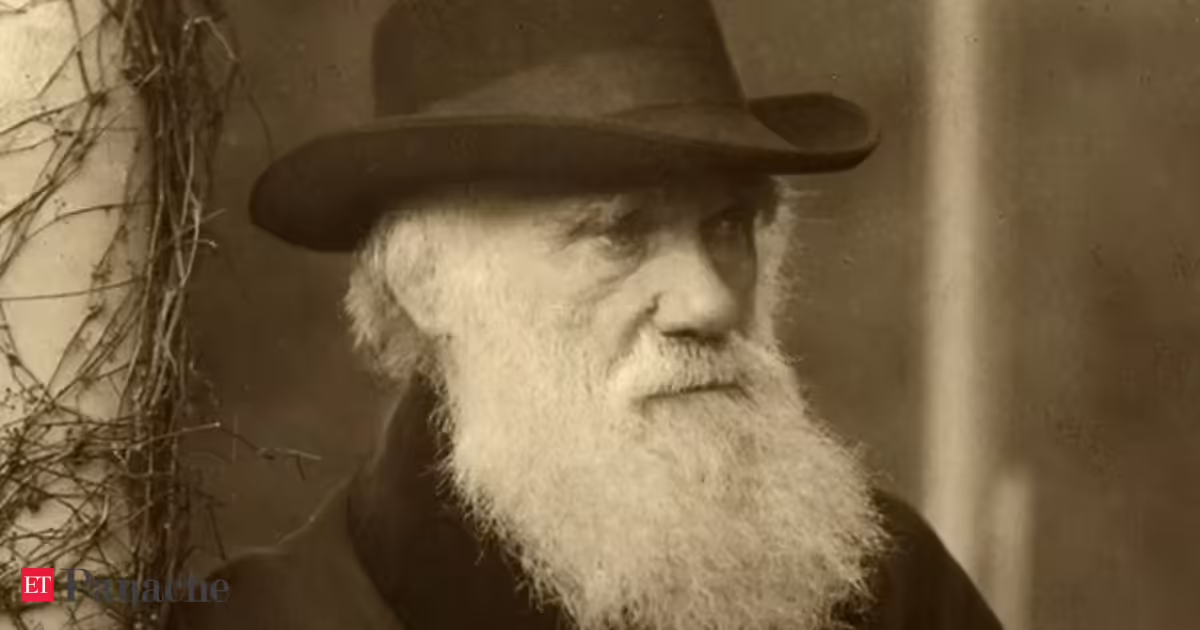
Long before he changed the world with his theory of evolution, Charles Darwin found himself wrestling with a question that millions of people still face today: should one devote life entirely to work, or make room for love, family and companionship? In a surprisingly personal journal entry written when he was just 29, the British biologist revealed fears, hopes and doubts that feel remarkably modern. His words give an interesting glimpse into the moment he began questioning whether professional success alone could ever be enough to create a fulfilling life.The quote of the day is, "My God, it is intolerable to think of spending one’s whole life, like a neuter bee, working, working, & nothing after all. No, no won’t do. Imagine living all one’s day solitarily in smoky dirty London House. — Only picture to yourself a nice soft wife on a sofa with good fire, & books & music perhaps — Compare this vision with the dingy reality of Grt. Marlbro’ St."These famous words were written by Charles Darwin in July 1838, months before he proposed to his cousin, Emma Wedgwood. At the time, Darwin was living in London and dedicating nearly all of his energy to scientific research. Yet behind the image of the focused young naturalist was a man trying to decide whether marriage would enrich his life or distract him from his ambitions.Unusual pros-and-cons marriage list that came before the proposalAccording to The Correspondence of Charles Darwin, Volume 2: 1837-1843 and the Darwin Correspondence Project, Darwin approached the question of marriage with the same methodical mindset that he applied to science.Earlier in 1838, he famously created a "Marry" versus "Not Marry" list, carefully writing down the advantages and disadvantages of taking a wife. On the positive side, he imagined a "constant companion," a friend in old age, and the comforts of home, music and conversation. On the negative side, he worried about reduced finances, less time for books, professional limitations and what he called a "terrible loss of time."The list revealed a man torn between two competing visions of the future. One involved complete dedication to work and scientific discovery. The other offered companionship, family life and emotional fulfilment.Why Darwin compared himself to a 'neuter bee'One of the most striking parts of the quote is Darwin's comparison of himself to a "neuter bee."In nature, worker bees spend their lives labouring for the colony but do not reproduce. By using this image, Darwin expressed a fear that many ambitious people still recognise today: the possibility of spending an entire lifetime working without building a family, sharing life with a partner or creating meaningful personal connections.At the time, Darwin was living alone in London on Great Marlborough Street, often consumed by research and observation. His words suggest that he was beginning to feel the emotional cost of such a solitary existence.The gloomy image of a "smoky dirty London House" reflects his concern that endless work, however important, might eventually feel empty without companionship.A vision of marriage that changed his thinkingWhat makes the quote especially powerful is the contrast Darwin creates. On one side is isolation, routine and relentless work. On the other is a simple but comforting vision: a loving wife, a warm fire, books, music and a welcoming home.Darwin was not dreaming of fame or wealth. Instead, he imagined ordinary moments of companionship and emotional support. Those everyday comforts appeared increasingly valuable to him as he weighed his future.His thoughts reveal that the debate was never simply about marriage. It was about what kind of life he wanted to build and whether professional achievement alone could provide lasting happiness.What happened after the journal entry?As noted by the Natural History Museum, Charles Robert Darwin was born in 1809 and went on to become one of the most influential scientists in history. His voyage aboard HMS Beagle and his later work on evolution transformed scientific understanding of the natural world.But while he was developing ideas that would change biology forever, he was also making deeply personal decisions. After months of reflection, Darwin chose marriage. He proposed to Emma Wedgwood later in 1838, and the couple married on January 29, 1839.Despite his earlier worries, the marriage proved to be one of the most important relationships of his life. Darwin and Emma remained together for more than four decades and raised ten children. Through personal triumphs, scientific breakthroughs and devastating losses, including the death of their daughter Annie, their partnership endured.The life lesson behind the quoteMore than 180 years later, Charles Darwin's words remain relevant because they address a challenge that has not disappeared. People still struggle to balance careers, ambitions, relationships and personal happiness.The quote does not argue that marriage is superior to single life in every circumstance. Instead, it reflects Darwin's personal realisation that achievement alone could not satisfy all human needs.His fear was not hard work itself. It was the idea of working endlessly without companionship, emotional connection or a sense of home. By contrasting a lonely existence with a vision of shared life, Darwin reminds readers that success and happiness are not always the same thing.His thoughts ultimately suggest that while ambition can provide purpose, relationships often provide meaning. For Darwin, choosing marriage was not a rejection of science or achievement. It was an acknowledgement that love, family and companionship could exist alongside a life devoted to great work.
Quote of the day by Charles Darwin: 'It is intolerable to think of spending one’s whole life, like a neuter bee, working, working and nothing after all' ; life lesson on marriage vs single life by British biologist
Charles Darwin, at 29, grappled with balancing work and personal life, fearing a solitary existence. His journal revealed a 'neuter bee' analogy for endless labour without companionship. He meticulously weighed marriage's pros and cons, ultimately choosing a life with his cousin Emma, finding fulfilment beyond scientific ambition. Read on to know why it feels relatable in today's era.
893 words~4 min read