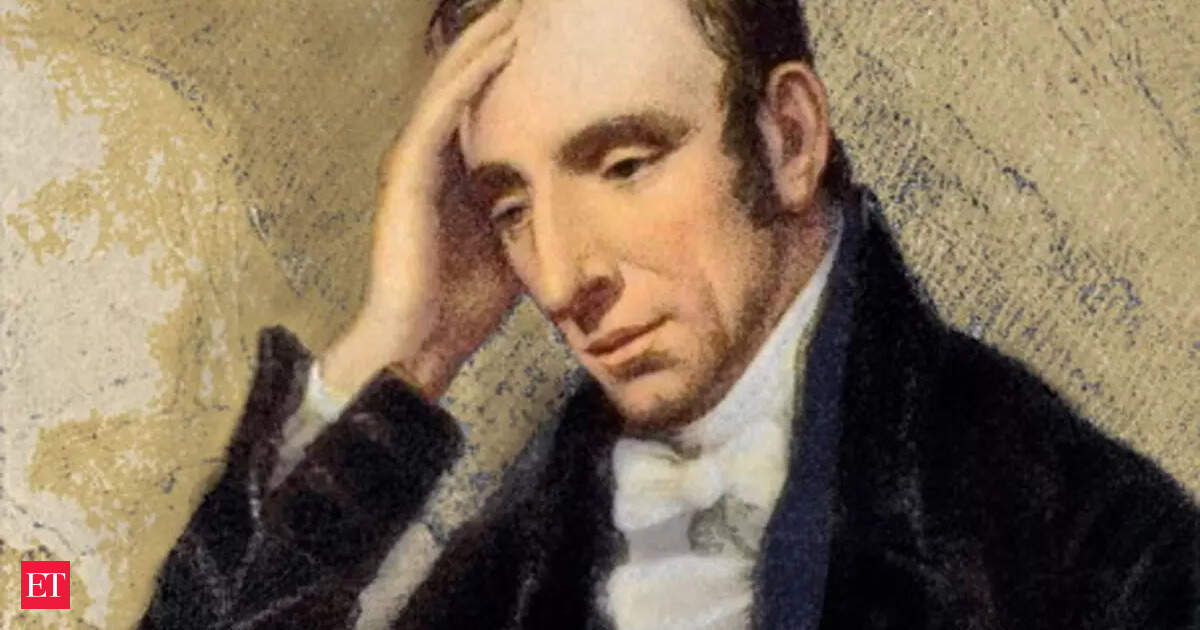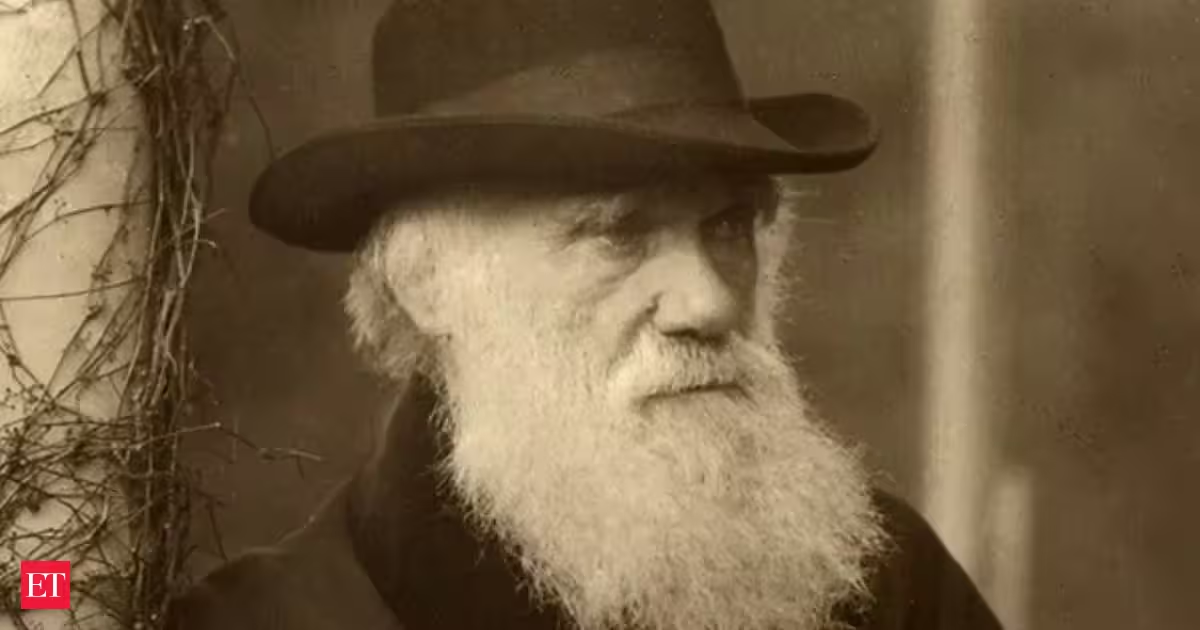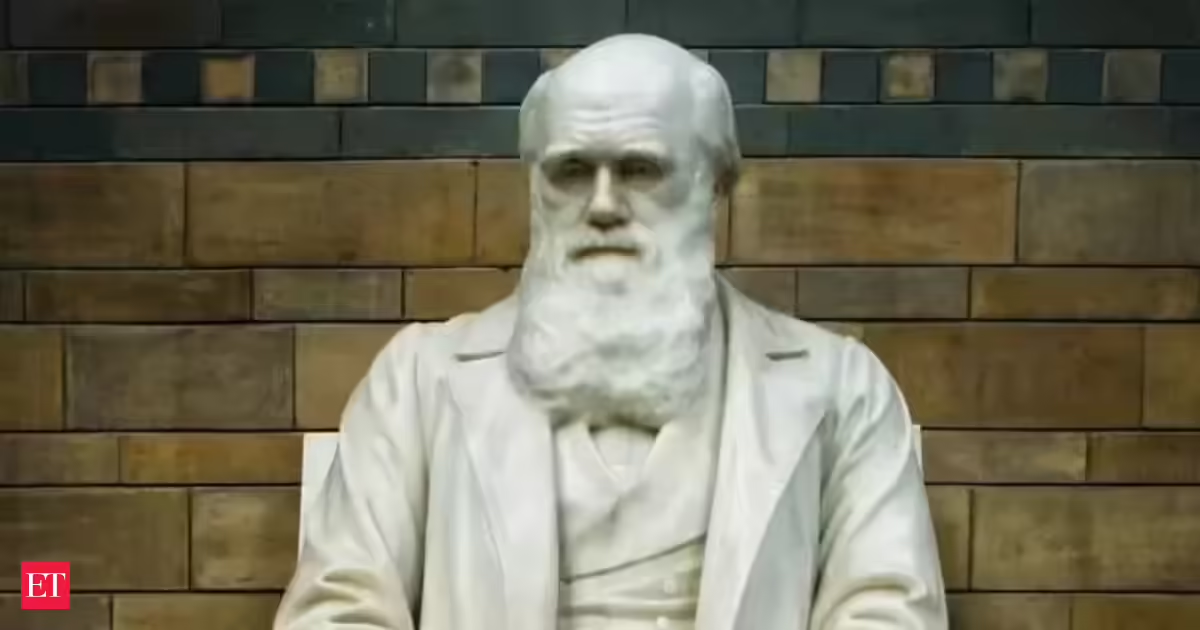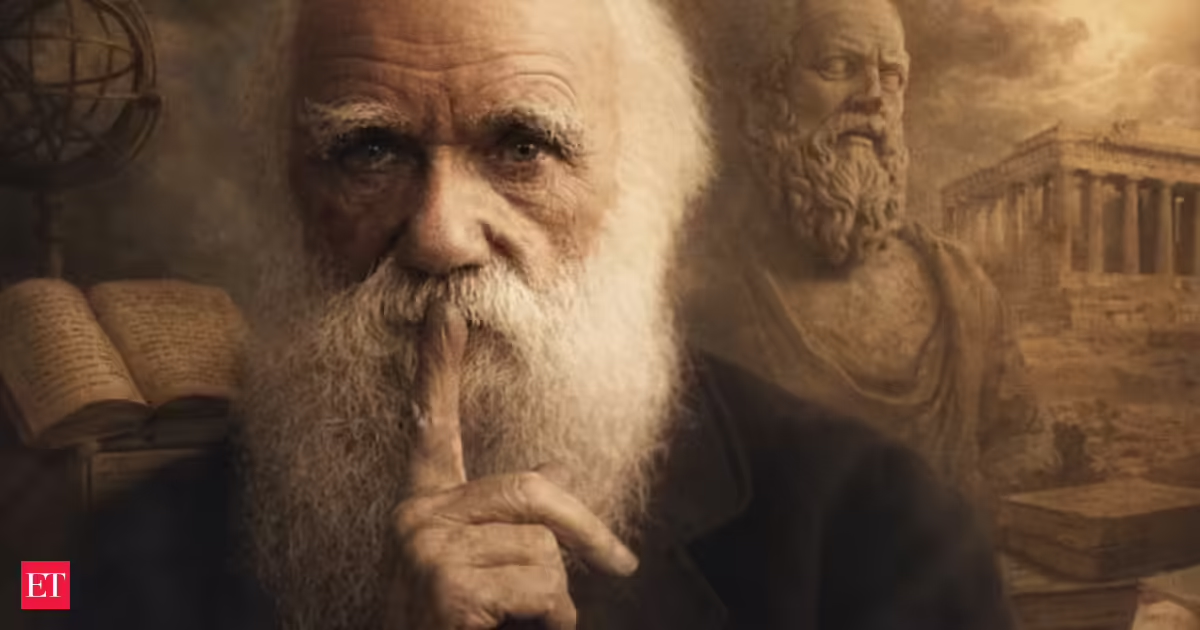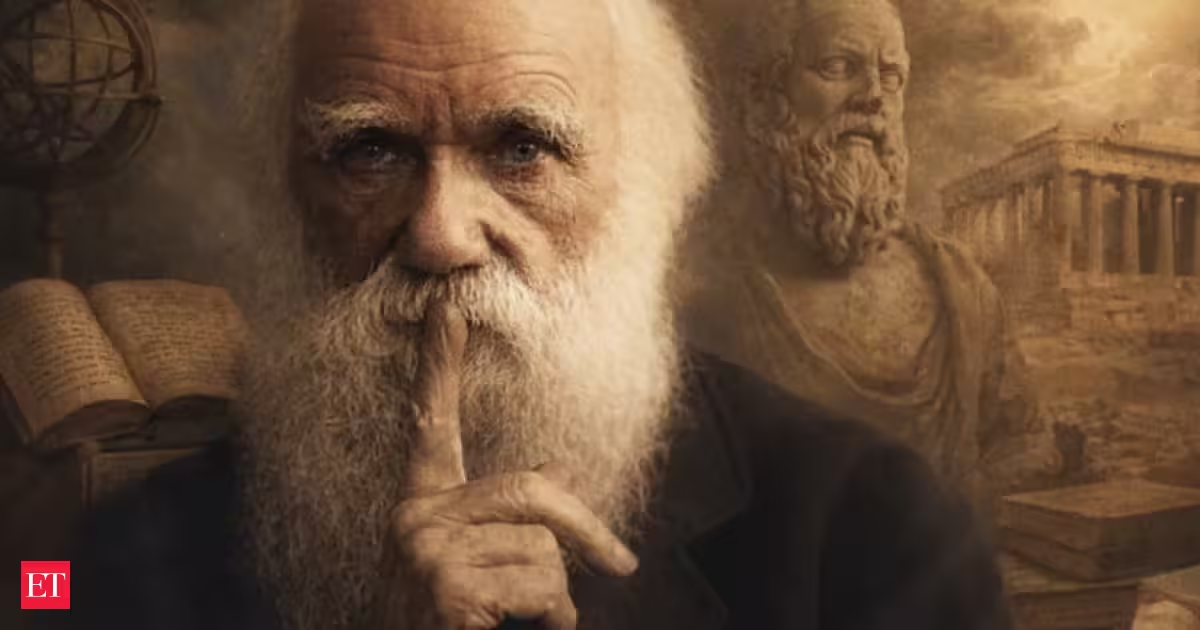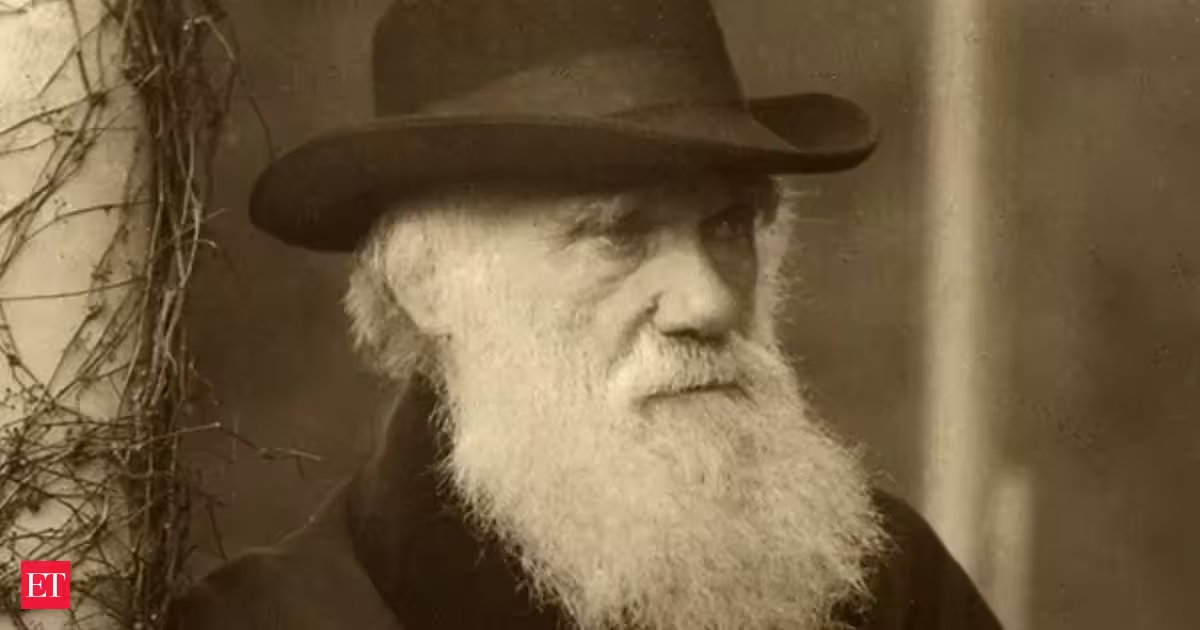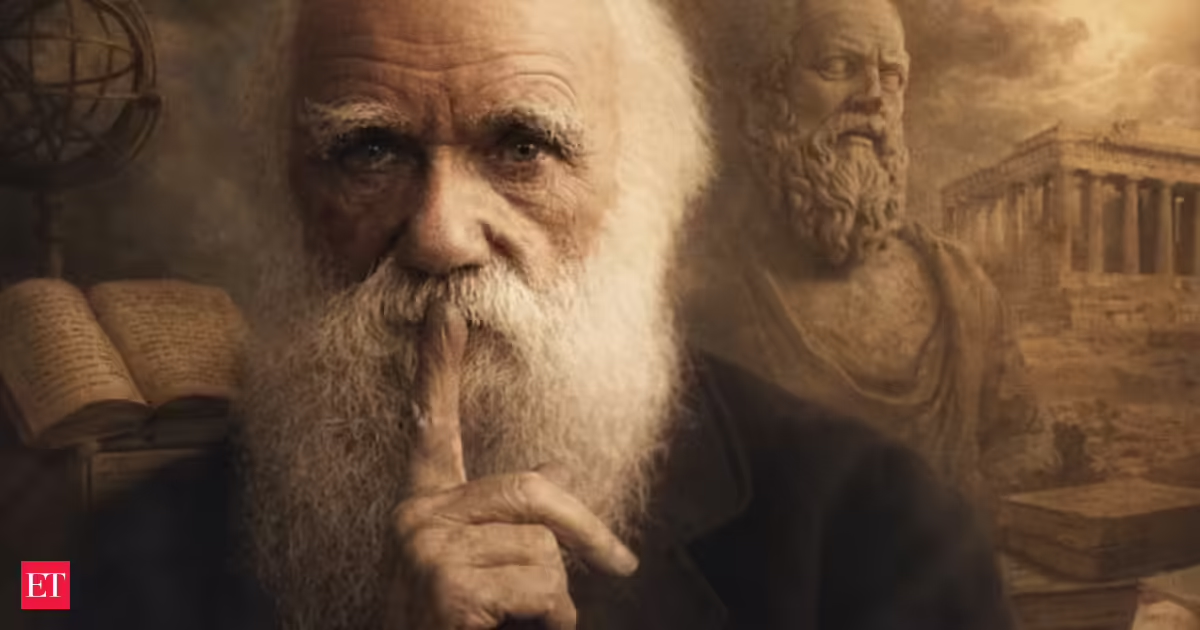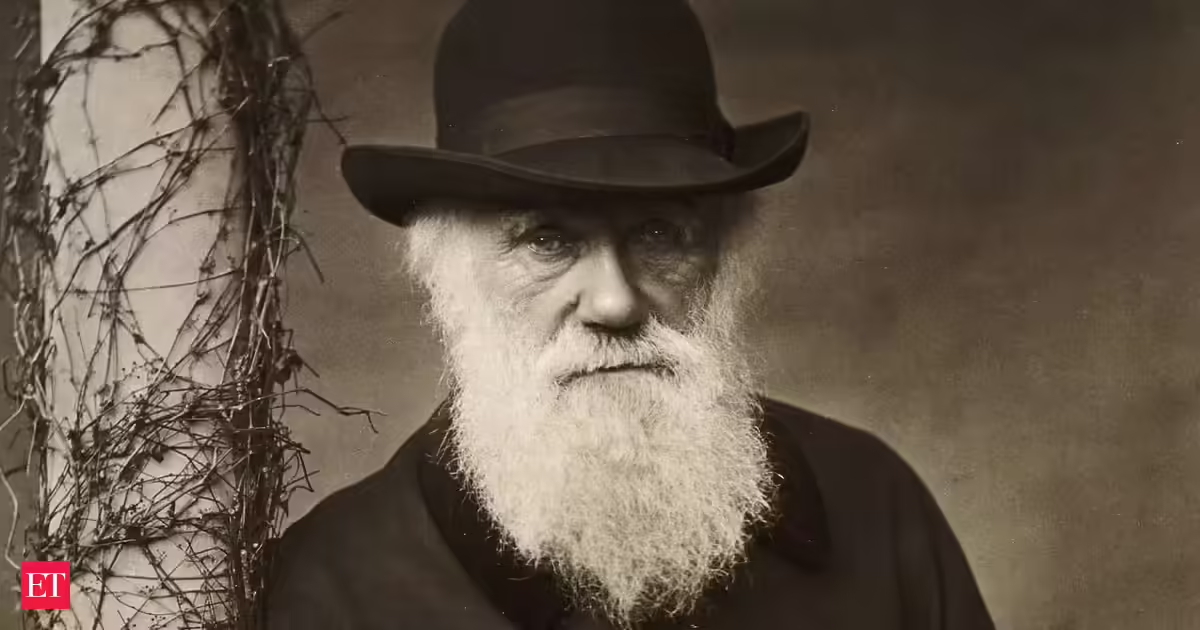
Quote of the day by Charles Darwin: When Charles Darwin wrote, “If I had my life to live over again, I would have made a rule to read some poetry and listen to some music at least once every week,” he was not speaking as a poet, philosopher, or artist. He was speaking as one of the greatest scientific minds in human history. That is precisely why the quote continues to resonate so deeply today.The line, taken from The Autobiography of Charles Darwin, feels almost startling in the modern world. We live in an age driven by speed, algorithms, productivity, artificial intelligence, financial pressure, and endless information. Attention itself has become a currency. Yet Darwin’s regret was not about fame, failure, money, or scientific achievement. His regret was that he slowly lost touch with beauty.That single admission transforms the quote from a simple reflection into something philosophical, emotional, and deeply human.“If I had my life to live over again, I would have made a rule to read some poetry and listen to some music at least once every week.” — Charles DarwinQuote of the day by visionary naturalist Charles DarwinThe Quote of the day by Charles Darwin carries a deep message for modern life. Darwin spent decades studying science, evolution, and human existence. Yet near the end of his life, he admitted that constant intellectual work slowly distanced him from poetry, music, and emotional beauty. His words reveal that success and knowledge alone cannot fully satisfy the human mind.In today’s fast-moving digital world, the Charles Darwin quote feels more relevant than ever. Millions live under pressure from nonstop work, social media, deadlines, and information overload. People chase productivity but often lose connection with creativity, reflection, and peace. Darwin’s reflection reminds readers that emotional balance matters as much as professional achievement and intellectual growth.The quote also explains why art, literature, and music remain essential to human life. Poetry sharpens emotional understanding. Music heals mental exhaustion. Creative expression gives meaning beyond money and success. Through this simple but powerful reflection, Charles Darwin leaves behind not just scientific wisdom, but a timeless lesson about protecting the human soul in a demanding world.Meaning of the Quote of the dayThe meaning behind the Quote of the day is deeply emotional and philosophical. Charles Darwin realized that a life focused only on work, science, and intellectual success can slowly disconnect a person from beauty, creativity, and emotional peace. His reflection about poetry and music was not a small regret. It was a warning that human beings need art, feelings, imagination, and inspiration to remain fully alive.The quote also highlights the importance of balance in modern life. Today, millions spend most of their time chasing careers, money, deadlines, and digital distractions. People often ignore simple things that nourish the mind and soul. Darwin’s words remind readers that music, literature, and creative thinking are not luxuries. They are essential parts of emotional health, inner wisdom, and personal growth.At a deeper level, the quote teaches that intelligence alone does not create a meaningful life. A person can achieve success and still feel emotionally empty. Through this honest reflection, Charles Darwin encourages people to protect their humanity, curiosity, and emotional depth before it slowly disappears under pressure, routine, and nonstop ambition.Who was Charles Darwin?Charles Darwin was a British naturalist, biologist, and scientist who changed humanity’s understanding of life on Earth. Born on February 12, 1809, in Shrewsbury, Darwin became one of the most influential thinkers in modern history through his theory of evolution by natural selection. His ideas transformed science, biology, medicine, anthropology, and the study of human origins.Darwin gained worldwide recognition after publishing On the Origin of Species in 1859. In the book, he explained that species evolve over time through natural selection, where organisms better adapted to their environment survive and reproduce. The theory challenged long-held beliefs about creation and became one of the foundations of modern biological science.Much of Darwin’s research came from his five-year voyage aboard the HMS Beagle, where he studied plants, animals, fossils, and geology across South America and nearby islands. His observations in the Galápagos Islands played a major role in shaping his evolutionary ideas. Beyond science, Darwin was also known for his curiosity, humility, and deep reflections on human life, nature, creativity, and emotional balance, which continue to inspire readers around the world today.Although he briefly studied medicine and theology, Darwin’s true passion remained scientific observation and natural history. His life changed forever when he joined the historic voyage of the HMS Beagle in 1831. During the five-year journey, Darwin explored South America, fossils, wildlife, and the Galápagos Islands, where his observations later shaped the theory of evolution. He spent decades carefully researching and writing before publishing On the Origin of Species, one of the most influential scientific books ever written.Darwin’s work transformed modern biology and permanently changed how humans understand life and evolution. His theory of natural selection explained how species gradually evolve and adapt over time. The success of his ideas made him one of the most respected scientists in history, even though his theories sparked global debate and criticism during his lifetime.Darwin also wrote major works including The Descent of Man, and Selection in Relation to Sex and The Autobiography of Charles Darwin. While there was no Nobel Prize during his lifetime, Darwin received prestigious scientific honors from major European institutions and became an international intellectual icon. Today, his legacy continues to influence science, medicine, psychology, philosophy, and modern research across the world.Other famous quotes by Charles Darwin “A man who dares to waste one hour of time has not discovered the value of life.” “It is not the strongest of the species that survives, nor the most intelligent, but the one most responsive to change.” “The love for all living creatures is the most noble attribute of man.” “Ignorance more frequently begets confidence than does knowledge.” “In the long history of humankind, those who learned to collaborate and improvise most effectively have prevailed.” “A scientific man ought to have no wishes, no affections — a mere heart of stone.” “We stopped looking for monsters under our bed when we realized they were inside us.” “The highest possible stage in moral culture is when we recognize that we ought to control our thoughts.” “Blushing is the most peculiar and most human of all expressions.” “I am turned into a sort of machine for observing facts and grinding out conclusions.” “Animals, whom we have made our slaves, we do not like to consider our equal.” “The mystery of the beginning of all things is insoluble by us.”
Quote of the day by Charles Darwin: “If I had my life to live over again, I would have made a rule to read some...” — The profound wisdom from the evolution pioneer: Ignoring music, poetry, and beauty can slowly rob the human soul of happiness
Charles Darwin quote of the day is gaining fresh attention in 2026 as millions struggle with burnout, stress, screen addiction, and emotional fatigue. In The Autobiography of Charles Darwin, Charles Darwin admitted he regretted not reading more poetry and listening to music every week. The quote now connects deeply with modern life, mental health, productivity culture, and digital overload. Darwin, best known for On the Origin of Species, warned that endless intellectual work can slowly weaken emotional depth and creativity.
1,097 words~5 min read