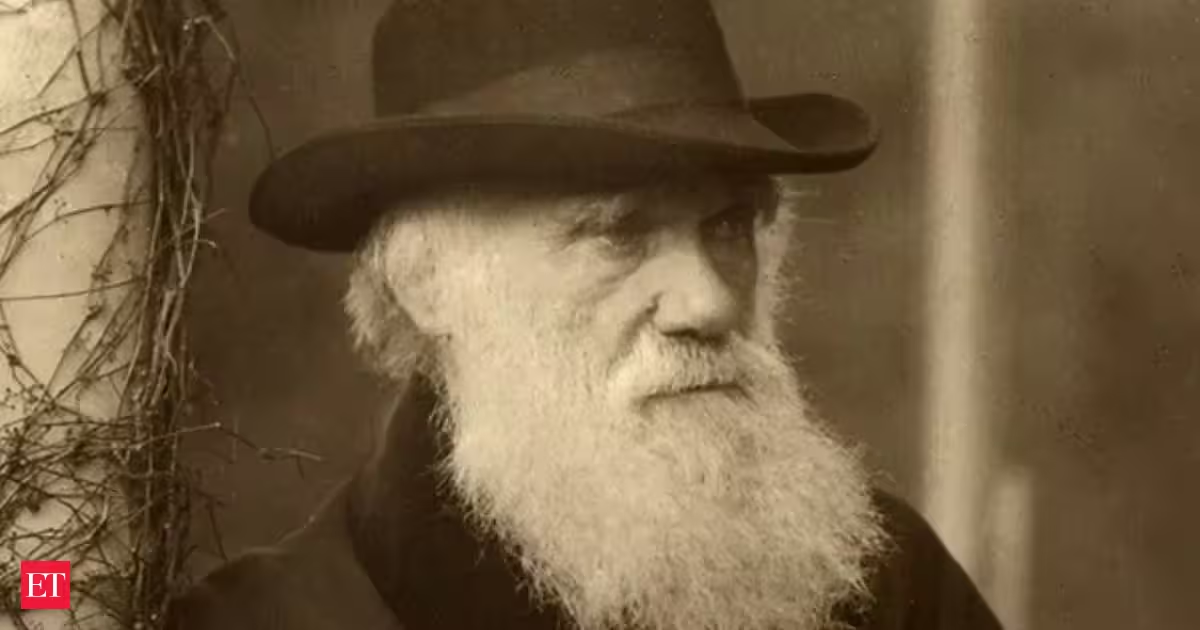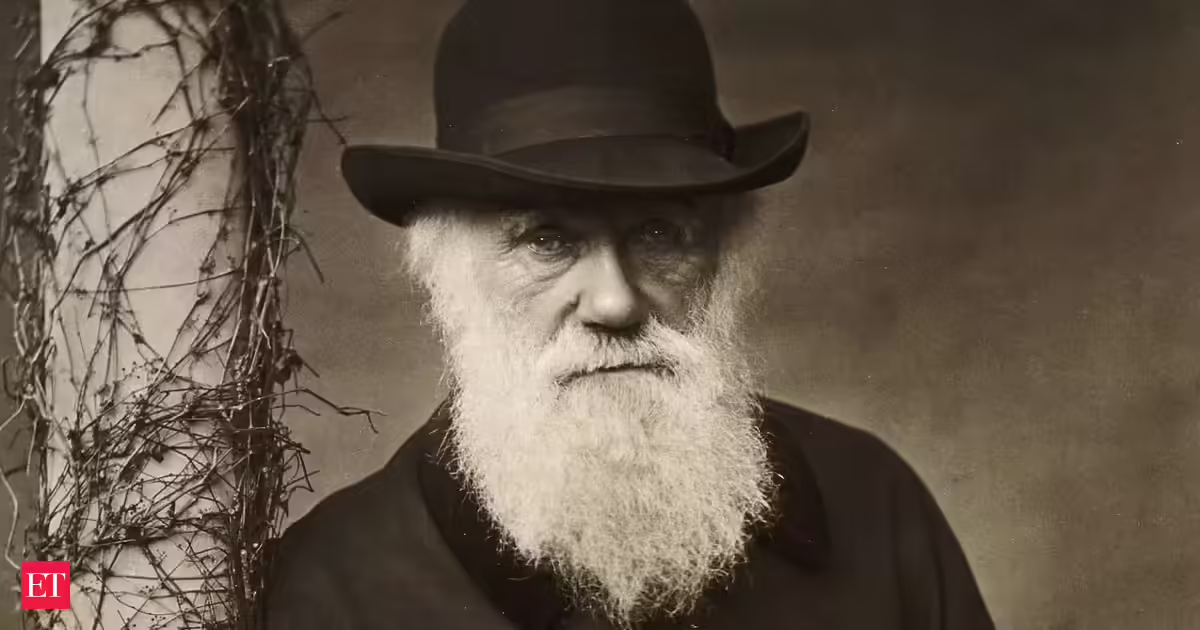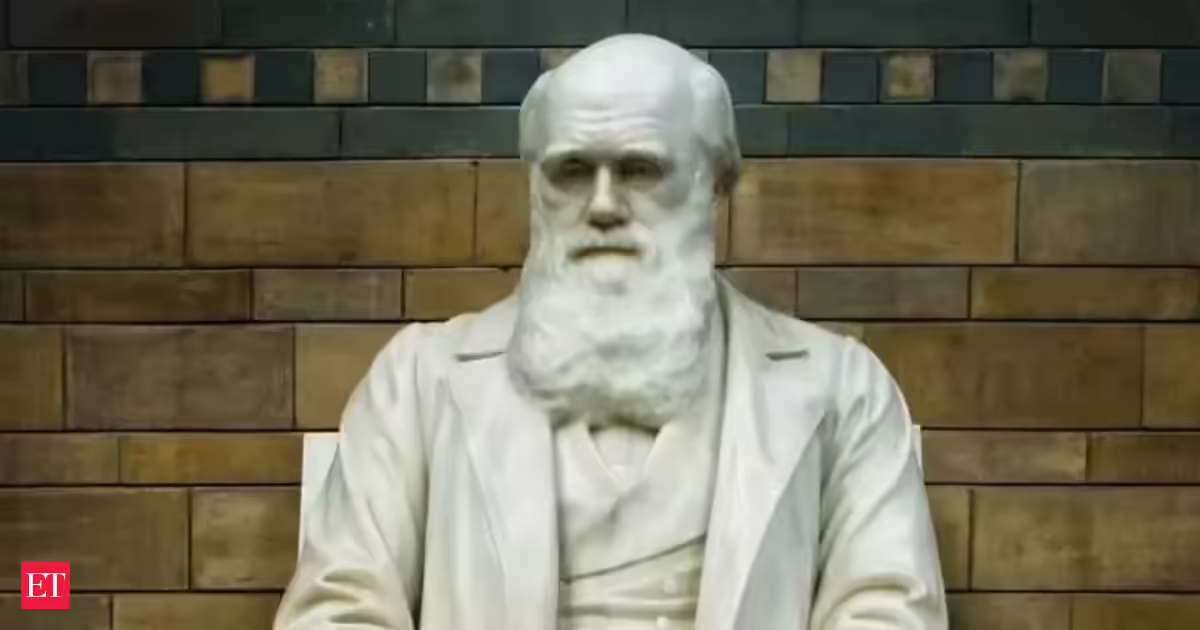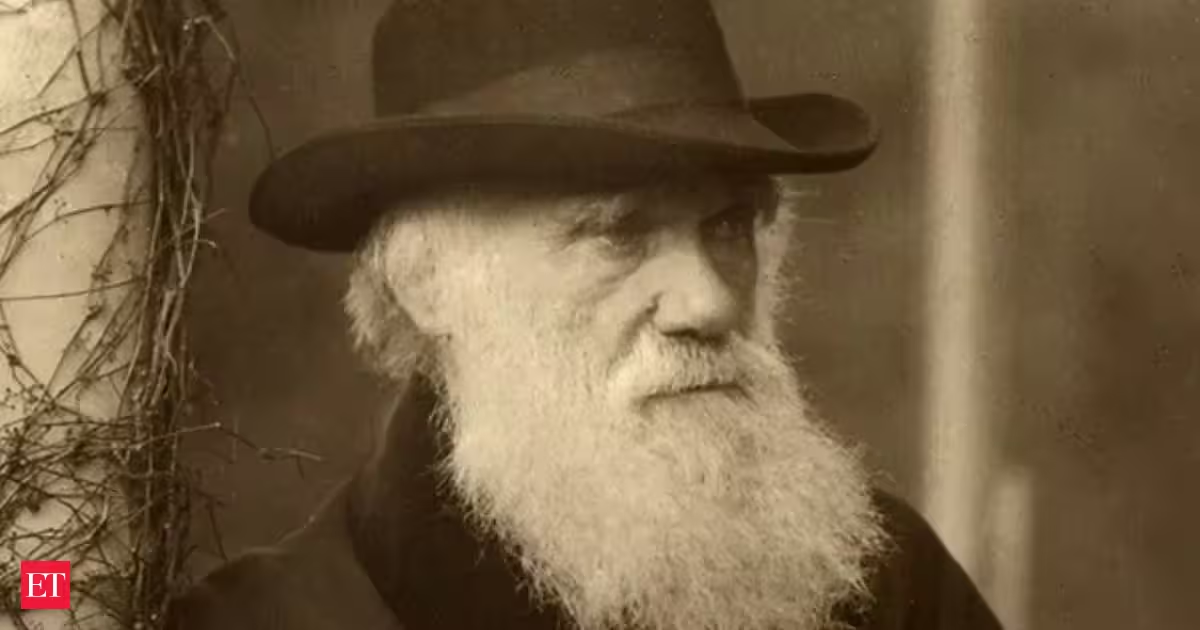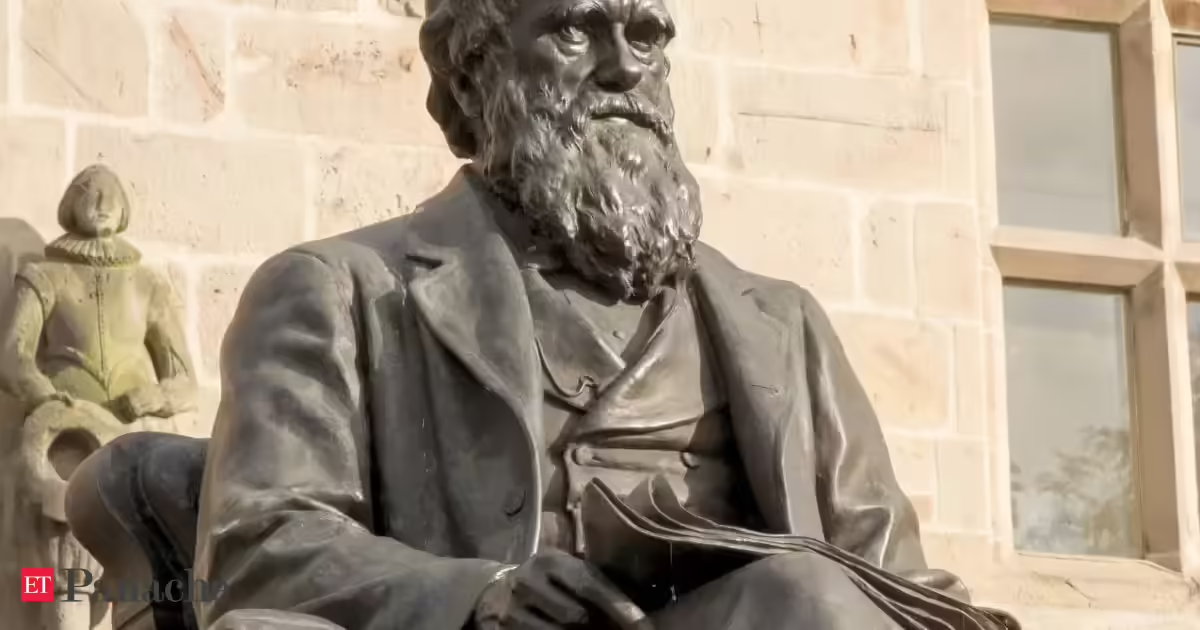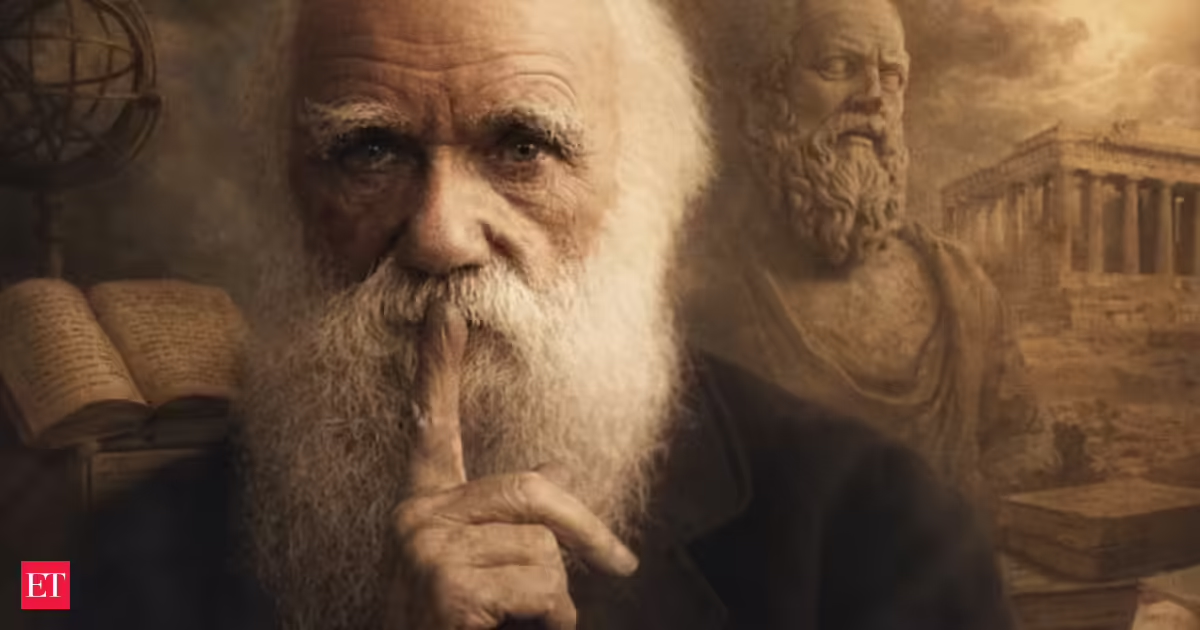
Quote of the Day: What Darwin Really Meant When He Said Scientists Should Have "A Heart of Stone" Charles Darwin once declared that a scientific man ought to have no wishes, no affections — only a heart of stone. The quote shocks. It also reveals something profound about the cost of truth. "A scientific man ought to have no wishes, no affections — a mere heart of stone."— Charles Darwin, from a letter discussing the ideal of scientific objectivity rather than a prescription for everyday life.It sounds cold. Almost cruel. And yet, this sentence — written not in a manifesto but in a private letter — may be one of the most honest things Darwin ever confessed. Not a prescription for how scientists should be. A lament for what the pursuit of truth often demands.Understanding the difference changes everything.What Does This Quote Actually Mean?Darwin wrote these words in 1857, two years before On the Origin of Species would upend the intellectual world. He was deep in correspondence with his closest scientific confidants, wrestling not just with facts but with the human consequences of what he was discovering.He wasn't celebrating emotional detachment. He was describing its necessity — and its price.To do science honestly, you must be willing to demolish your own favorite ideas. You must look at evidence that contradicts your beliefs and follow it anyway. You must publish findings that will upset friends, alienate family, and challenge the sacred. Darwin knew this intimately. His theory of natural selection directly contradicted the religious convictions of his wife Emma, whom he loved deeply. For decades, he delayed publication. Not from laziness — from love.The "heart of stone" quote is the sound of a man steeling himself against his own tenderness.There's a broader truth buried here too. Objectivity isn't the absence of feeling. It's the discipline to act despite feeling. Darwin didn't lack affection. He was famous among friends for his warmth, his meticulous thank-you letters, his devotion to his children. What he was saying is that the pursuit of truth cannot be corrupted by what we wish were true. Those are different things.Who Was Charles Darwin?Born in Shrewsbury, England, in 1809, Charles Robert Darwin came from a family of distinguished thinkers. His grandfather Erasmus Darwin had already speculated about evolutionary change. His father was a wealthy physician. Charles himself was, by his own admission, a mediocre student — bored by medicine, briefly enchanted by theology, ultimately saved by beetles.His obsession with natural history led to the pivotal five-year voyage aboard HMS Beagle from 1831 to 1836. It was during stops in the Galápagos Islands that Darwin noticed something that would take him decades to fully articulate: species weren't fixed. They changed. They adapted. The beak shapes of finches varied island by island, each subtly shaped by what food was available. Nature was not a static divine creation. It was a relentless, unsentimental process of variation and selection.He didn't publish his conclusions until 1859, after Alfred Russel Wallace sent him a letter outlining virtually the same theory. That letter — which could have unraveled Darwin's life's work — instead accelerated it.Major Works:On the Origin of Species (1859) — arguably the most consequential scientific book in historyThe Descent of Man (1871) — extended evolutionary theory to human beingsThe Expression of the Emotions in Man and Animals (1872) — a surprisingly modern exploration of emotion and behaviorThe Formation of Vegetable Mould through the Action of Worms (1881) — his final book, and proof that even the mundane deserves serious attentionHe died in 1882 and was buried in Westminster Abbey, near Isaac Newton. The man who had feared destroying faith now rested in its most famous building.What This Quote Teaches Us About Intellectual HonestyHere is what most people miss: Darwin's "heart of stone" is not an instruction to become unfeeling. It is a warning against motivated reasoning — the deeply human tendency to interpret evidence in whatever way protects what we already believe.Psychologists call it confirmation bias. We all do it. We read the news that confirms our politics. We remember the feedback that matches our self-image. We trust the doctor who tells us what we hoped to hear.Darwin was saying: science requires you to fight this instinct. To love truth more than comfort.This is extraordinarily hard. Especially when the truth has consequences. Darwin's truth meant his children were not specially created in the image of God. It meant that the suffering of species — including human beings — was not a moral failing but a mechanism of biology. That's not a comfortable conclusion. It required, as he put it, something like stone where the heart was.But here's the paradox: that discipline made him more credible, not less human. Because readers could sense that Darwin was telling them what the evidence showed, not what he wished it showed. That integrity is exactly what made On the Origin of Species so devastatingly persuasive.Life Lessons From Darwin's Words1. Follow the evidence, even when it costs you.Darwin sat on his theory for twenty years partly because he knew what it would do to people he loved. Eventually, he published anyway. Truth delayed is not truth avoided.2. Your feelings are valid. Let them inform your compassion, not your conclusions.Darwin didn't stop loving. He stopped letting love distort his reasoning. That's a discipline worth practicing — in science, in relationships, in any domain where clarity matters more than comfort.3. Intellectual courage is quieter than we imagine.We picture courage as dramatic. Darwin's courage was mostly private — writing, revising, doubting, and continuing anyway. Most real intellectual work looks like that.4. Delay is not always weakness.Darwin took his time not because he was afraid of controversy, but because he wanted to be right. In an age that rewards speed over depth, that patience feels almost revolutionary.5. The things that cost us most to believe are often truest.If a conclusion is easy, comfortable, and widely accepted, it might be correct. But the ideas that genuinely advance human understanding tend to be the ones that disturb something — in us, in society, in the world we thought we knew.Darwin's quote endures not because it describes scientists, but because it describes something universal about the relationship between truth and desire. We all want the world to be a certain way. We all have affections — people, ideas, beliefs we cannot bear to lose.The heart of stone Darwin described isn't a goal. It's a reminder. That truth-seeking has a cost. And that the people willing to pay it — in whatever field, in whatever century — tend to be the ones who change how the rest of us see the world.The irony? Darwin's willingness to have that stony heart gave us knowledge that made us more human — more aware of our origins, our connections, our shared vulnerability as a species navigating a world that doesn't arrange itself for our comfort.That's not cold. That's one of the warmest gifts the history of science has ever offered.
Quote of the Day by Charles Darwin: "A scientific man ought to have no wishes, no affections,—a mere heart of..." - Inspiring lessons from English naturalist Charles Darwin on objectivity, critical thinking, overcoming confirmation bias, and becoming wiser every day
Quote of the Day by the legendary Charles Darwin reminds us that the pursuit of truth demands intellectual honesty above personal preference. His famous reflection on having "a mere heart of stone" was not about rejecting emotion, but about setting aside bias when examining evidence—a timeless lesson in curiosity, integrity, and lifelong learning.
1,160 words~5 min read