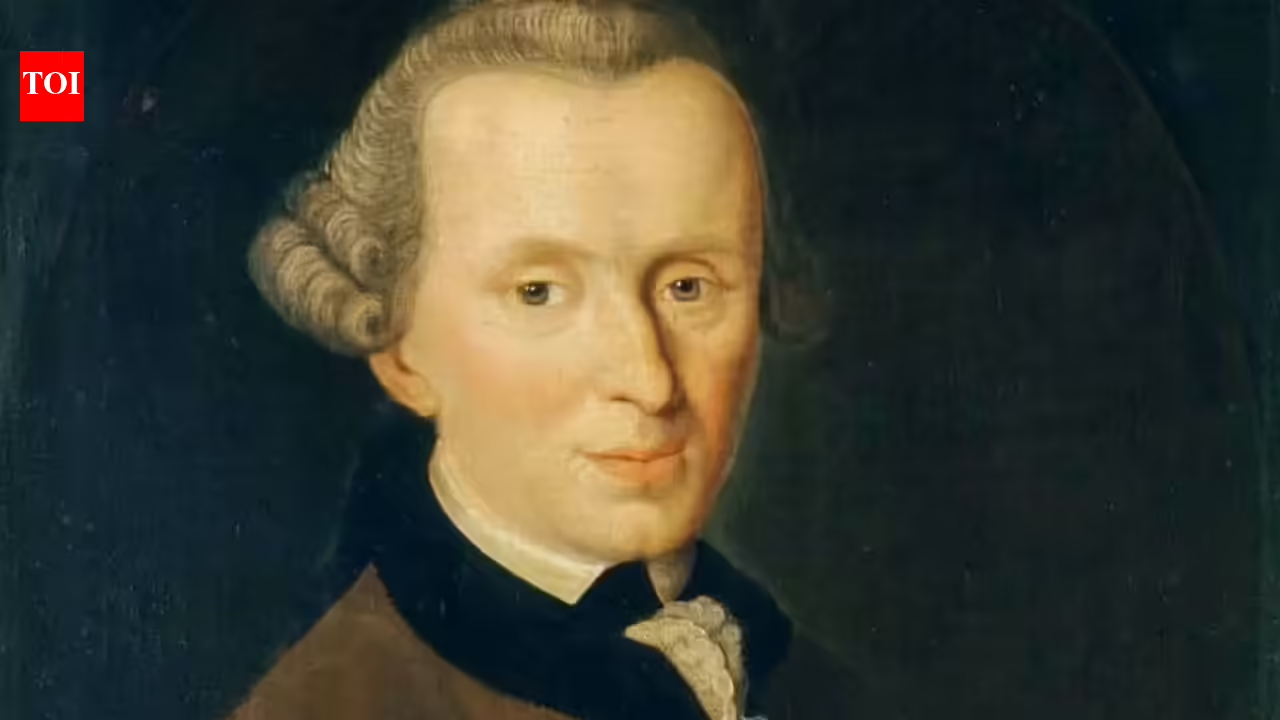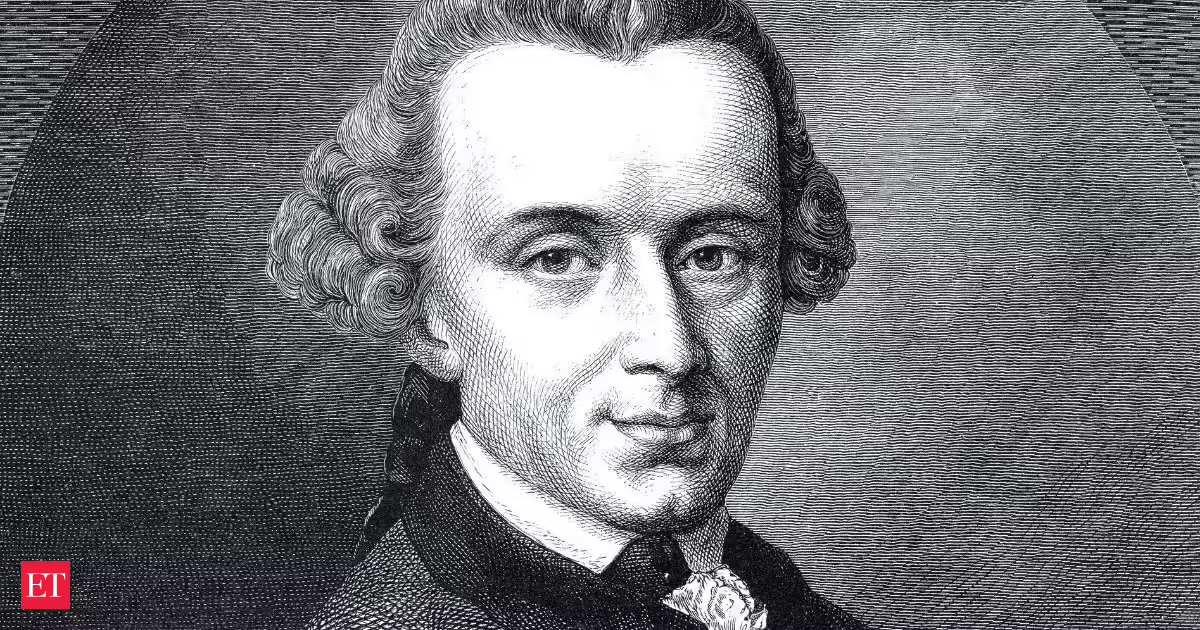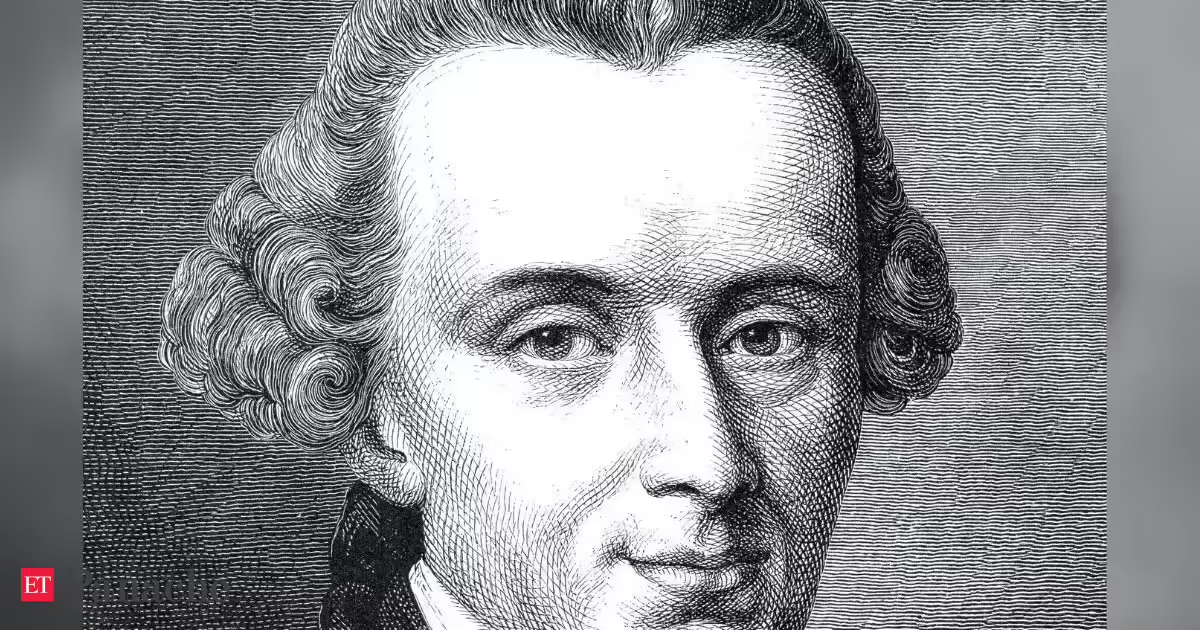
Life often changes people’s priorities in ways they do not expect. Many dreams and plans depend not only on desire but also on timing, money, responsibilities, and personal circumstances. That is one reason why certain old quotes continue to connect with modern readers. One such observation came from German philosopher Immanuel Kant, whose words about marriage and timing are still widely discussed today because they reflect a reality many people understand from their own lives. The quote of the day by Immanuel Kant goes: “When I could have used a wife, I could not support one; and when I could support one, I no longer needed any.” The quote is closely tied to Kant’s personal life. He never married and remained a bachelor throughout his lifetime. During his younger years, he did not have enough financial stability to support a family, even though marriage may have been something he considered. Later, when he became established and financially comfortable through his academic career, his way of living had already become fixed around study, teaching, and routine. At that point, he no longer felt the need to marry. The statement became his simple explanation for why marriage never happened in his life. There is another layer to the quote that goes beyond relationships. Kant’s words speak about the way human life often works. Sometimes people strongly want something when circumstances make it impossible. Then, years later, when the opportunity finally appears, their needs and emotions may already have changed. That gap between desire and timing is what gives the quote its lasting appeal. Even today, many readers connect it to careers, ambitions, friendships, and personal goals that arrive either too early or too late.A life shaped by discipline and routine Immanuel Kant was born in 1724 in Königsberg, Prussia, which is now known as Kaliningrad in Russia. He came from a modest family and grew up in a strict religious environment that valued discipline, honesty, and hard work. These habits stayed with him throughout his life and became part of the reason he was known for his extremely structured daily routine.You Might Also Like: Kant spent nearly his entire life in Königsberg and rarely traveled far from the city. Even when he received opportunities to work elsewhere, including offers connected to Berlin, he chose to remain in his hometown. Before gaining recognition, he experienced years of financial struggle and worked as a private tutor to support himself. His academic success came slowly, and much of his most influential work appeared later in life. Despite his reputation today as a difficult philosopher, historical accounts describe him as an engaging lecturer. He taught subjects ranging from philosophy and logic to geography and science. Students reportedly enjoyed his lectures because he mixed serious ideas with practical examples and humor. For many years, he also taught geography courses that became highly popular among students. The work that changed modern philosophy Kant is widely considered one of the most important thinkers in Western philosophy because he tried to bridge the divide between rationalism and empiricism. Philosophers before him were debating whether knowledge mainly came from reason or from experience. Kant argued that both played a role in shaping human understanding.You Might Also Like: His most famous book, Critique of Pure Reason, explored how the human mind processes reality. Kant argued that people do not simply observe the world exactly as it exists. Instead, the mind actively organizes experiences through structures like space, time, and causality. According to him, human beings can understand the world as it appears to them, but they cannot fully know reality in its pure form beyond experience. This distinction later became famous as Kant’s idea of the phenomenal world and the noumenal world. The phenomenal world refers to things as human beings experience them, while the noumenal world refers to things as they exist independently of human perception. These ideas influenced generations of philosophers and changed the direction of modern thought. Kant’s writing style was often described as difficult and extremely dense. Even during his lifetime, readers struggled with his books. Still, the depth of his arguments made his work highly influential in philosophy, politics, ethics, and even psychology.Kant’s views on morality and ethics Apart from metaphysics and knowledge, Kant also made a major impact on moral philosophy. He believed morality should not depend on personal gain or emotional outcomes. Instead, moral actions should be guided by duty and universal principles.You Might Also Like: One of his best-known ideas was the “categorical imperative.” Kant argued that before taking any action, a person should ask whether they would want everyone else to act the same way. If an action could not reasonably become a universal rule for everyone, then it should not be considered morally right. He also argued that people should never treat others merely as tools for personal benefit. According to Kant, every individual has value and should be treated with dignity and respect. These ideas later became central to discussions about ethics, law, and human rights.A legacy that still matters today Although Immanuel Kant died in 1804, his influence remains strong more than two centuries later. His writings continue to be studied in universities around the world, and his ideas still shape debates on morality, politics, religion, and human understanding. What makes Kant especially interesting is that even his smaller personal remarks, including his famous observation about marriage, continue to resonate with readers today. The quote survives not because it is dramatic, but because it feels honest and deeply human. It reflects regret, practicality, and acceptance all at once. In many ways, the line also mirrors Kant’s own life story. He spent years chasing knowledge, building a career, and living according to discipline and routine. By the time stability arrived, life had already taken him in another direction. That personal truth, expressed in a single sentence, is what continues to make the quote memorable generations later.
Quote of the day by Immanuel Kant: 'When I needed a wife, I could not support one; and when I could support one, I no longer needed...' - A life advice by German philosopher that sometimes we get things when we have learnt to live without them
Immanuel Kants observation about marriage reflects a broader truth about how timing and life circumstances shape human choices. He never married, explaining that when he was young he lacked financial stability to support a family, and by the time he became established through his academic career, his life was already centered around disciplined study and routine. Beyond his personal experience, the idea captures a common life pattern where desires and opportunities often fail to align, making certain goals either unattainable when wanted or unnecessary when possible.
985 words~4 min read